From 20
Dare to Ask
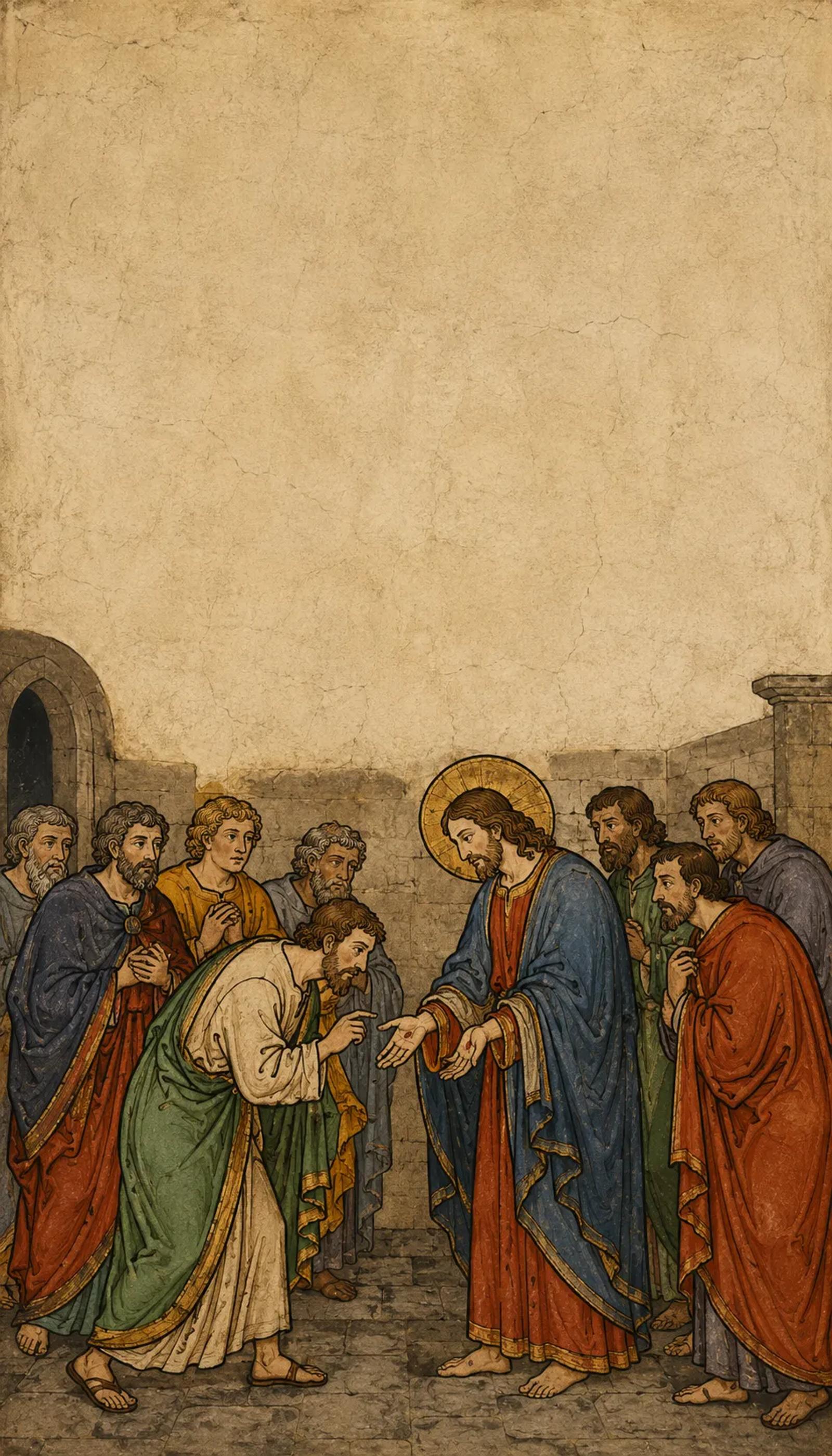
After everything that's happened, the friends are sitting together behind a locked door. They're afraid.
isn't there that time. When he comes back, everyone talks over each other: we've seen him.
Thomas doesn't believe it. He says: I want to see it myself. I want to feel it with my own hands. Otherwise, no.
That's a brave thing to say, because he's completely on his own with it. All his friends are saying something different from him.
A week later he is there. And then he hears: come here. Look. Feel.
It doesn't say whether Thomas actually did that. Only that he stopped doubting.
He's ended up with a nickname that doesn't really make sense: doubting Thomas. When really he was the only one who said out loud what he actually thought.
For today
Does this sound familiar?
A story goes around school. Someone did something, or something's about to happen, and everyone's sure of it. Ask where they heard it, and someone says: heard it from Sam. And Sam heard it from someone else.
If you then ask “are you sure?”, they look at you like you're being annoying. Nodding along is easier.
And then that other side of it. You're in class and you don't understand the maths problem. You look around and no one puts their hand up. So neither do you. Afterwards it turns out half the class didn't get it either.
Whoever asks a question is usually asking it for more people than just themselves.

Ask questions? Waste of time. I'll just nod along with everything and call him the weird one!
Take a look in the mirror:
- When did you nod along while you actually didn't believe it?
- What don't you dare ask in class? What would really happen if you did?
- Who around you asks the questions you don't dare ask?
Mirror line
I'd love to just nod along without understanding a thing, but I've learned that whoever dares to ask a question is usually asking it for more people than just themselves.
From 2
A Strange Kind of Language Lesson
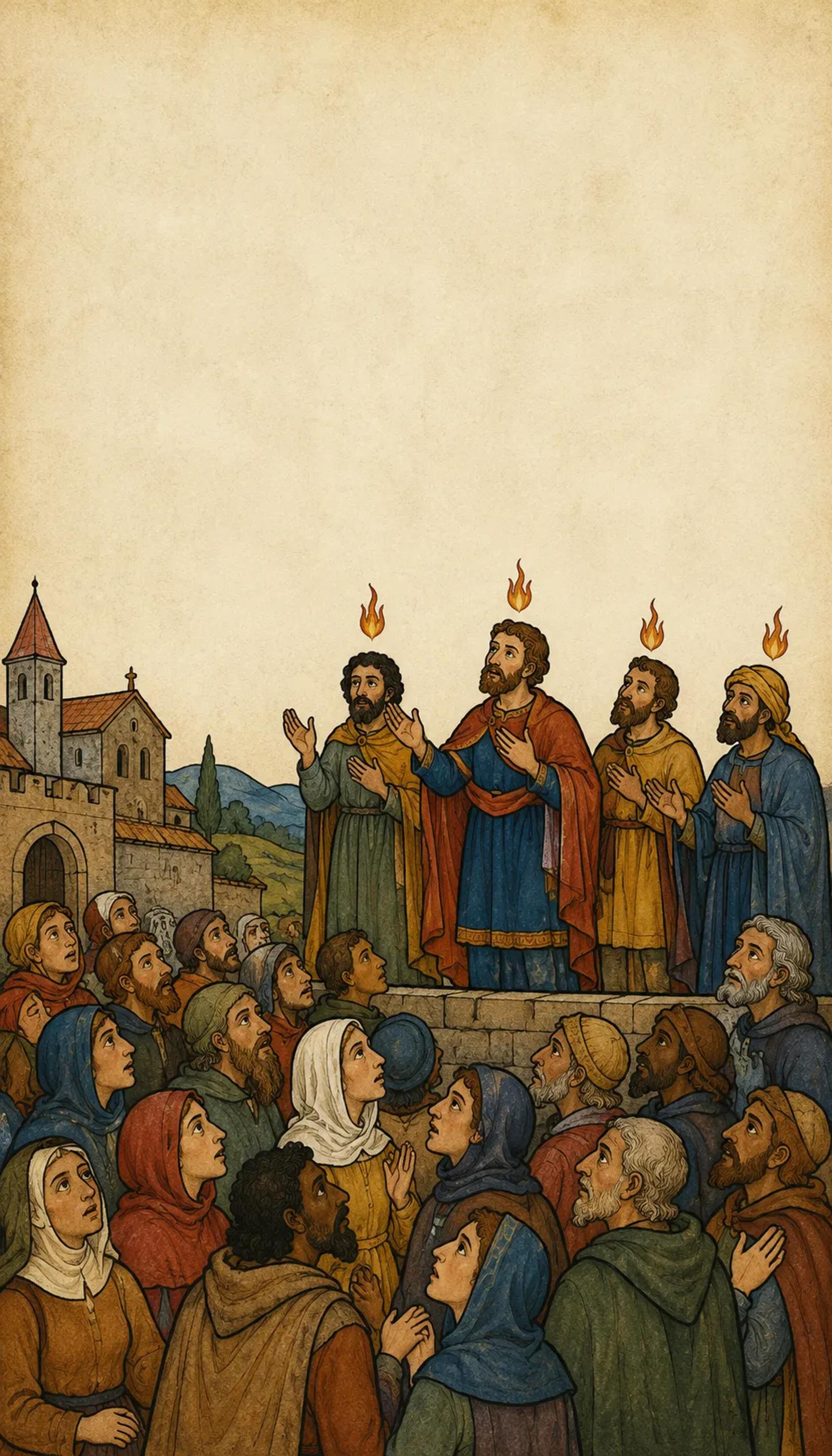
The friends are all sitting together in one house. Suddenly a sound like a rushing wind fills the room, and it's as if little flames appear above their heads.
They go outside, onto the street. The city is busy. There are people from every corner of the world.
And then comes the strange part. The friends speak, and everyone who hears them, hears it in their own language. Not: everyone suddenly speaks the same language. Everyone hears it in the language of home.
The people can't make sense of it. Some say: they've had too much to drink. Later the friends explain it was the that had come over them.
Remember that tower, from earlier in this book? That went wrong when everyone was the same and still stopped listening to each other. Here, exactly the opposite happens.
For today
Does this sound familiar?
A new kid joins the class who barely speaks the language yet. And the whole class starts talking slowly and loudly, as if he's a bit deaf.
Then there's one person who does something different. Who sits down next to him and points things out. Or draws it. Or learns three words in his language and gets them completely wrong, which makes everyone laugh — him too.
That works. Not because it's easier, but because that one person wasn't waiting for the other to become like them.
Adjust, calmly? Far too much effort. I'll just drum it into his ear if I have to!
Take a look in the mirror:
- Who do you sometimes talk to louder or slower than you need to?
- What can you do that no one else in your class can? Does anyone actually know that?
- What three words would you want to learn in someone else's language?
Mirror line
I'd love to just talk louder, but I've learned you don't understand each other better by raising your voice — only by doing something slightly different from everyone else.
From 9
The Enemy in the Dark
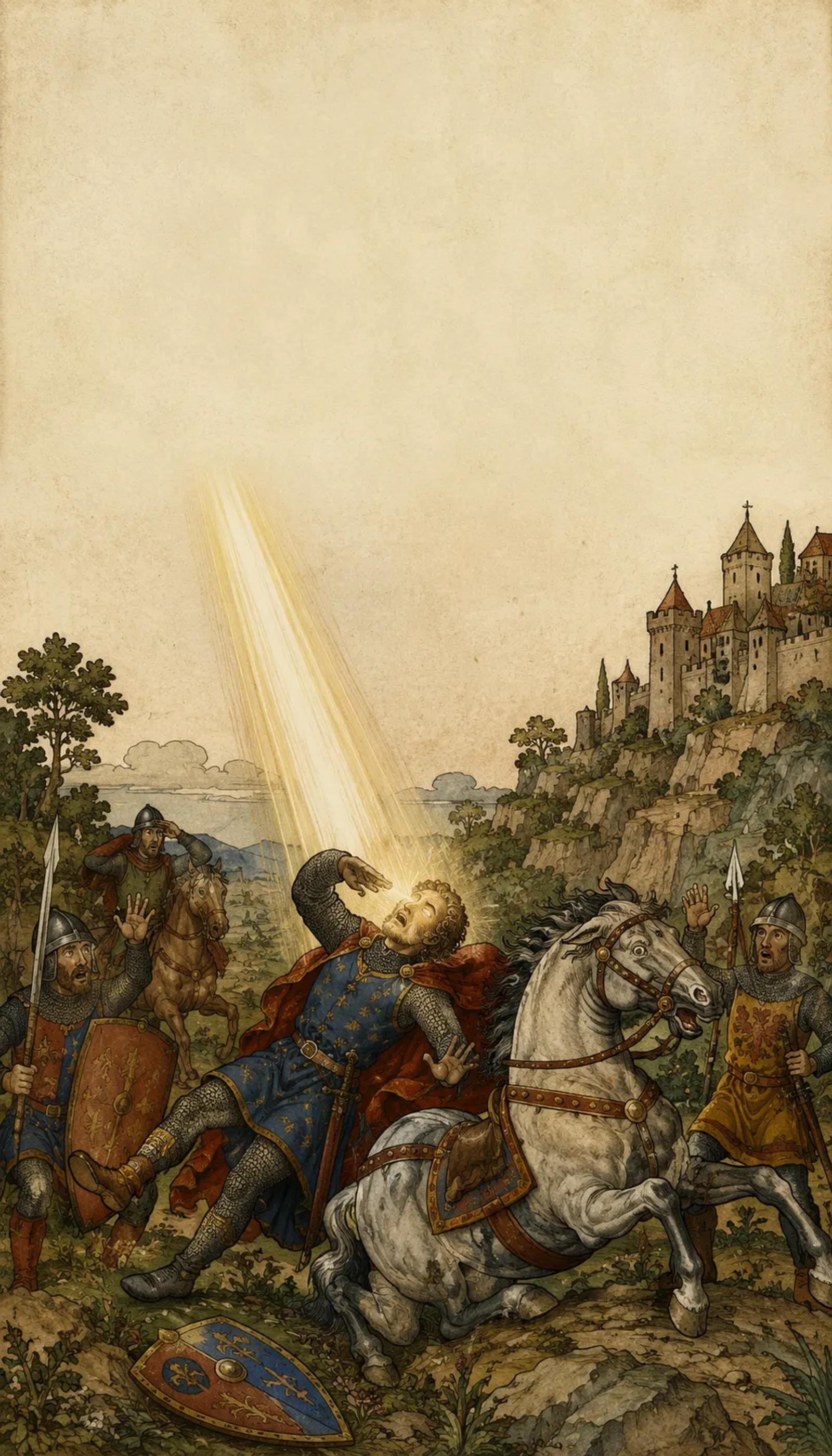
is a dangerous man. He hunts down the friends of and has them arrested. Everyone knows his name and everyone is afraid of him.
On the road to the city of , something happens. There's a blinding light and he falls to the ground. He hears a voice say his name and ask: why are you doing this to me? When he gets up, he can't see anything at all. For three days he sits in the dark. He doesn't eat and he doesn't drink.
In that same city lives . tells him: go to Saul.
Ananias is terrified and just says so out loud. Do you know who that is? I've heard what that man does. He's come here to arrest us.
But he goes. He walks into that house, puts his hands on the shoulders of the most dangerous man he knows, and says: Saul, my brother.
For today
Does this sound familiar?
The kid who's bullied you all year comes up to you and says sorry.
You don't believe a word of it. That's not strange either — you've seen it a hundred times, him being nice and then not again. Your face is already set to no before you've said anything.
And here's the hard part. Someone who wants to change almost never manages it alone. He needs someone willing to believe him, even once, while it's still nowhere near certain.
That doesn't have to be you. If he's bullied you all this time, that's really not your job. But someone has to do it, or he stays exactly who he was.
Give him another chance? Once a liar, always a liar. I should know!
Take a look in the mirror:
- Who once believed you before you were even sure of yourself?
- Who might still be waiting for a second chance from you? Do you want to give it?
- If you did something completely different tomorrow, who would believe it first?
Mirror line
I'd love to never trust him again, but I've learned that whoever truly wants to change almost never manages it alone — he needs someone willing to believe him, just once, first.