From 37
The Dream Coat in the Well
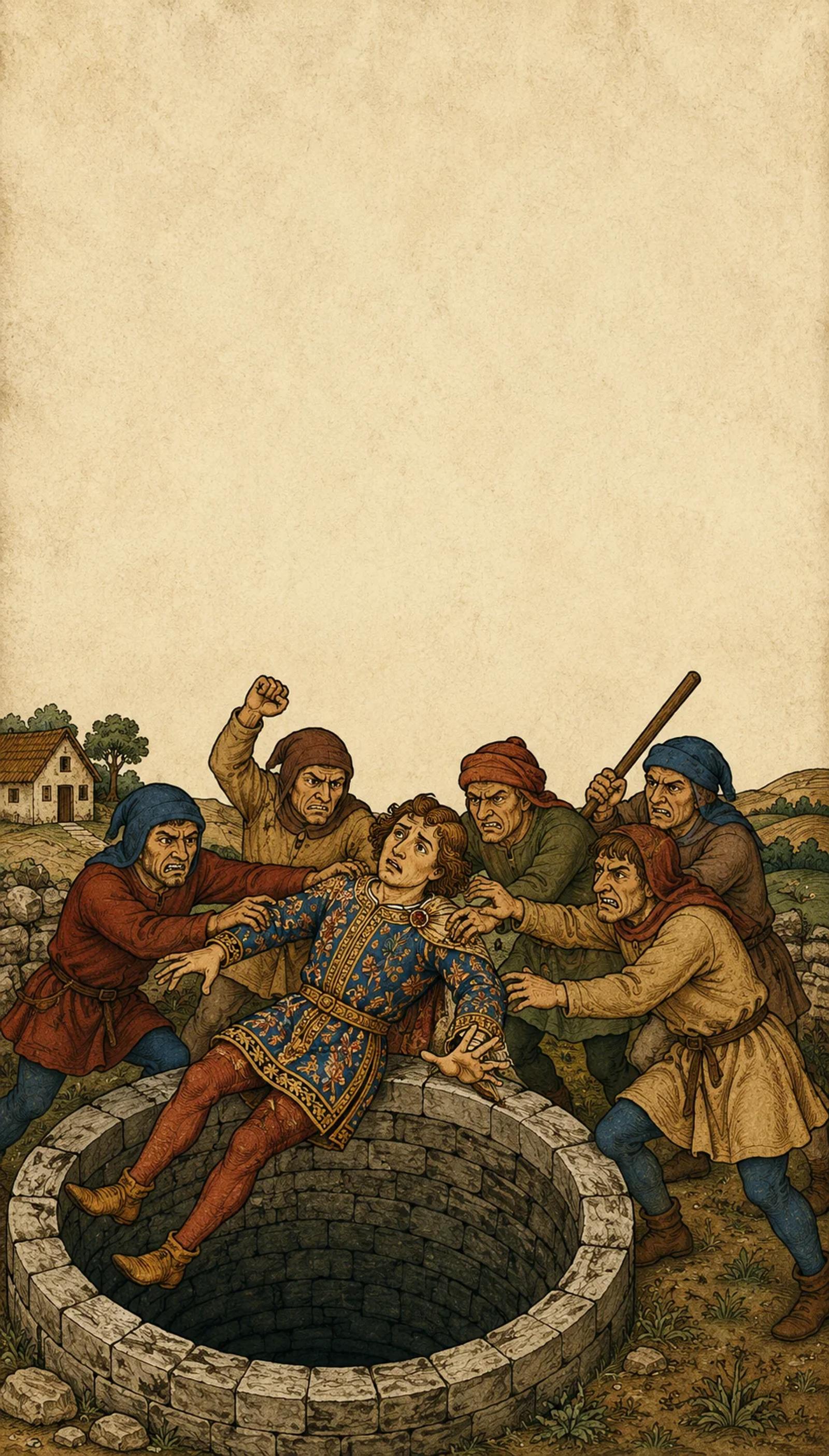
has twelve sons, and is his favourite. He doesn't hide it. He gives him a beautiful coat, while the others get nothing.
Joseph wears it every day.
And then he starts telling his dreams too. I dreamed about , he says, and yours were bowing down to mine. A little later he has another one: the sun and the moon and eleven stars were bowing down to me.
He just tells it. He doesn't see what it's doing.
His brothers can't stand him anymore. When he comes out to the field one day, they throw him into a well. A little later they pull him out and sell him to a passing .
They take his coat home. They tell their father that Joseph is dead.
For today
Does this sound familiar?
You get a great mark on a test you barely studied for. You tell everyone right away. And again. And then again, to someone who'd already heard.
Next to you sits someone who studied for three whole evenings and still failed.
You haven't done anything wrong. You're just happy.
But there's a difference between being happy and telling everyone over and over. And you almost never notice that difference when you're the one on the good side.

Say sorry? Please. I'm just tossing him down the nearest well!
Take a look in the mirror:
- When did you have good news while someone next to you was having bad luck? What did you do?
- What comes easier to you than to others? Do you even realise it?
- Who might be jealous of you sometimes? Are you sure?
Mirror line
I'd love to say I did nothing wrong, but I've learned being happy with yourself and constantly making sure everyone else knows it are two very different things.
From 3
The Bush That Didn't Burn Up
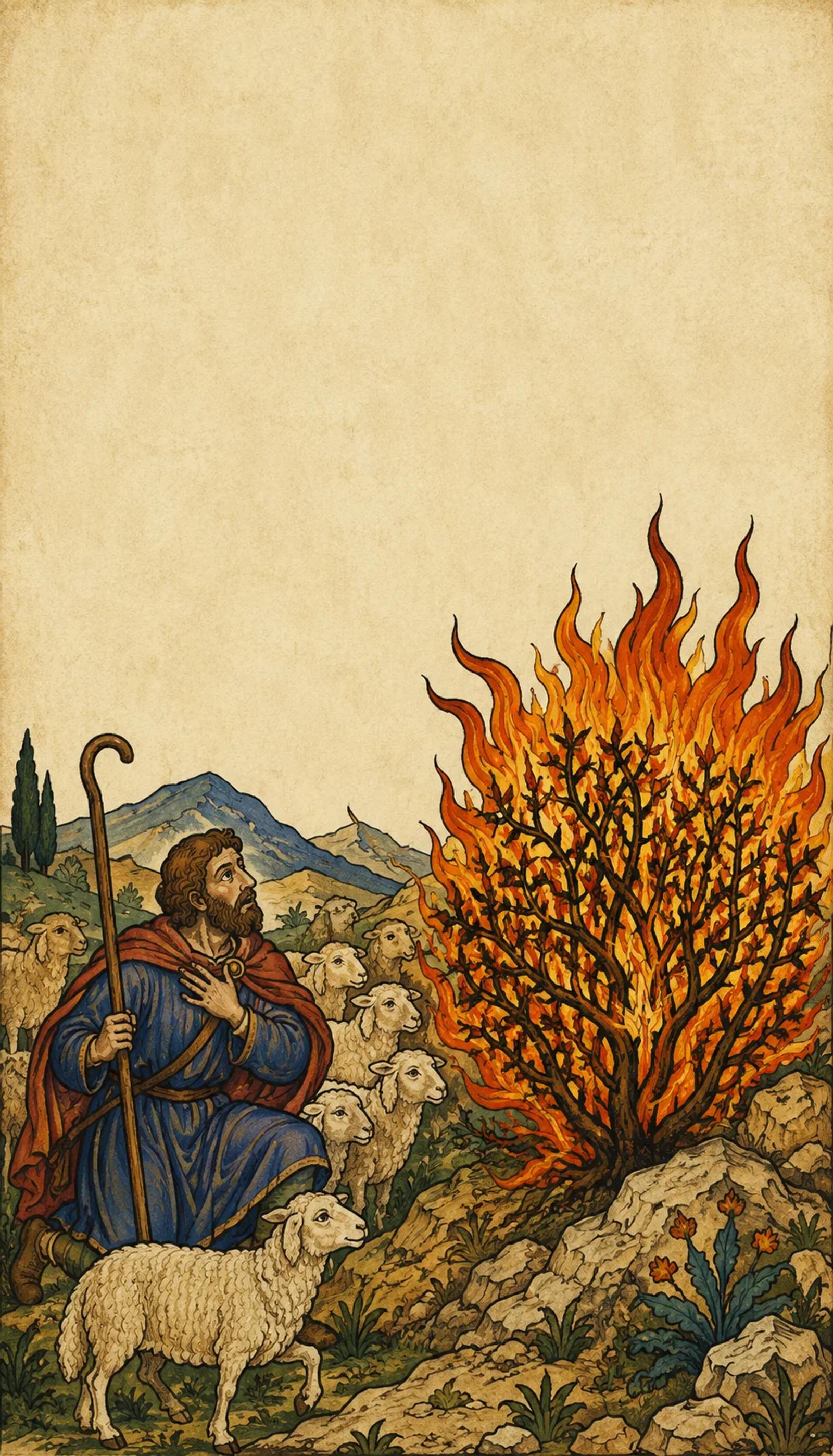
is tending his father-in-law's sheep. He's far from home and far from everyone. He used to live in a palace. Now he walks out here, with a stick.
Then he sees something strange. A thornbush is on fire. But it doesn't burn up. The flames keep going and the bush stays standing.
He walks closer to get a better look. And out of the fire, calls his name.
He's given a task: go back, and get my people out of there.
Moses starts making excuses right away. Who am I? They'll never believe me. I can't even speak well, you know that.
Four times he tries to get out of it. Four times.
And then he goes.
For today
Does this sound familiar?
Tomorrow's your presentation. Tonight in bed you think of everything that could go wrong. Your voice sounds weird. You forget your lines. Someone laughs.
You half hope you get sick.
And then you're standing there, and it starts. The first sentence is the worst. After that you just hear yourself talking, and before you know it you're on your last slide.
The nerves didn't go away before you started. They went away while you were doing it.
Just get on with it? Not likely. I'll cook up an excuse and be rid of it for good!
Take a look in the mirror:
- What do you keep putting off because it feels too scary?
- What excuse do you use most often?
- What would you do if you knew it was fine to fail?
Mirror line
I'd love to say I'd forgotten, but I've learned the nerves only go away once you actually start.
From 20
Rules of the Game in the Desert
The people are free. They're out of Egypt and can do whatever they want.
And that goes wrong. Because when nobody has agreed on anything, whoever shouts loudest is in charge. There's fighting all through the camp: whose goat is that, who gets to the well first, who said what exactly.
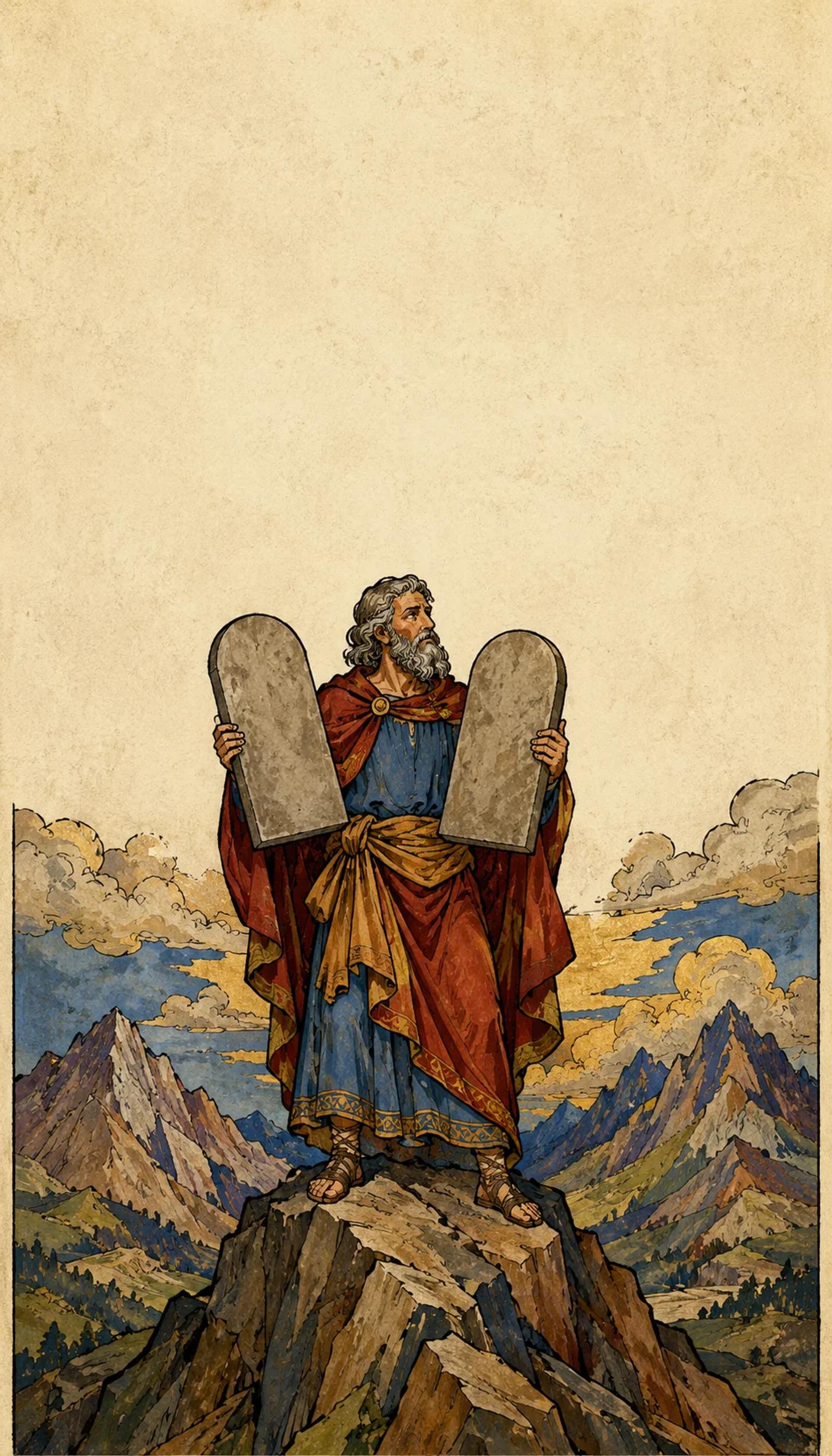
climbs the mountain. Below, the whole people stand waiting, and the mountain itself smokes and rumbles as if there's thunder inside it. Up there, gives Moses ten agreements. The first few are about God himself. The rest are about how people treat each other, and they're short. Don't take what belongs to someone else. Don't say things about someone that aren't true. Don't spend all your time wanting what your neighbour has. And: one day a week, you do nothing.
These aren't punishment rules. They're agreements that make it possible to live together without it being a fight every day.
Moses comes down the mountain with two stone tablets in his arms, written by God himself.
For today
Does this sound familiar?
Playing football on the playground with no referee and no lines. The first two minutes are fun. Then someone handles the ball, someone else shouts offside, and there's a fight.
Only once you've agreed where the goal is and what's not allowed can you actually play.
It works the same way at home. That rule about tablets and phones being put away at the table is annoying. But it does make sure people actually talk.
Follow the rules? Not a chance. I'm making up my own — rigged so I always win!
Take a look in the mirror:
- Which rule at home or school do you think is the most pointless?
- What do you think that rule is actually there for?
- What rule would you introduce if you were in charge for a day?
Mirror line
I'd love to make up rules that only suit me, but I've learned that without rules, freedom doesn't win — the strongest one does.