From 38
When the Storm Suddenly Hits
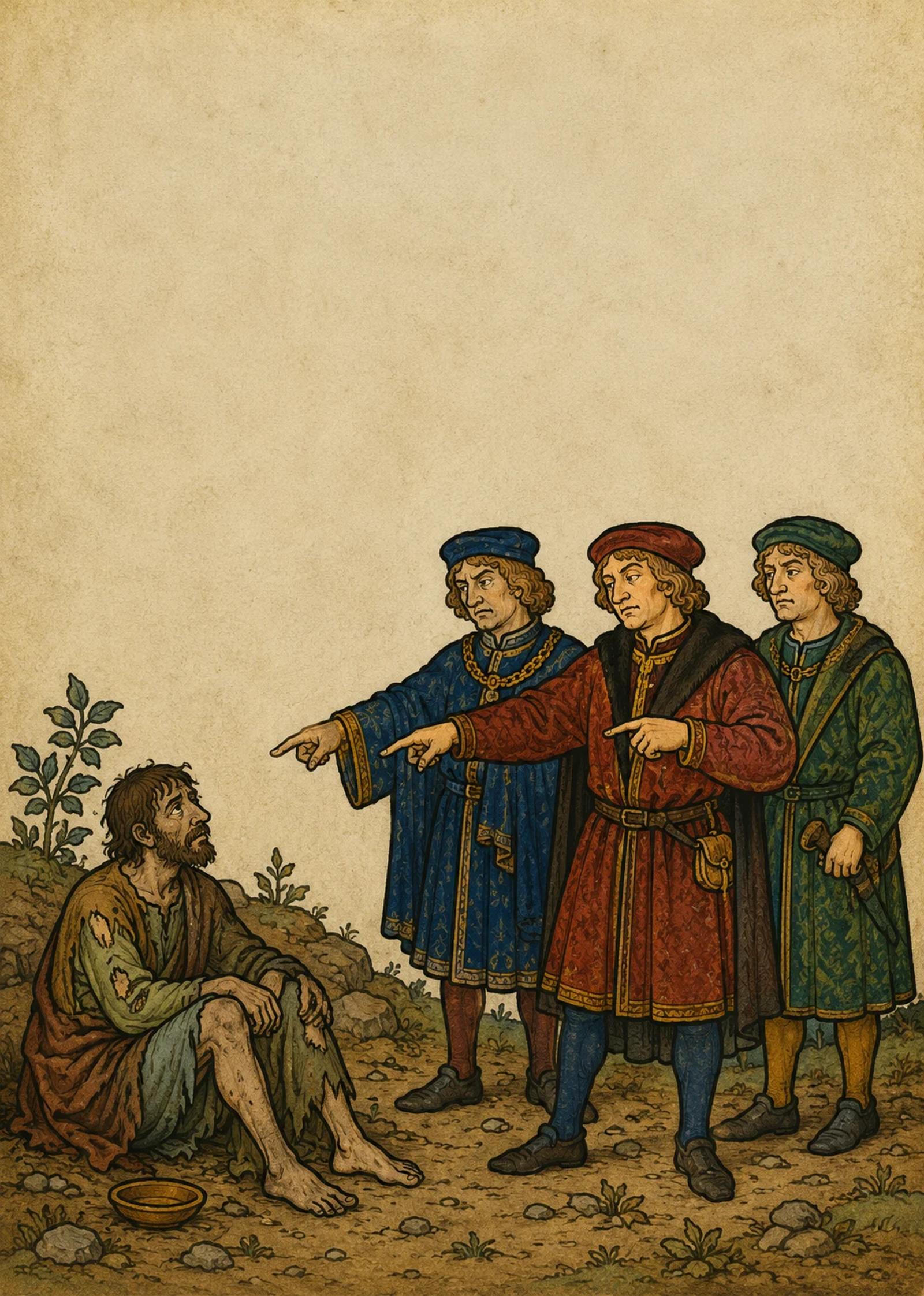
Job loses everything in a very short time. His animals, his house, the people he loved. Then he gets sick too. He sits in the dust and doesn't understand any of it.
Three friends come to see him. For seven days they say nothing. They just sit next to him.
Then they start talking, and all three say the same thing: you must have done something wrong.
Job keeps asking. Why? Why me? No answer comes.
Until a storm rises. Out of that storm, speaks, and Job thinks: now I'll finally hear it. But God gives no answer. He asks questions.
*Where were you when the earth was made? Do you know where the snow is kept? Can you tame a wild donkey?*
Almost a hundred questions. And not one answer.
And when the storm settles, Job is calm.
For today
Does this sound familiar?
Something really awful happens to a kid in your class. And on the playground someone says, “Well, his dad always drives way too fast too.”
We say things like that because we're scared. If there's a reason, it can't happen to us. But there isn't always a reason.
And then that other moment. You're standing next to someone who's sad and you don't know what to say. Every sentence you think of sounds stupid. So you say nothing and walk on.
While that person maybe didn't need a sentence at all. Just someone who stayed.

Sit with him? No time for that. I'll just think: at least it's not me, and carry on with my day!
Take a look in the mirror:
- When did you not know what to say to someone who was sad?
- When did you secretly think: he brought that on himself a bit?
- Do you want someone who explains things, or someone who just stays sitting next to you?
Mirror line
I'd love to think: at least it's not me, but I've learned that looking for a reason usually comforts yourself, not the other person.
From the book of
The Grump in the Sun
tells Jonah: go to . That's the enemy's city, and Jonah doesn't feel like it. So he heads in exactly the opposite direction.
A storm comes. He gets thrown overboard, an enormous fish swallows him, and three days later spits him out onto the beach.
Then he walks to Nineveh after all. He says one sentence. And to his utter astonishment, the whole city listens. Everyone says sorry and changes their ways.
So it turns out brilliantly. And Jonah is furious.
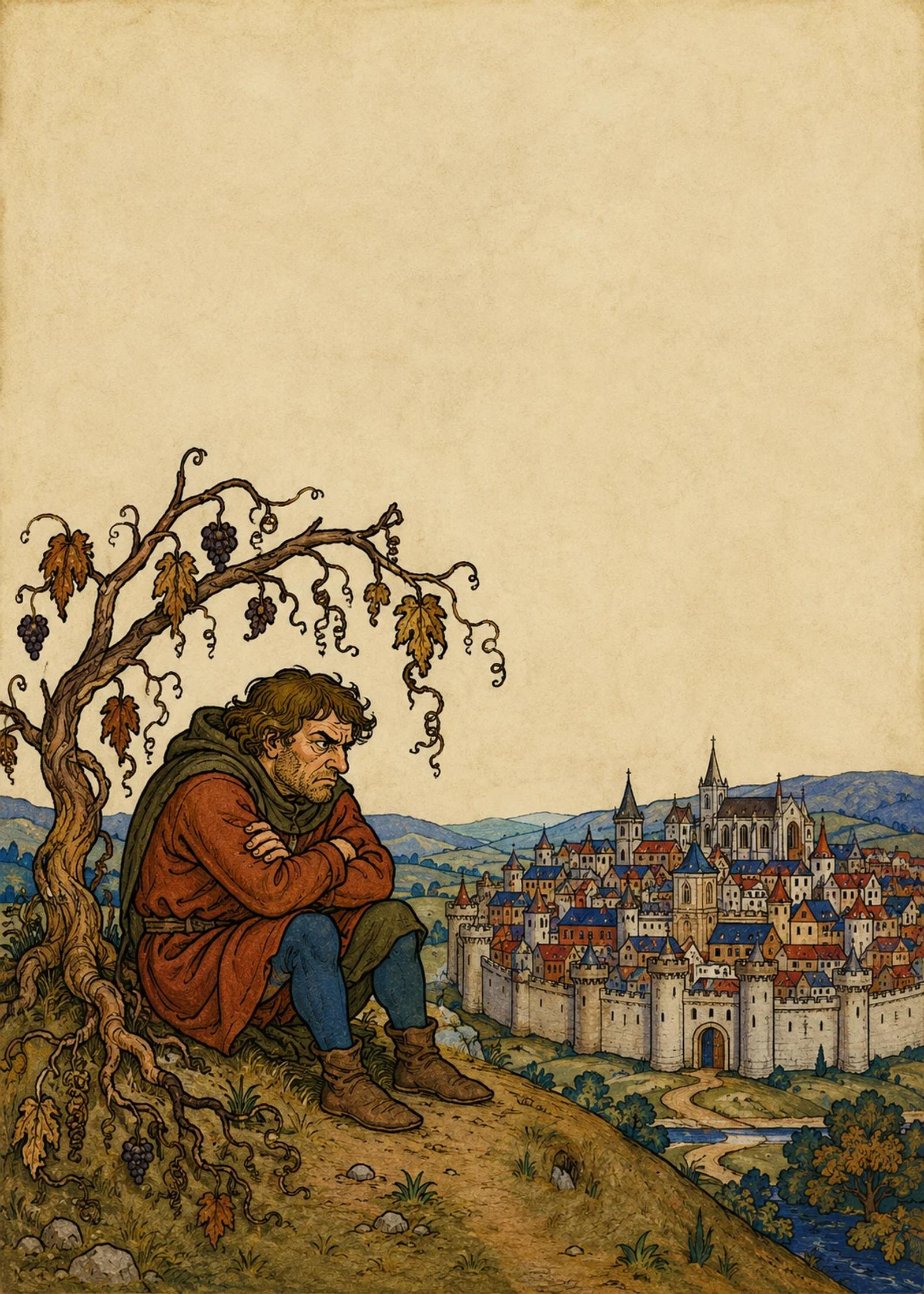
He goes and sulks on a hill outside the city. A plant grows over his head and gives him shade, and he's thrilled about that. But the next morning a little worm chews through the stem. The plant dries up, the sun burns down, and Jonah doesn't want to go on.
Then God asks him one last question: you're devastated over a little plant you didn't even plant yourself. And what about those thousands of people?
The book stops there. We never hear what Jonah answered.
For today
Does this sound familiar?
There's a kid in your class who's been annoying all year. You know exactly who he is. That's the troublemaker. Case closed.
And then one day he apologises, and the teacher says he can join in again. Everyone's happy. And you're standing there feeling something odd: you're annoyed. Part of you is almost hoping he messes it up again.
That's not because you're mean. It's because you'd already given him a fixed spot in your head, and that spot doesn't fit anymore.
Be happy for him? Forget it. I'm quietly hoping he messes it up again, right when things were finally going his way!
Take a look in the mirror:
- Who has a fixed spot in your head? Does that spot still fit?
- When were you annoyed by something good happening to someone else?
- What made you angriest this week? Was that also the most important thing that happened that week?
Mirror line
I'd love to hope he messes it up again, but I've learned that means I'm still keeping him stuck in the spot I once gave him — even if he stopped fitting there long ago.
From 4
The Fast Way
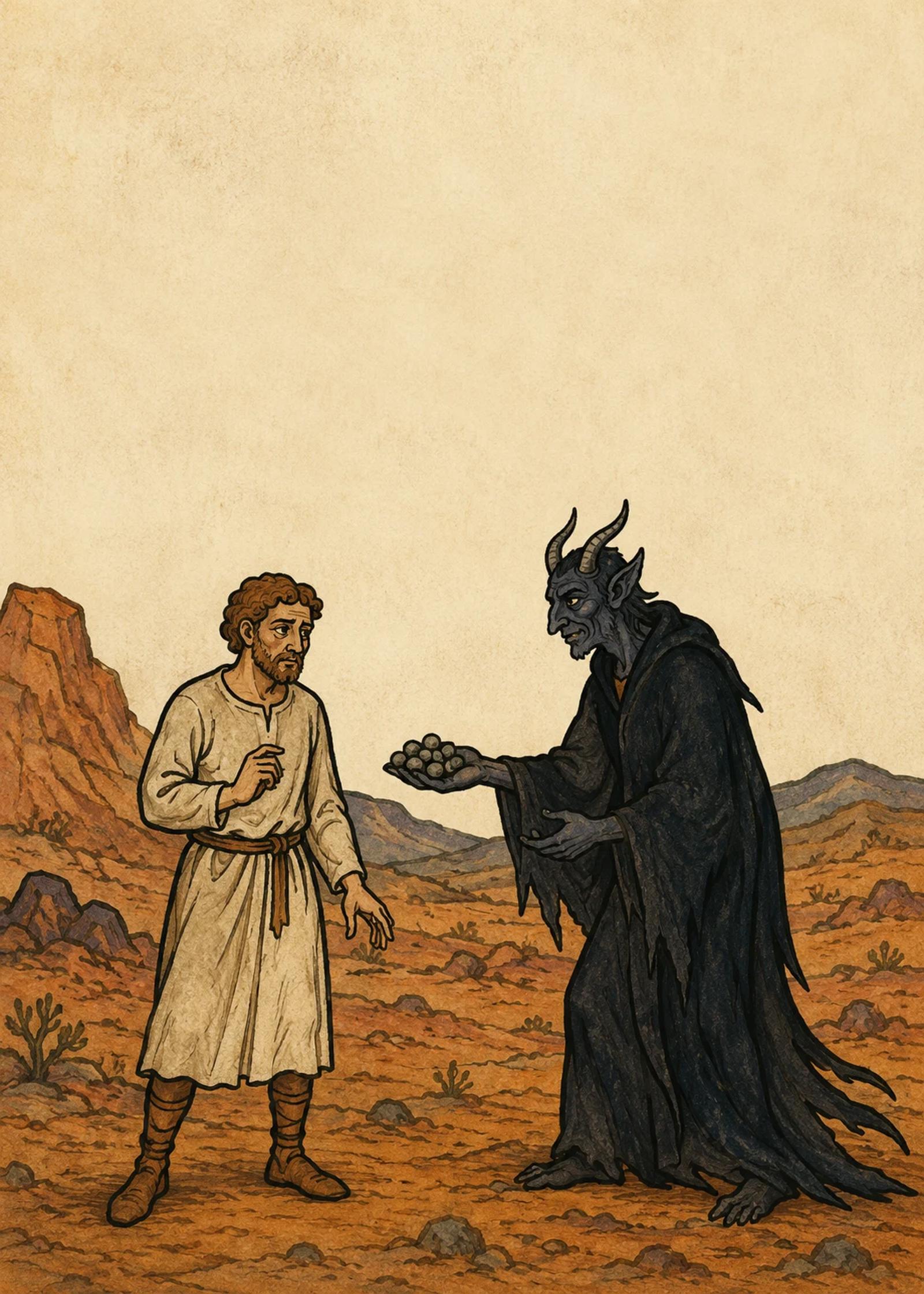
is alone in the desert for forty days. No food, no people, only sand and his own thoughts. He's exhausted and starving.
And then the devil comes walking alongside him. He sounds friendly and he has three suggestions. The clever thing is: all three sound perfectly reasonable.
*You're hungry. Look, stones everywhere. Turn them into bread.*
*Go stand on the highest point of the temple and jump. Angels will catch you, and the whole city will see. Then everyone will know at once who you are.*
*Look at all the countries of the world. Yours, today. All you have to do is bow down for a moment.*
Three times he says no. Not because food, or being seen, or having something to say are bad things. But because he doesn't want to get them this way.
Then the devil is gone. And he's still standing there. Hungry. And he just has to start walking.
For today
Does this sound familiar?
You've been stuck on the same level for days and it just won't work. In the app you see: buy this upgrade and you'll have it instantly. You buy it. You win. But within a couple of minutes the fun's gone, because you haven't really won anything — and you're out some money too.
Or you're writing a project on volcanoes and you paste in a chunk of text you don't even understand yourself. You get a great mark. And when someone asks you a question about your own project afterwards, you don't quite know where to look.
The shortcut works, almost every time. Only you know how you got there.
Earn it properly? Why would I. I'll just buy it and act like I pulled it off myself!
Take a look in the mirror:
- When did you last take the shortcut? What did it get you, and what did it cost you?
- What would you love to be able to do without ever having to practise for it?
- If you knew for certain no one would ever find out — would you cheat? Really think about it before you say no.
Mirror line
I'd love to just buy it, but I've learned a shortcut never gives you the satisfaction of something you actually earned.