From 10
The Hero from the Wrong Side
Someone asks : who am I actually supposed to help? Who counts as mine?
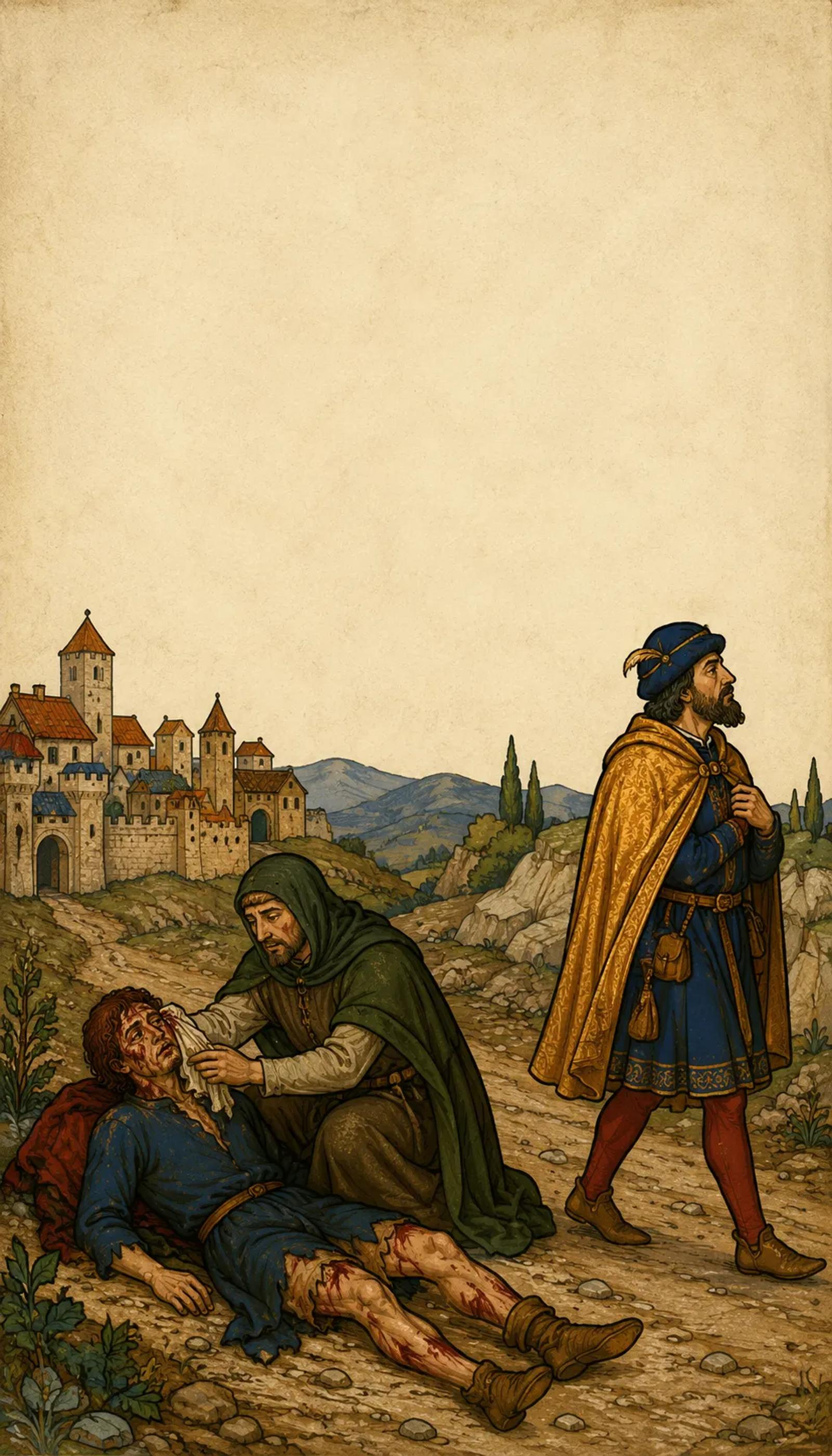
Jesus answers with a story. A man is walking down a lonely road and gets attacked. They beat him and leave him half-dead by the roadside.
Someone important comes along. He sees the man lying there, crosses over, and walks on along the other side of the road. A little later, someone else like him comes by. He crosses over too.
Then a passes. And that's exactly someone from the wrong side: the people listening to this story want nothing to do with Samaritans.
He stops. He treats the wounds, puts the man on his own donkey, brings him to an , and pays for him.
At the end, Jesus flips the question around. Not: who counts as yours? But: who became a here?
For today
Does this sound familiar?
Someone takes a hard fall on the playground. Not just anyone: it's that tough kid who was rotten to you last week. Your first thought is: serves him right.
You stop for a second. And in those few seconds you come up with three reasons to keep walking. You're going to be late. Other people are already there. And he probably doesn't even want your help.
Those reasons aren't lies. All three of them are a little bit true.
That's exactly what makes them so useful.

Stop and help? Why would I. He surely wouldn't help me either!
Take a look in the mirror:
- Who would you never help? Really think about it. You don't have to tell anyone.
- Which reason do you use most often to keep walking?
- Who helped you once when you least expected it?
Mirror line
I'd love to just keep walking, but I've learned the question isn't who deserves my help, but who I become when someone's lying there.
From 15
The Unfair Party
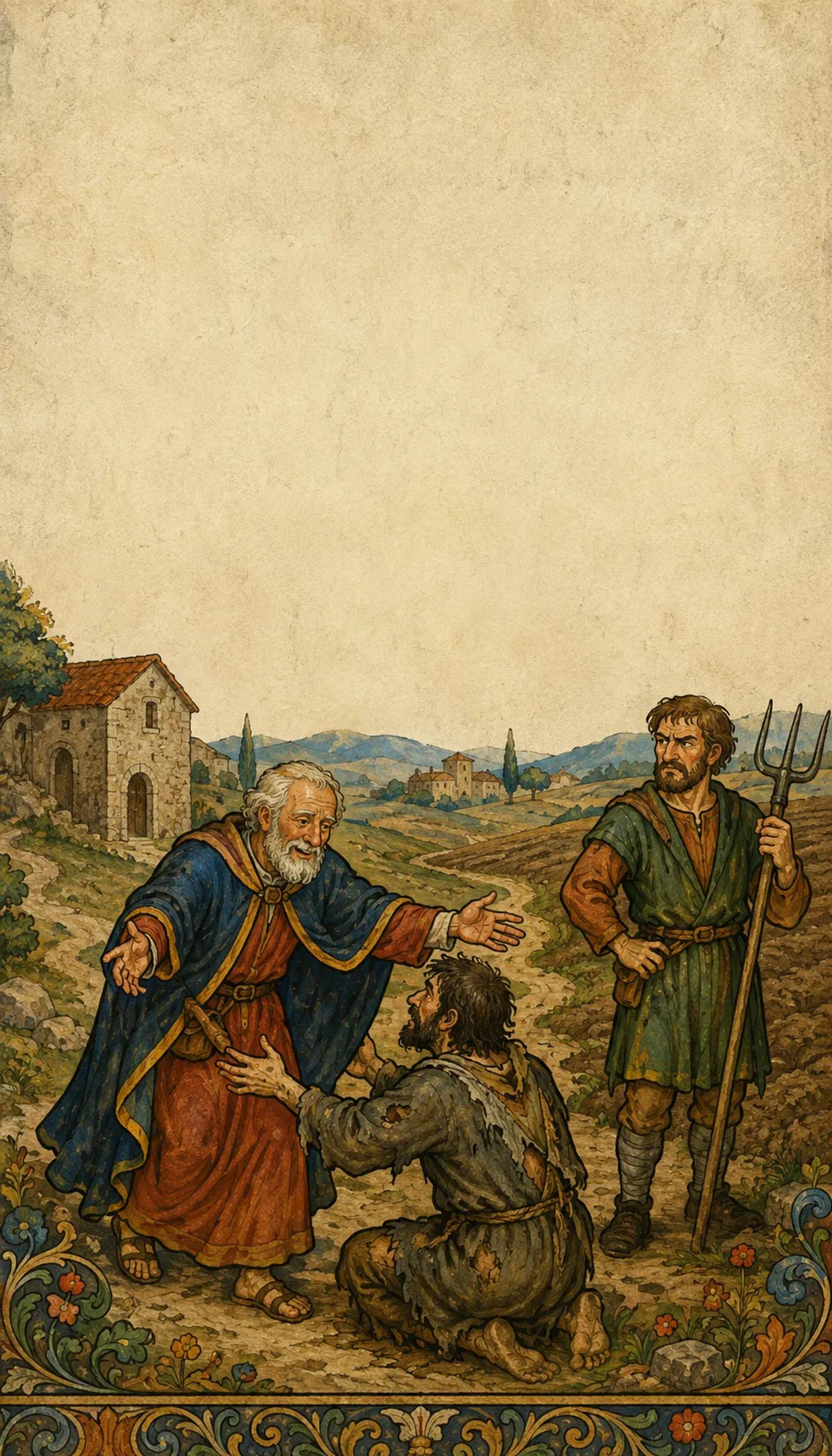
A father has two sons. The younger one won't wait and asks for his share of the money right now. He leaves, spends it all, and ends up with nothing. Eventually he's working among the pigs and is so hungry he wants to eat their food.
He decides to go back, and practises his apology along the way.
But his father sees him coming from far away. So he'd been watching. He runs to him, and a party breaks out. Music, food, everything.
The oldest son is out in the field. He hears the music, hears what's going on, and refuses to go inside. All these years, he says, I've worked here. And I've never had a party.
Then the father goes outside too. Towards him.
What the oldest son did next isn't written down.
For today
Does this sound familiar?
Your little brother breaks something and gets a hug. You got told off last week for something much smaller. You don't say anything about it, but something settles inside you.
Or this: someone who did nothing all year for the group project gets exactly the same compliments at the presentation as you, who put in three whole evenings.
In moments like that, you're the older brother. You haven't done anything wrong — that's exactly the point. You did everything right and it feels like nobody noticed.
That's a lonely kind of angry.
Be happy for him? No thanks. I'll give him a party he'll never forget!
Take a look in the mirror:
- When did you feel like nobody saw that you were doing the right thing?
- When were you the one who got the party without earning it?
- What would you want to hear if you were standing outside while the music started up inside?
Mirror line
I'd love to say I didn't mind about the party, but I've learned it's fine to be jealous of a party — as long as you actually say so out loud sometime.
From 4
The Clever Question
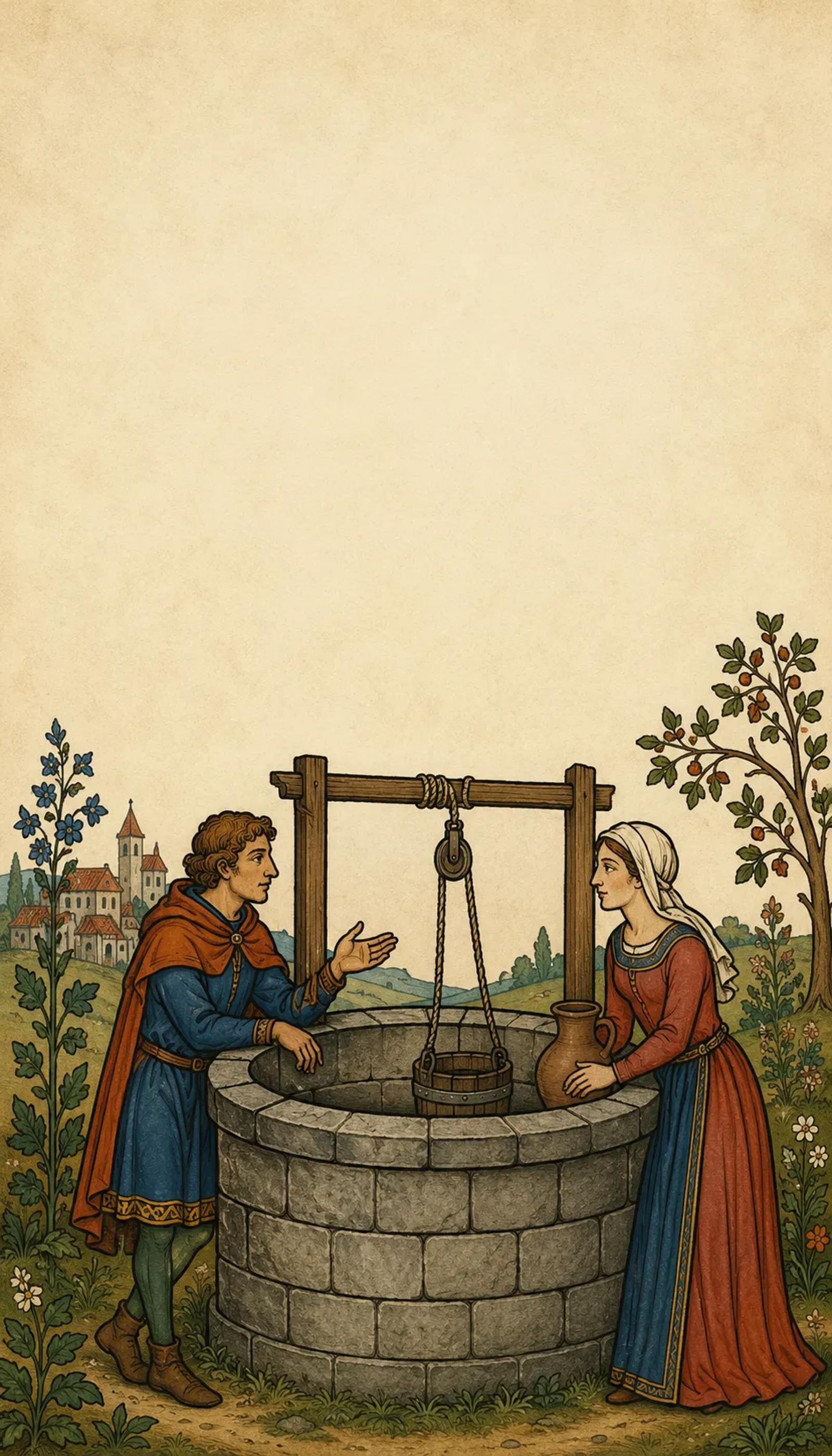
It's the middle of the day and blazing hot. is tired from walking and sits down by a well.
A woman comes to fetch water. That's odd, because no one fetches water in the hottest part of the day. She's probably coming at exactly that time because there's no one else around.
And then something happens that really isn't supposed to happen. He asks her for something. *Give me a drink.*
That sounds small, but it isn't. She belongs to the wrong people, she's alone, and really he should be pretending not to see her. Instead he asks her for help — because she has the bucket and he doesn't.
They get talking. It becomes the longest conversation of his recorded in the whole book. And afterwards she goes and tells the entire town.
For today
Does this sound familiar?
There's someone in your class you never talk to. Not because you have anything against him. It just never happened, and by now it would feel strange to start.
If you want to be kind, you usually think of giving. You ask if he wants to join in. That's meant kindly, but it also says: I'm inside, you're outside, and I'm letting you in.
There's something that works better, and it's even easier. Ask him something. Whether you can borrow his eraser. Whether he knows how to beat that one level.
Asking for something turns the other person, for a moment, into the one who gets to help.
Start a conversation? Far too much effort. I'll just never look that way at all!
Take a look in the mirror:
- Who in your class have you actually never talked to? How come?
- What could you ask that person, instead of giving them something?
- When were you the one who got asked to join in? How did that feel?
Mirror line
I'd love to just never look, but I've learned you don't have to be mean to someone to still never really see him.