
From 3
The Clever King
has only just become king and he's still young. Two women come to him, both claiming the same baby is theirs.
There are no . There's no proof. It's one woman's word against the other's.
Solomon thinks. And then he says something terrible: bring a sword. We'll cut the child in half, so each of you gets a piece.
One of the two says: fine. Go ahead. Then neither of us has him.
The other screams: no! Give him to her, then. As long as he lives.
And then Solomon knows enough. Give the child to the second woman, he says. She is the mother.
For today
Does this sound familiar?
The two of you are pulling on the same thing. You're both shouting that it's yours.
And at some point it's not about the thing anymore. It's about not wanting to give in.
You hear it start to crack. And you pull again.
If one of you lets go, the other usually thinks: I won. But the one who let go was the one who still remembered what it was actually about.

Back down? Not a chance. I'll keep pushing until it breaks — purely to win!
Take a look in the mirror:
- When did you fight so hard to be right that you forgot what it was about?
- What wouldn't you want to see broken, even if it meant losing?
- When did someone let go for your sake? Did you notice?
Mirror line
I'd love to keep nagging until I got my way, but I've learned that whoever lets go first often still remembers best what it was actually about.
From 38
When the Storm Suddenly Hits
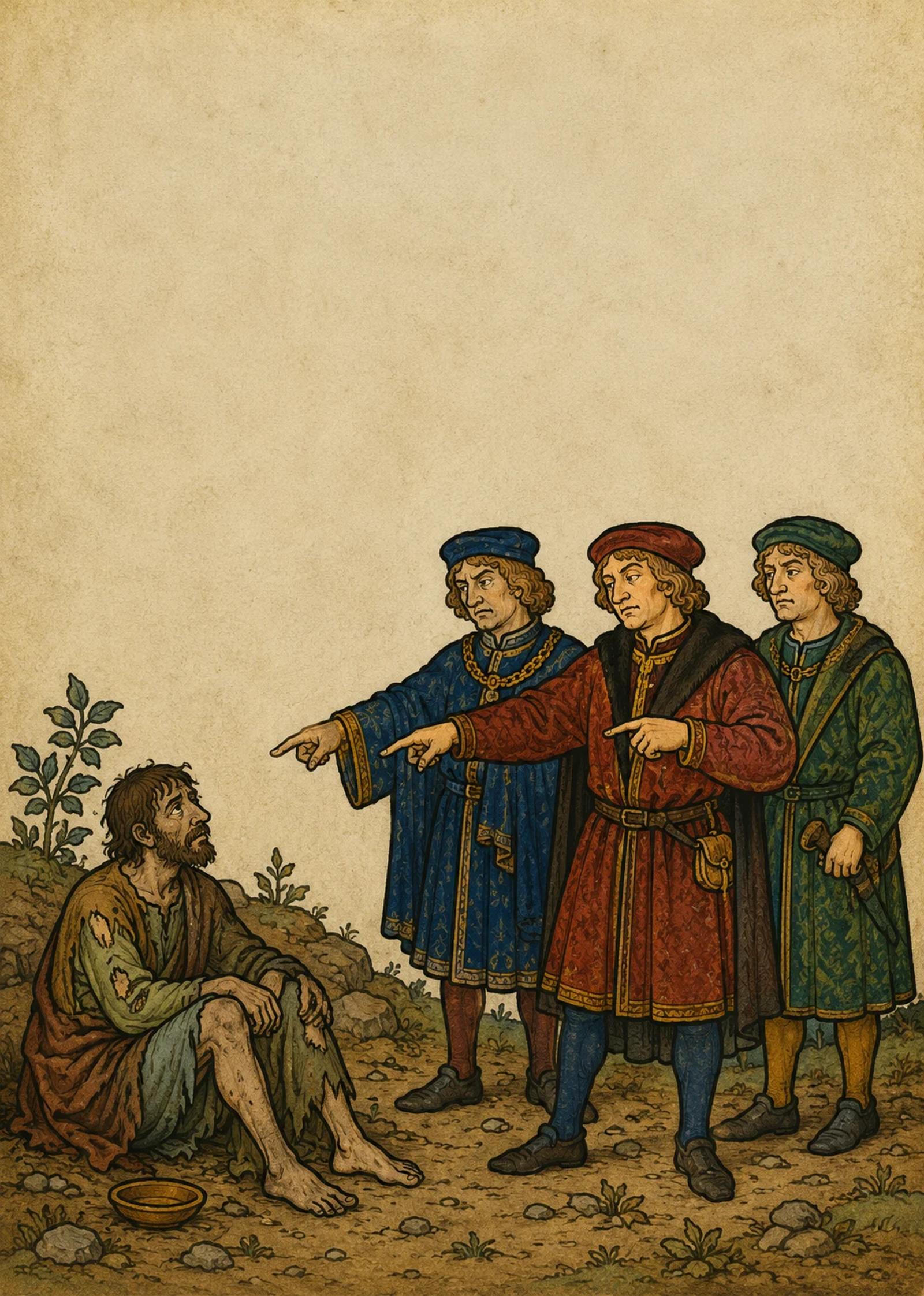
Job loses everything in a very short time. His animals, his house, the people he loved. Then he gets sick too. He sits in the dust and doesn't understand any of it.
Three friends come to see him. For seven days they say nothing. They just sit next to him.
Then they start talking, and all three say the same thing: you must have done something wrong.
Job keeps asking. Why? Why me? No answer comes.
Until a storm rises. Out of that storm, speaks, and Job thinks: now I'll finally hear it. But God gives no answer. He asks questions.
*Where were you when the earth was made? Do you know where the snow is kept? Can you tame a wild donkey?*
Almost a hundred questions. And not one answer.
And when the storm settles, Job is calm.
For today
Does this sound familiar?
Something really awful happens to a kid in your class. And on the playground someone says, “Well, his dad always drives way too fast too.”
We say things like that because we're scared. If there's a reason, it can't happen to us. But there isn't always a reason.
And then that other moment. You're standing next to someone who's sad and you don't know what to say. Every sentence you think of sounds stupid. So you say nothing and walk on.
While that person maybe didn't need a sentence at all. Just someone who stayed.
Sit with him? No time for that. I'll just think: at least it's not me, and carry on with my day!
Take a look in the mirror:
- When did you not know what to say to someone who was sad?
- When did you secretly think: he brought that on himself a bit?
- Do you want someone who explains things, or someone who just stays sitting next to you?
Mirror line
I'd love to think: at least it's not me, but I've learned that looking for a reason usually comforts yourself, not the other person.
From the book of
The Grump in the Sun
tells Jonah: go to . That's the enemy's city, and Jonah doesn't feel like it. So he heads in exactly the opposite direction.
A storm comes. He gets thrown overboard, an enormous fish swallows him, and three days later spits him out onto the beach.
Then he walks to Nineveh after all. He says one sentence. And to his utter astonishment, the whole city listens. Everyone says sorry and changes their ways.
So it turns out brilliantly. And Jonah is furious.
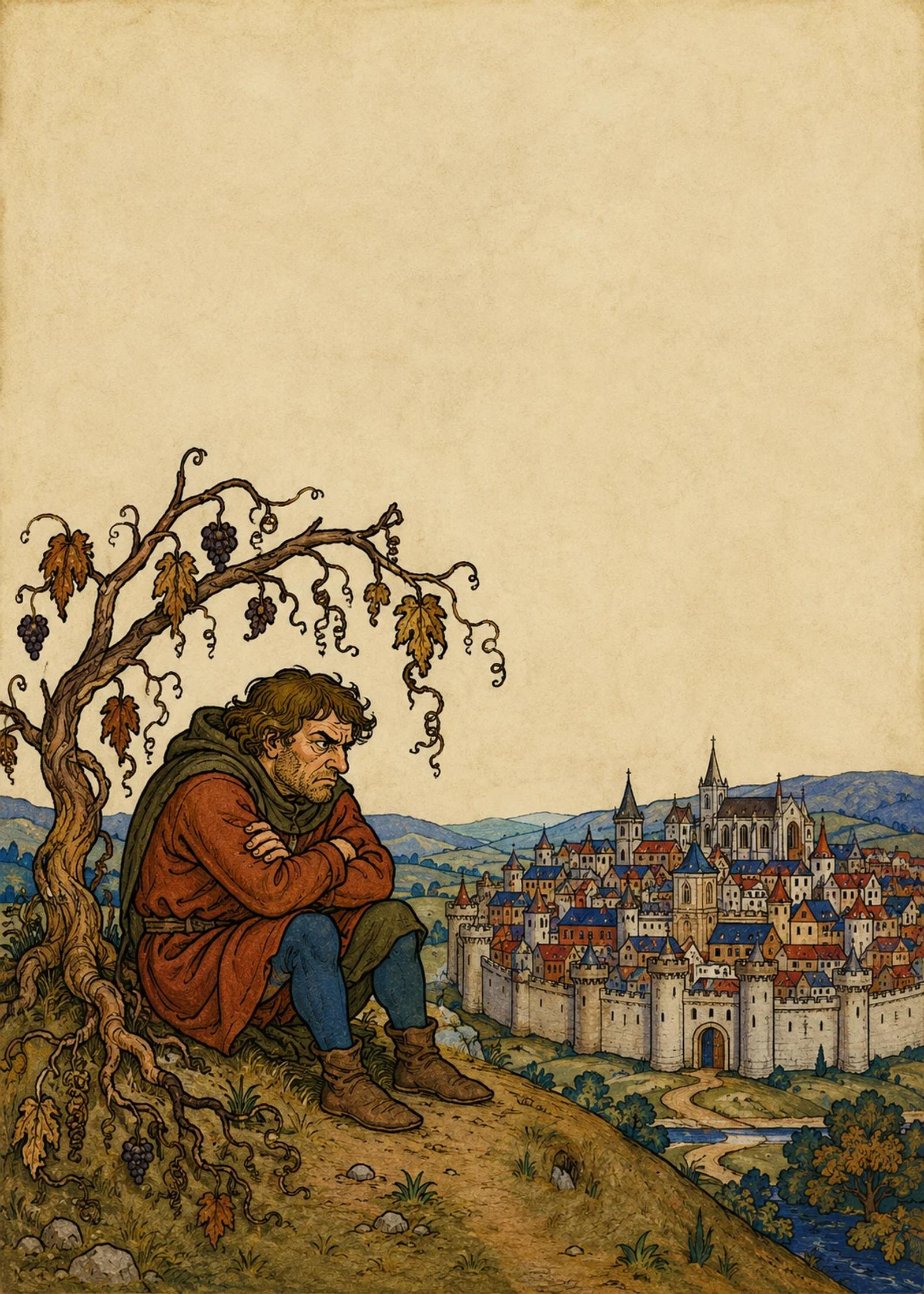
He goes and sulks on a hill outside the city. A plant grows over his head and gives him shade, and he's thrilled about that. But the next morning a little worm chews through the stem. The plant dries up, the sun burns down, and Jonah doesn't want to go on.
Then God asks him one last question: you're devastated over a little plant you didn't even plant yourself. And what about those thousands of people?
The book stops there. We never hear what Jonah answered.
For today
Does this sound familiar?
There's a kid in your class who's been annoying all year. You know exactly who he is. That's the troublemaker. Case closed.
And then one day he apologises, and the teacher says he can join in again. Everyone's happy. And you're standing there feeling something odd: you're annoyed. Part of you is almost hoping he messes it up again.
That's not because you're mean. It's because you'd already given him a fixed spot in your head, and that spot doesn't fit anymore.
Be happy for him? Forget it. I'm quietly hoping he messes it up again, right when things were finally going his way!
Take a look in the mirror:
- Who has a fixed spot in your head? Does that spot still fit?
- When were you annoyed by something good happening to someone else?
- What made you angriest this week? Was that also the most important thing that happened that week?
Mirror line
I'd love to hope he messes it up again, but I've learned that means I'm still keeping him stuck in the spot I once gave him — even if he stopped fitting there long ago.