From 4
The Clever Question
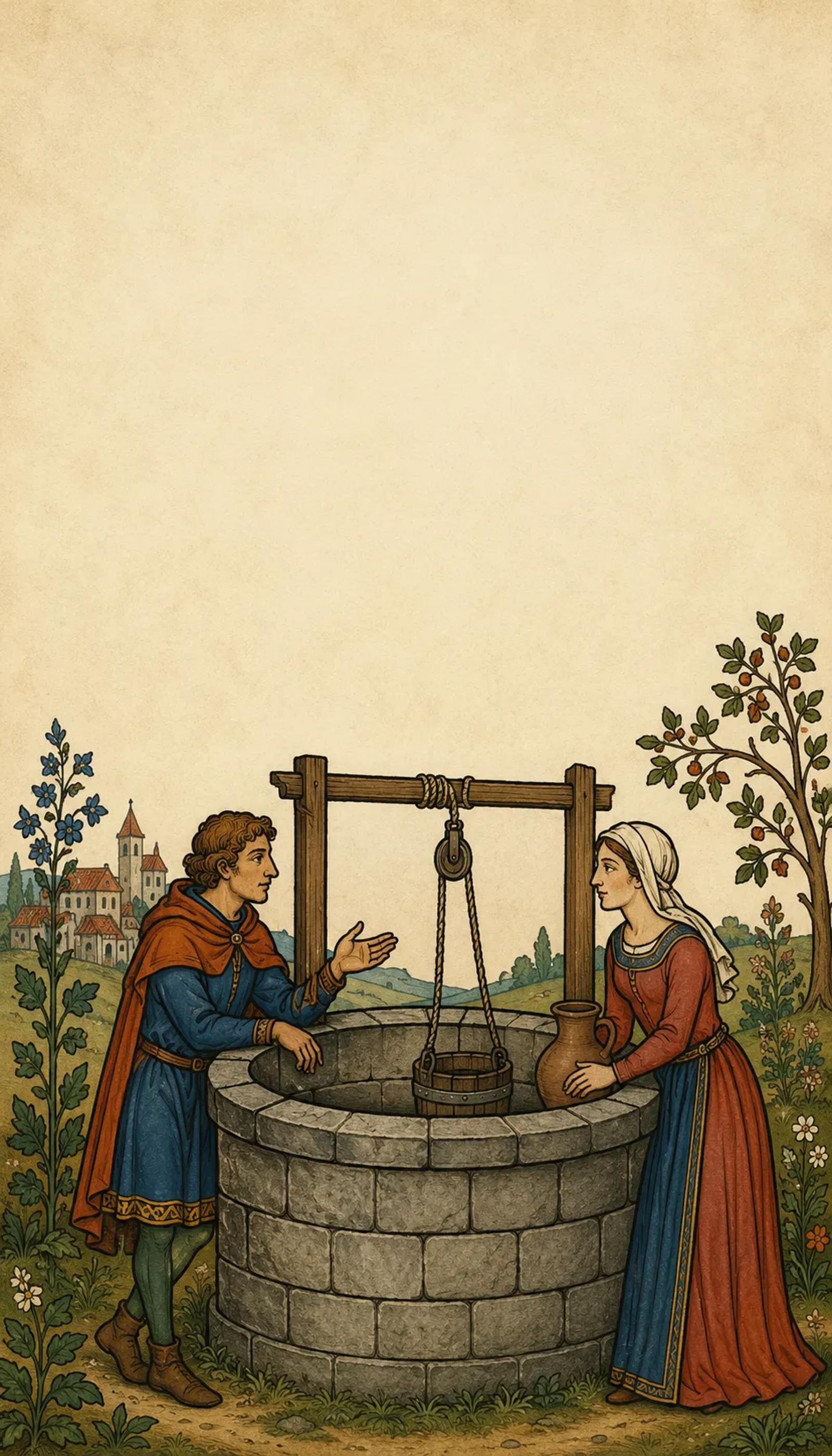
It's the middle of the day and blazing hot. is tired from walking and sits down by a well.
A woman comes to fetch water. That's odd, because no one fetches water in the hottest part of the day. She's probably coming at exactly that time because there's no one else around.
And then something happens that really isn't supposed to happen. He asks her for something. *Give me a drink.*
That sounds small, but it isn't. She belongs to the wrong people, she's alone, and really he should be pretending not to see her. Instead he asks her for help — because she has the bucket and he doesn't.
They get talking. It becomes the longest conversation of his recorded in the whole book. And afterwards she goes and tells the entire town.
For today
Does this sound familiar?
There's someone in your class you never talk to. Not because you have anything against him. It just never happened, and by now it would feel strange to start.
If you want to be kind, you usually think of giving. You ask if he wants to join in. That's meant kindly, but it also says: I'm inside, you're outside, and I'm letting you in.
There's something that works better, and it's even easier. Ask him something. Whether you can borrow his eraser. Whether he knows how to beat that one level.
Asking for something turns the other person, for a moment, into the one who gets to help.

Start a conversation? Far too much effort. I'll just never look that way at all!
Take a look in the mirror:
- Who in your class have you actually never talked to? How come?
- What could you ask that person, instead of giving them something?
- When were you the one who got asked to join in? How did that feel?
Mirror line
I'd love to just never look, but I've learned you don't have to be mean to someone to still never really see him.
From 8
Who Dares Throw the First Stone?
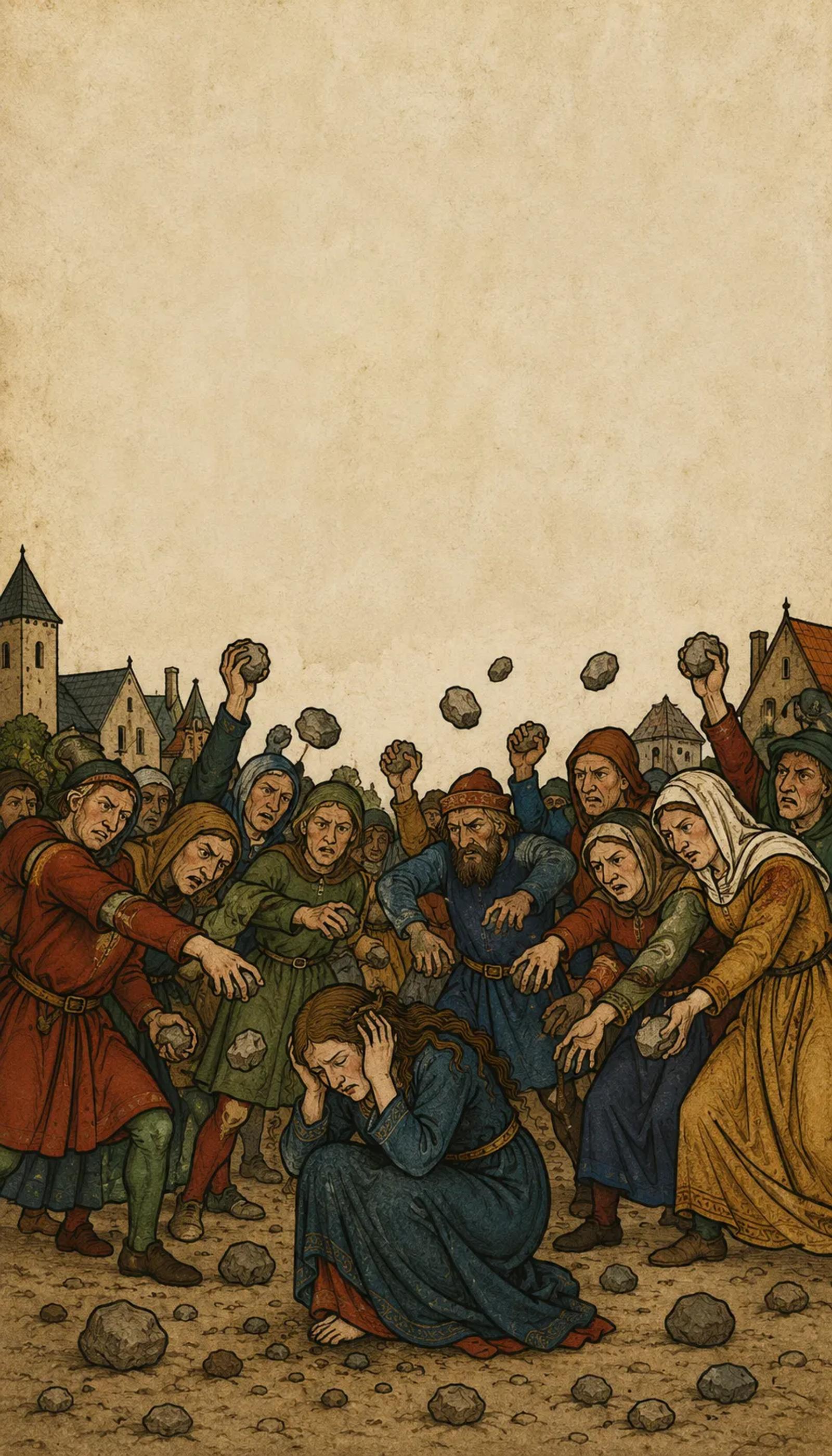
A large group of people comes along, pushing a woman ahead of them. She's done something forbidden, and by the rules of that time she can be stoned for it.
They put her in the middle of the circle. Everyone can see her. And then they ask : so, what do you think?
He says nothing. He bends down and writes something in the sand with his finger. What he wrote isn't recorded. Nobody knows.
They keep pressing him. Then he stands up and says one sentence: whichever of you has never done anything wrong may throw the first stone.
And then he bends down again, and keeps writing.
It goes quiet. And one by one they walk away. The oldest ones first.
For today
Does this sound familiar?
Someone starts talking about a classmate on the playground. A second comment follows. Then a third, with a nasty joke on top. Within two minutes almost everyone's joined in.
You say something too. Not the worst thing — you're smarter, you say something funny. Everyone laughs. That feels good.
That night in bed you think about it again. On your own, without all that laughter around it, your little sentence suddenly sounds very different.
The strange thing about a group is that no one feels responsible. Everyone thinks: I only did a small bit. Added up, it wasn't a small bit at all.
Can't quite manage a throw? Just say so. Hand over the biggest stone you've got!
Take a look in the mirror:
- What was the last thing you passed on about someone, when you could just as easily have kept it to yourself?
- What does someone know about you that you'd rather not have repeated all over the playground?
- Who could stop you when things go too far? And who could you stop?
Mirror line
I'd love to say I only said that one joke, but I've learned a group never makes you feel responsible — even when you were.
From 26 and 22
The Night Everyone Ran
knows something terrible is about to happen. At the last meal with his friends, he says it out loud: soon all of you will leave me alone.
nearly gets angry. *Not me. Never.*
Later that evening Jesus sits in a garden and he's afraid. Really afraid. He asks his three closest friends to stay awake with him. When he comes back, they're asleep. He wakes them. When he comes back again, they're asleep again.
Then the soldiers arrive. And then they all run away.
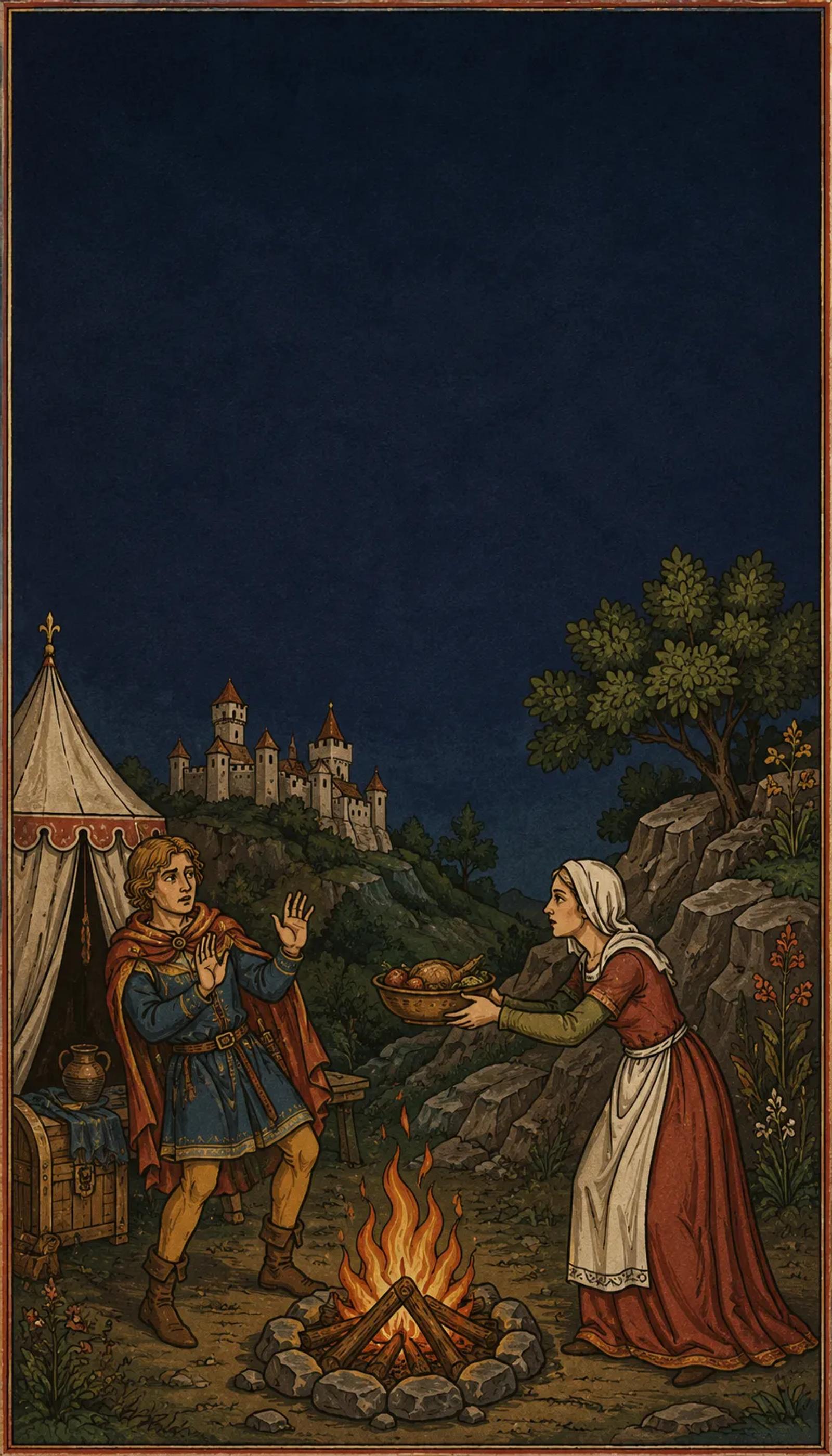
Only Peter follows at a distance, all the way to a courtyard where a fire is burning. Someone looks at him and says: weren't you with him? *No.* A little later, again. *I don't know that man.* And a third time. *I don't know what you're talking about.*
Then a rooster crows. Peter gets up, walks outside, and cries.
What happens next is the worst part. Jesus is killed. His friends aren't there; a few women stand watching from a distance. He's laid in a tomb and a stone is rolled in front of it.
And on the third day, that tomb is empty.
For today
Does this sound familiar?
You have a friend from way back. You must have played together a thousand times. But at school he doesn't belong to the group you're part of now.
And then suddenly he's standing next to you on the playground, where everyone can see. Someone asks, laughing: is that a friend of yours? And you shrug and say: not really.
You haven't lied, you tell yourself. You've just made it a bit smaller. But he heard it, and you know he heard it, and it sits in your stomach for the rest of the day.
did it three times in one evening. And he was truly the best friend there was.
Admit I actually hang out with him? I'll pass. Then they'd all know I'm a loser too!
Take a look in the mirror:
- When did you make a friendship smaller because other people were around?
- When did someone need you and you fell asleep, or looked the other way for a moment?
- Who would stand by you if things really went wrong? Do they know that about you?
Mirror line
I'd love to say he wasn't really my friend, but I've learned I usually only say that when I'm scared myself — and that's a very ordinary reason.