From 22
Don't Hold On Too Tight
has waited a very long time for a son. Now that is finally here, he means everything to him.
And then asks him the hardest thing there is. He must give up his son.
Abraham says nothing back. He gets up early the next morning, saddles his donkey, and sets off. They walk together for three days. Along the way Isaac asks him something, and Abraham gives an answer that isn't really an answer.
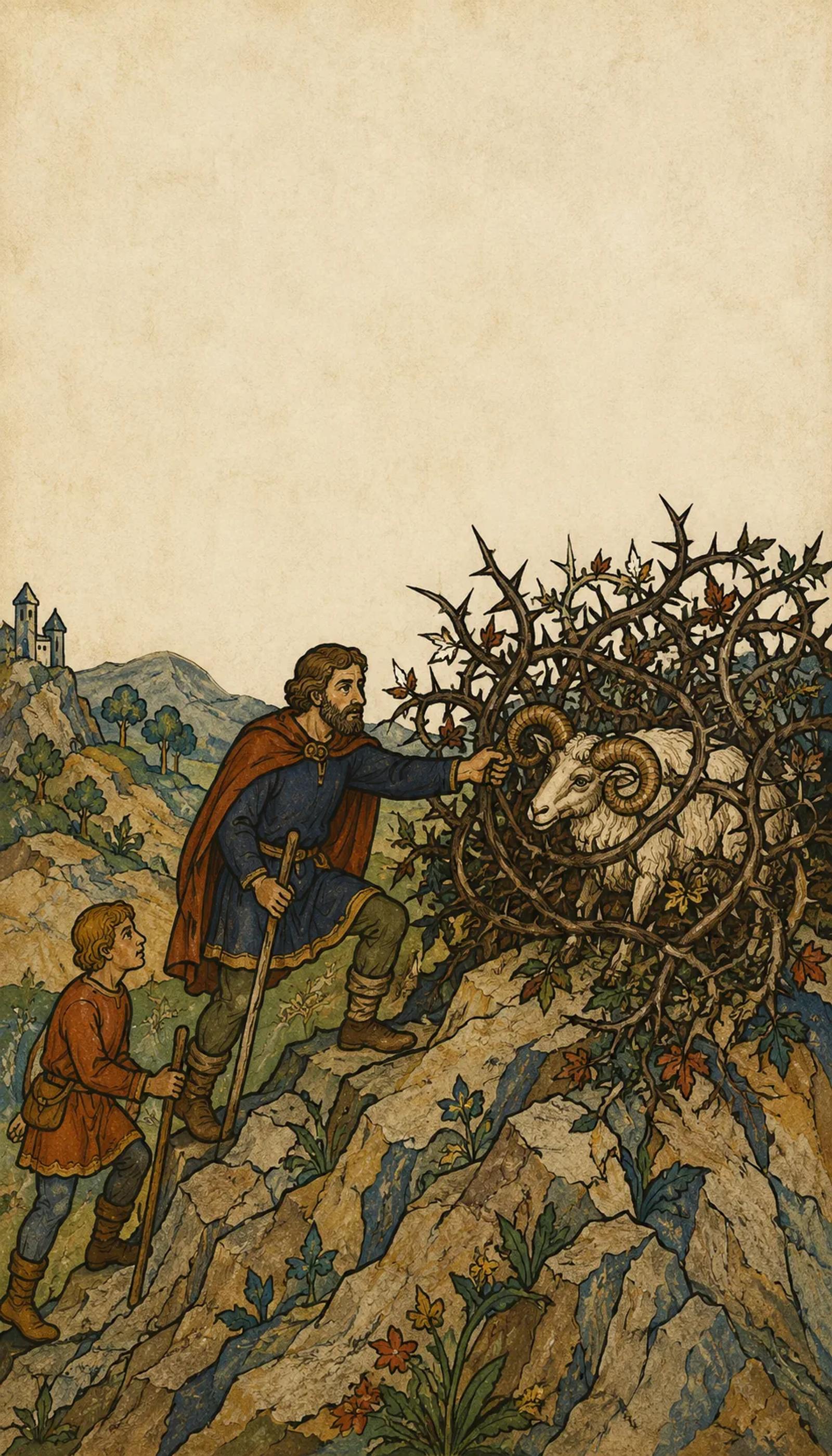
On the mountain, at the very last moment, an angel calls out to him. Stop. Don't touch him.
There's a ram caught in the bushes.
They walk back down together. But nowhere does it say whether they said anything more to each other along the way.
For today
Does this sound familiar?
There's something you really love. A friendship, say. And precisely because you want so badly to keep it, you start acting strange.
You get angry when he plays with someone else for once. You ask for the tenth time whether you're still best friends. You watch who he looks at during break.
And then the strange thing happens: by holding on so tightly, you push him away.
Things work differently than people. The tighter you hold onto a person, the less you have left.

Share him? Absolutely not. I'll hold on so tight no one else gets anywhere near him!
Take a look in the mirror:
- Have you ever held on to someone so tightly that it got uncomfortable?
- How does it feel when someone gives you no room at all?
- What do you think of this story? It's fine to just find it a sad one.
Mirror line
I'd love to keep him all to myself, but I've learned the tighter you hold onto a person, the less you have left.
From 28
The Remarkable Stone
Jacob is on the run from his brother. He tricked him, and now he has to leave.
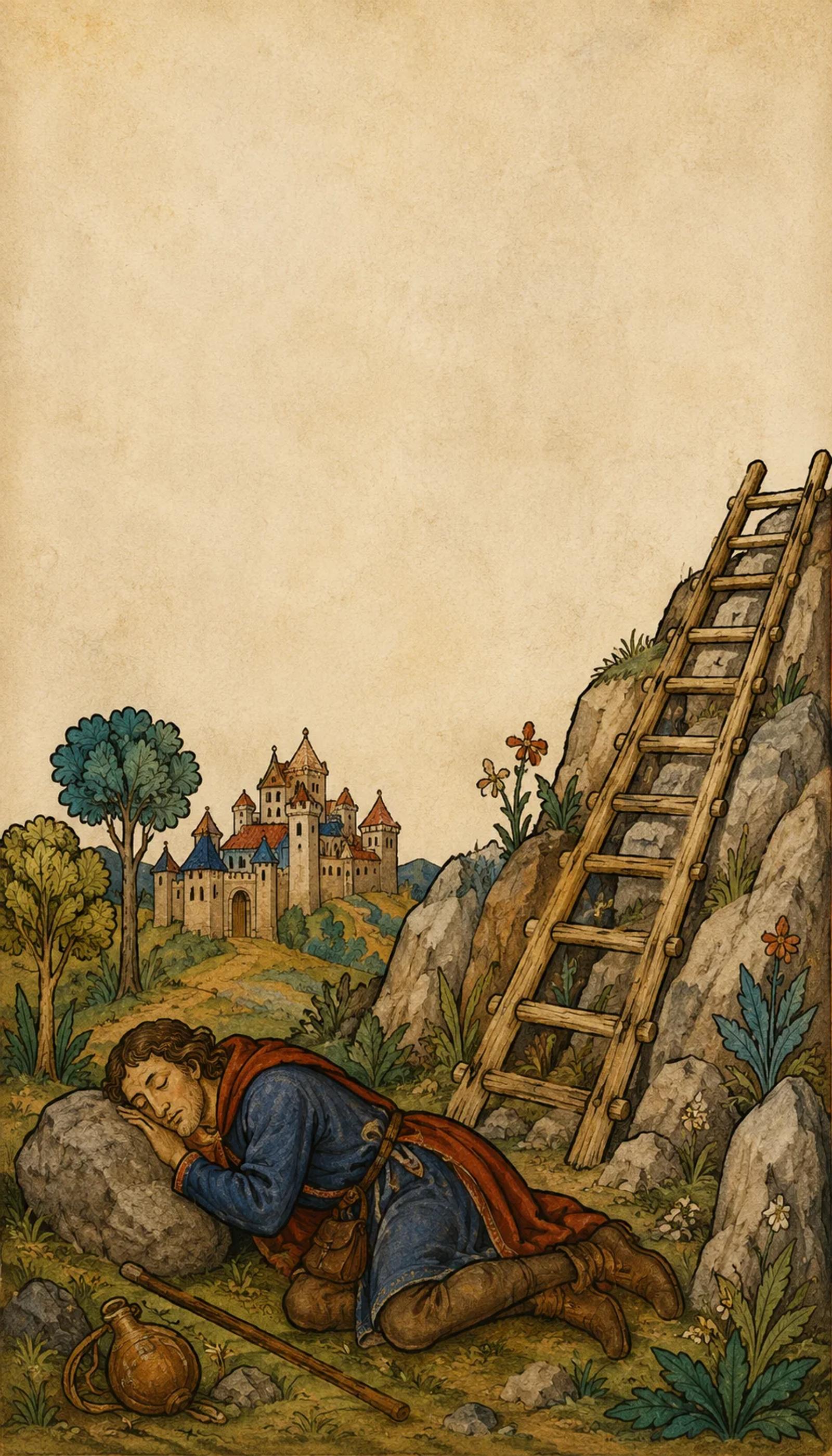
Night falls and there's nothing around. No village, no house, no one. He lies down in the sand and rests his head on a stone.
And there, on that stone, in the worst bed of his life, he dreams. He sees a staircase reaching from the ground all the way to heaven, with angels going up and down.
When he wakes up, he looks around at the same empty sand as the evening before.
He says: was here, and I didn't know it.
Then he sets that stone upright, gives the place a name — , house of God — and walks on. Later himself gets a new name too: Israel.
For today
Does this sound familiar?
You cycle down the same street every day. You know every paving stone and there's nothing to it.
Until one morning you stop at a spiderweb covered in dew drops, glinting in the sun.
That street was exactly the same yesterday. And the day before. You just weren't looking.
The strange thing is that moments like this usually don't come on the days you feel like having them. They come when you're tired, or late, or grumpy.
Pay attention? Why bother. Nothing special ever happens in a boring place like this!
Take a look in the mirror:
- When did you see something completely ordinary that suddenly looked beautiful?
- What's the most boring place you know? What might you see there if you stood still for a minute?
- What's your stone — a place where something happened that you never forgot?
Mirror line
I'd love to act like I saw nothing special, but I've learned the most ordinary places are sometimes exactly where something important happens.
From 37
The Dream Coat in the Well
has twelve sons, and is his favourite. He doesn't hide it. He gives him a beautiful coat, while the others get nothing.
Joseph wears it every day.
And then he starts telling his dreams too. I dreamed about , he says, and yours were bowing down to mine. A little later he has another one: the sun and the moon and eleven stars were bowing down to me.
He just tells it. He doesn't see what it's doing.
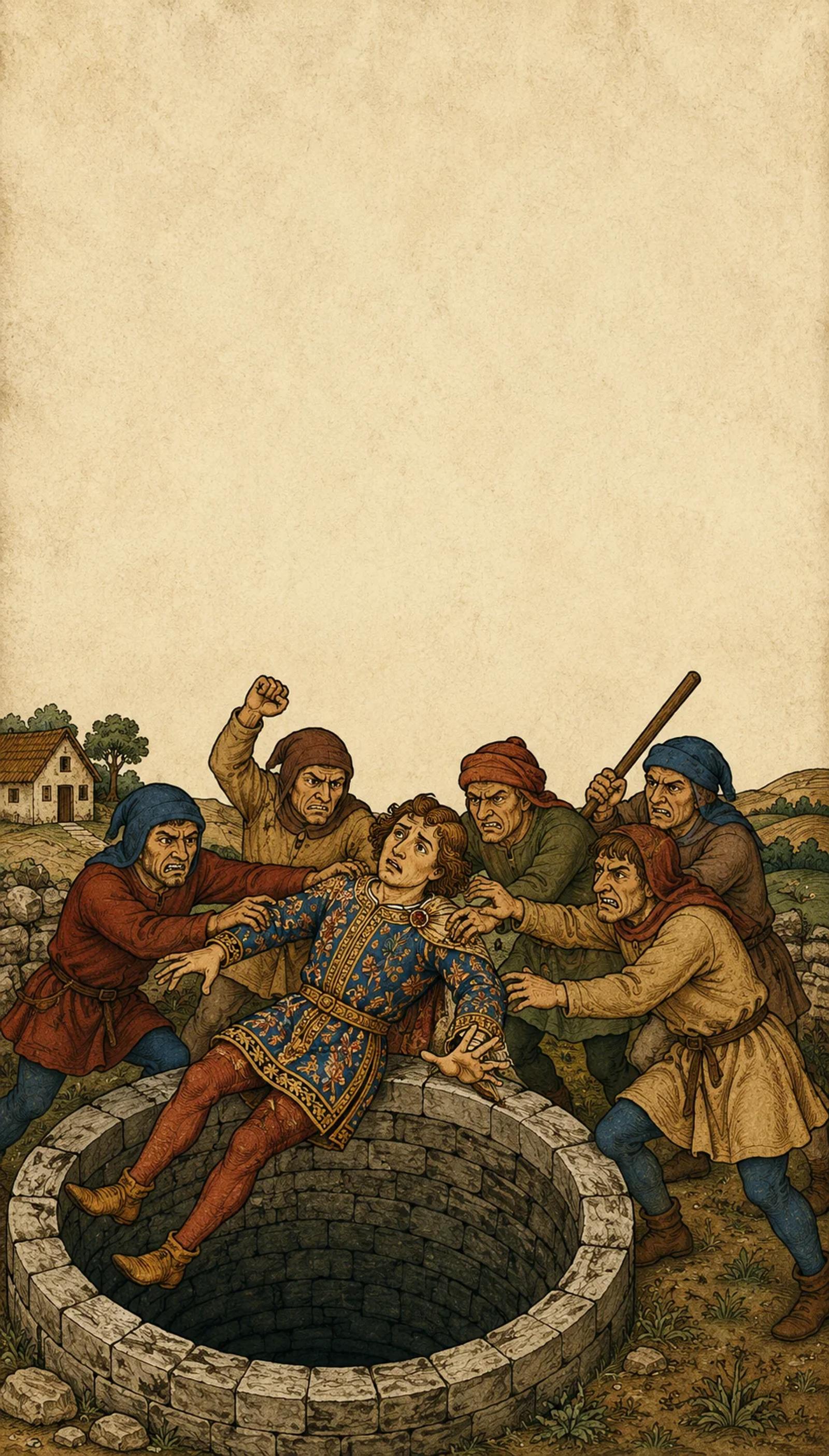
His brothers can't stand him anymore. When he comes out to the field one day, they throw him into a well. A little later they pull him out and sell him to a passing .
They take his coat home. They tell their father that Joseph is dead.
For today
Does this sound familiar?
You get a great mark on a test you barely studied for. You tell everyone right away. And again. And then again, to someone who'd already heard.
Next to you sits someone who studied for three whole evenings and still failed.
You haven't done anything wrong. You're just happy.
But there's a difference between being happy and telling everyone over and over. And you almost never notice that difference when you're the one on the good side.
Say sorry? Please. I'm just tossing him down the nearest well!
Take a look in the mirror:
- When did you have good news while someone next to you was having bad luck? What did you do?
- What comes easier to you than to others? Do you even realise it?
- Who might be jealous of you sometimes? Are you sure?
Mirror line
I'd love to say I did nothing wrong, but I've learned being happy with yourself and constantly making sure everyone else knows it are two very different things.