
My story
This is what happened, and this is how I dealt with it:
I mostly felt…
Stories thousands of years old, about who you are today
About this book
About being jealous of someone who did better. About walking on when you could have stopped. About saying someone isn't really your friend, because other people are watching.
Ancient stories. First the old story, then — on the next screen — your own life: the playground, the classroom, the back seat.On the left is the old story, on the right is your own life: the playground, the classroom, the back seat. And underneath, a few questions with no right answer. Sometimes there's also a place to write something about it yourself — not to solve it, but just to get it out.
This isn't a book that tells you what to think. There's no lesson at the end. What you believe is entirely yours to figure out — you've got your whole life for that.
From about age six to read together. From about age ten to read alone, and tell no one what you answered.
With love
With love
This book was made especially for you. Because it matters so much to me that you can carry the age-old, wise lessons from these stories into your own lives, even without those lessons having to come attached to any one religion.
I want to give you a solid foundation for the future. A foundation of self-acceptance and trust, of patience and empathy — not only for the people around you, but above all for yourself.
You're completely free to believe or not believe later on, as long as you keep looking at the world and at yourself with an open and gentle eye.
And I hope this mirror, besides the three of you, may also help many other children find their own way.
Love,
Dad
Foreword
Maybe you're thinking: what use do I have for stories thousands of years old? Stories about men in long robes, vast deserts, camels and wooden boats?
But if you read closely, those people from long ago look exactly like you and me. They were sometimes scared in the dark, grew jealous of someone else, wanted to be in charge, or simply didn't know what to do.
Stories from the Bible might look like old fairy tales. But I like to think of them as mirrors instead. A mirror doesn't judge and doesn't give advice — it only shows you what's there.
How does this book work?
Every chapter has two screens. First you read an old story, and discover what's really going on in it.
Swipe to the next screen, and we bring the story into your own life. Into the playground, the classroom, the back seat.
Every chapter has two sides. On the left you read an old story, and discover what's really going on in it.
On the right, we bring it into your own life. Into the playground, the classroom, the back seat.
And at the bottom are a few questions. There's no right answer. And there's no one who needs to hear yours.
Every story also comes with a line from the jester. Don't pay him any mind — he's a bit nasty, and hasn't learned a single one of this book's lessons.
In the menu you'll also find "My Story": your own place to write, kept only on your own device.
Grab the mirror. What do you see when you look into it?
A note on the stories
You're bound to wonder that along the way. There's a boat in this book big enough for every animal on earth. A bush that burns and never burns up. A fish that swallows a man and spits him back out three days later. And near the end, a tomb that turns out to be empty one morning.
I'm not going to tell you what to make of it.
Some people believe it happened exactly as written. Other people read it as an image: a way of telling something ordinary words fall short of. People have been discussing this for thousands of years, very clever and very kind people on both sides. They've never settled it.
A note on the stories
You'll notice that simply takes part in these stories. He talks, he asks things, he gets angry and he changes his mind. That's just how it's written, and that's how I'm passing it on.
That doesn't mean I'm saying that's how it is. It means I'm not going to rebuild the story.
What's true in it is yours to figure out. You may take your whole life over it.
In practice
Some people are quiet for a moment every morning before the day begins. Who say something at the table before they start eating. Who look back on their day in the evening. And who keep one day a week free to think about what really matters.
This book doesn't require any of that. But there is something in it that works.
If you read this book in one go, it's a nice book. If you read a story every now and then, it becomes something else.
Choose for yourself
On a fixed evening. Sunday, for instance, when the week has just ended and the new one hasn't started yet. One chapter. No more.
At the table. Not the whole chapter — just one question, out loud. And everyone answers. The grown-ups too. Especially the grown-ups.
Right before you fall asleep. No chapter. Just one question: what did you almost not notice today? Sometimes it's something small that was beautiful. Sometimes it's someone who did something for you without you realising. Sometimes it's nothing. And then it's nothing.
Or precisely not at a fixed moment. When something has happened. You were jealous. You walked on when you could have stopped. Then go and find the chapter that's about that.
You're allowed to read the same chapter again a year from now. Your answer will probably be different. That's fine. That's exactly what a mirror is for.
Stories
Ancient stories, translated into everything you're living through today.
This book isn't finished yet. Not every story from the Bible is here, and new ones are added regularly. Has a new story been added? You'll see it automatically the next time you open the app.
The stories
Above are the different themes from the stories. Tap a theme to read what it's about and see which stories belong to it.
These are the stories you've marked as favorites.
Stories about slowing down and noticing something you'd normally overlook.
Stories about dreading something, facing something new and scary, or feeling small.
Stories about being jealous of someone else, or about siblings who don't get the same things.
Stories about arguing, hitting back, and why rules can help with that.
Stories about holding onto something — or someone — too tightly.
A story about something bad happening to you, without an easy answer.
Stories about being bullied, left out, going along with a group — or standing up for someone.
Stories about temptation, cheating, and saying what you really think — even when that's hard.
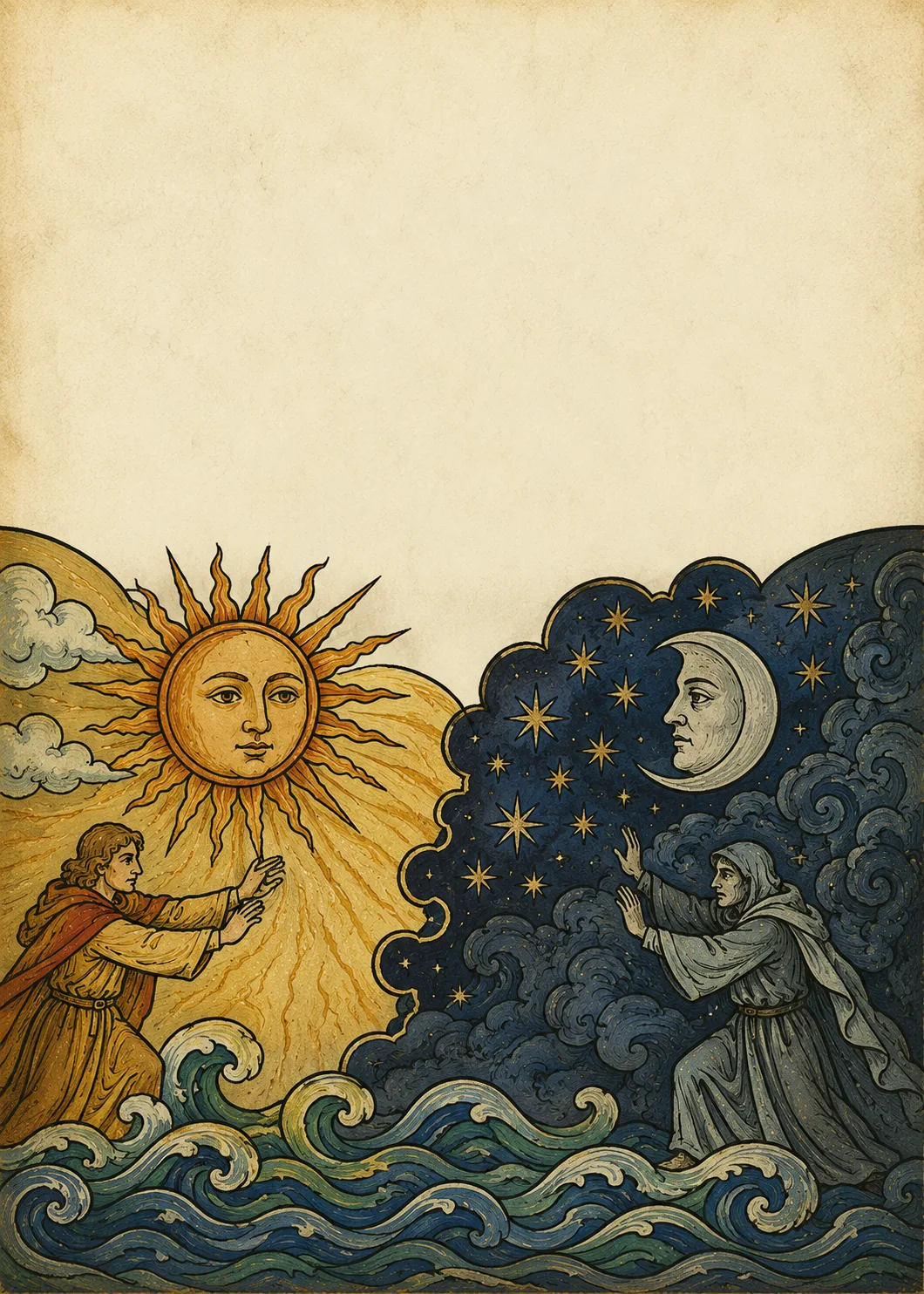
From 1
Imagine there's nothing. No ground, no sky. Just a dark, churning soup of water and wind. It's cold, pitch black, and one big mess.
Then says: let there be light. And there is light.
But light alone isn't enough. So the tidying begins. God draws lines. To the water he says: you go down there. What's above, we'll call sky.
Every day the world takes a little more shape. Plants push up, whales start swimming, everything crawls into its own corner. Everything gets its own place.
And on the seventh day, when the biggest project ever is finished, God sits down. Looks at what's there. And rests.
To now
Your room. Lego all over the floor, markers underneath, clothes in a pile, books half off your bed. And when it's time to sleep you can't, because your head feels just as messy as your floor.
Or a week. Monday school and football, Tuesday swimming lessons, Wednesday a party, and by Thursday you're wiped out. That's the churning soup.
You can't tidy everything at once. But you can do one thing. Put your markers away. Or say you're not coming on Wednesday. One line is often enough to breathe again.

Tidy up? Not a chance. I'm sweeping it all under the rug — no one's ever going to notice!
Mirror line
I'd love to just shove everything under my bed and leave it a mess, but I've learned you don't fix chaos all at once — you just start with one line.
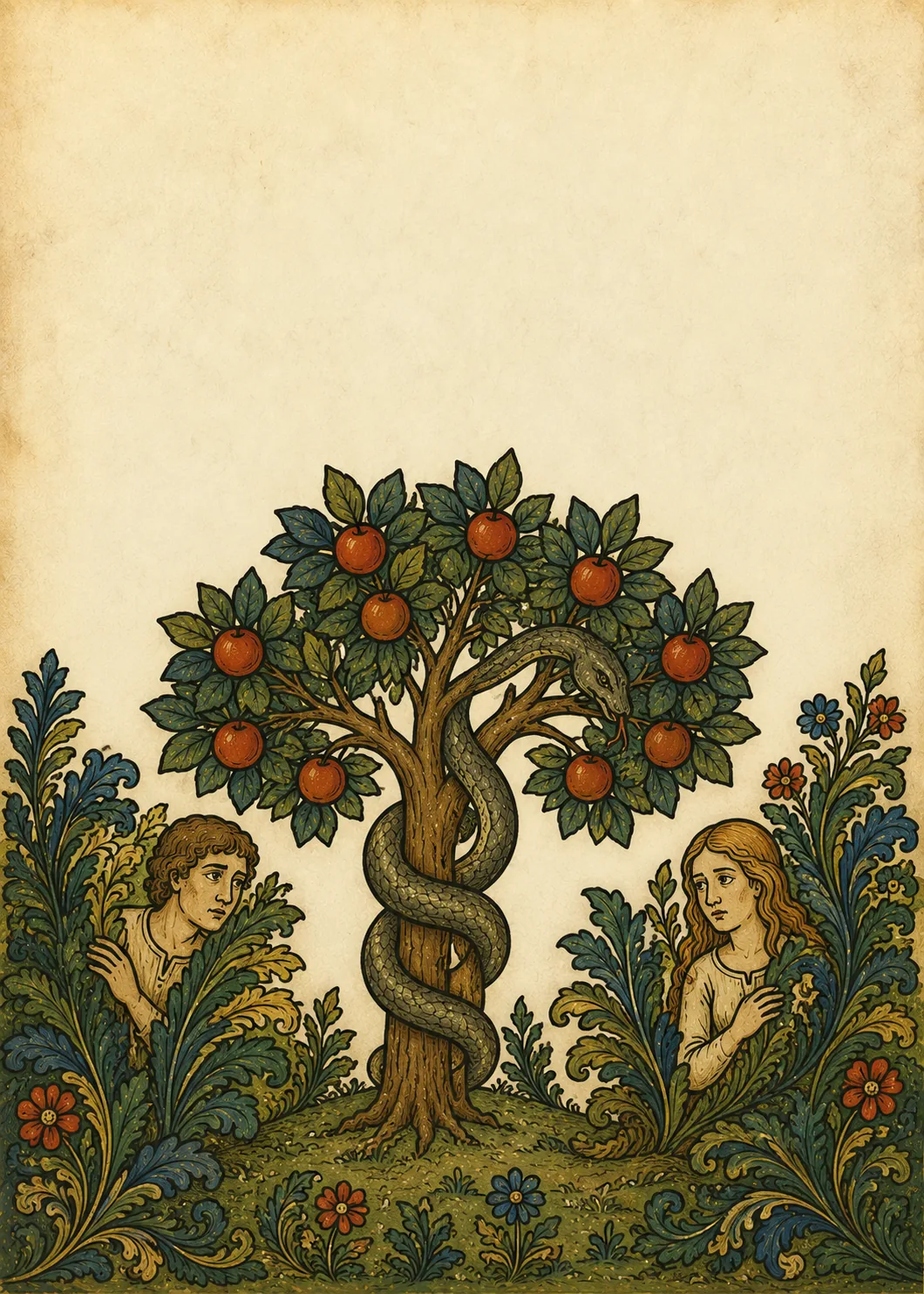
From 3
and live in a garden where everything is good. has given them one rule: stay away from that one tree.
And of course. Whenever something's forbidden.
There's a snake that whispers: just take a bite. Then you'll finally know how things really are.
They take a bite. And instantly everything is different.
Their eyes open. They no longer see the world as a place where everything works out by itself. They understand what danger is. They look at themselves and think: we have nothing to wear.
For the first time they feel ashamed. They hide in the bushes and hope no one sees them.
The time when they thought about nothing is over. And it doesn't come back.
To now
You accidentally overhear something that wasn't meant for you. Grown-ups arguing in the kitchen while they think you're asleep. Or something on the news that you're still thinking about that night.
You never used to think about that. Now you do. And you can't go back to how it was.
Or this. You say something mean and you watch the other person's face change. In that moment you know exactly what you've done. It makes you go hot, and you want to disappear.
Say sorry? I'll pass. I'll just point at whoever's standing closest!
Mirror line
I'd love to pretend I hadn't heard it, but I've learned you can't go back to not-knowing, however much you'd sometimes like to.
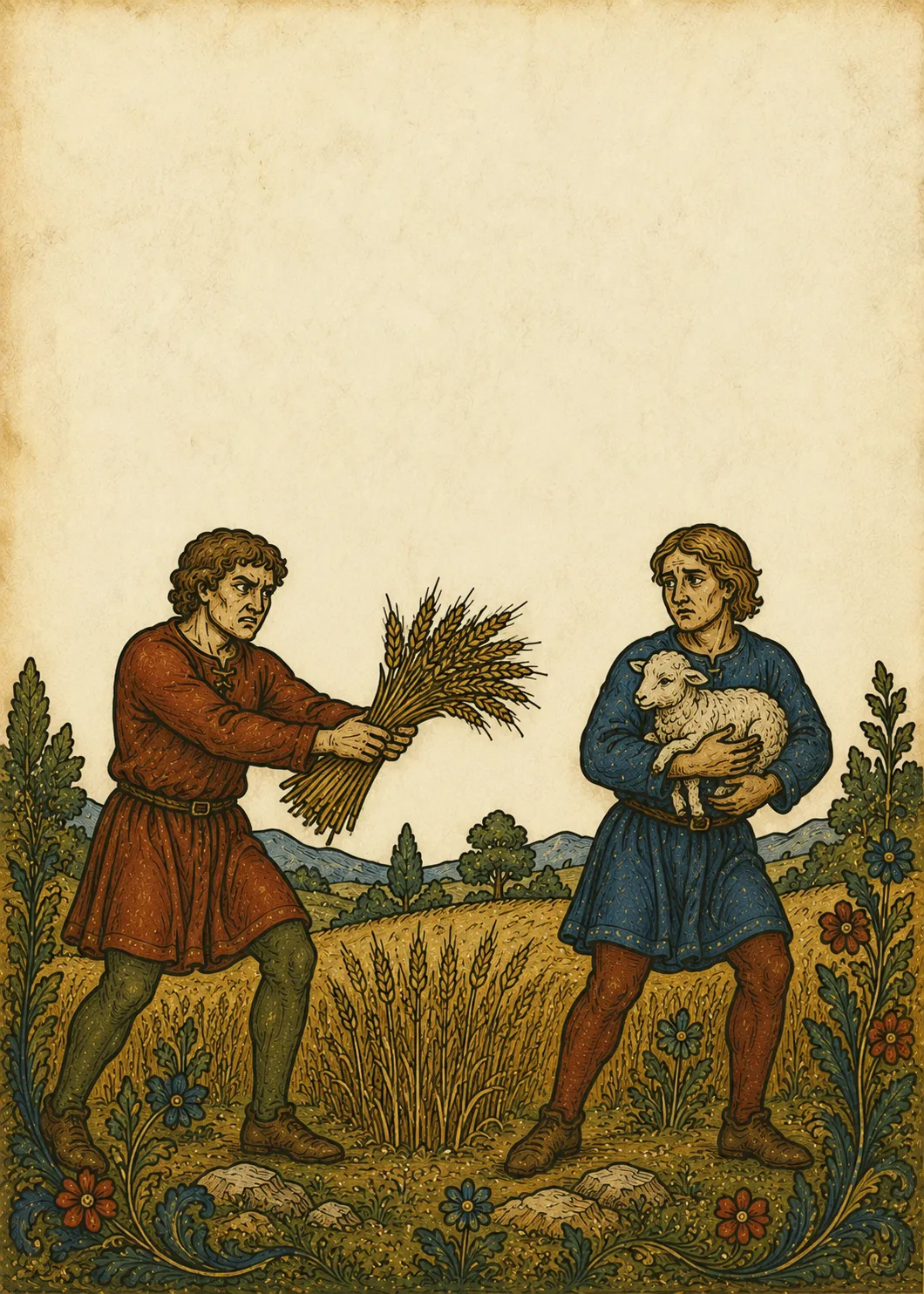
From 4
and are brothers. They both bring a gift. Cain brings grain from his land, Abel brings his best sheep.
And then something painful happens. is pleased with Abel's gift. Not with Cain's.
Cain becomes furious. Not right away — it starts with a face like a coming storm. God tells him: watch out, this feeling is crouching at your door like an animal. You can master it.
But he doesn't listen.
He asks his brother to go out into the field with him. And there he kills him.
When God later asks where Abel is, Cain says: how should I know? Am I supposed to watch my brother?
It's the first story in the Bible about two people having a conflict. It ends as badly as it possibly could, right away.
To now
You've practiced your lines for the school play for weeks. You know every word. And who gets the lead? That girl who only showed up to audition yesterday. She gets all the compliments.
You tell a friend: she's not even that good, honestly.
That's the green monster. You're hoping to feel a little bigger by making her smaller.
It doesn't work, by the way. Usually it just makes you feel worse.
Be happy for her? Hard pass. I'll just say she didn't deserve it anyway!
Mirror line
I'd love to say she wasn't even that good, but I've learned jealousy is usually just grief wearing a disguise.
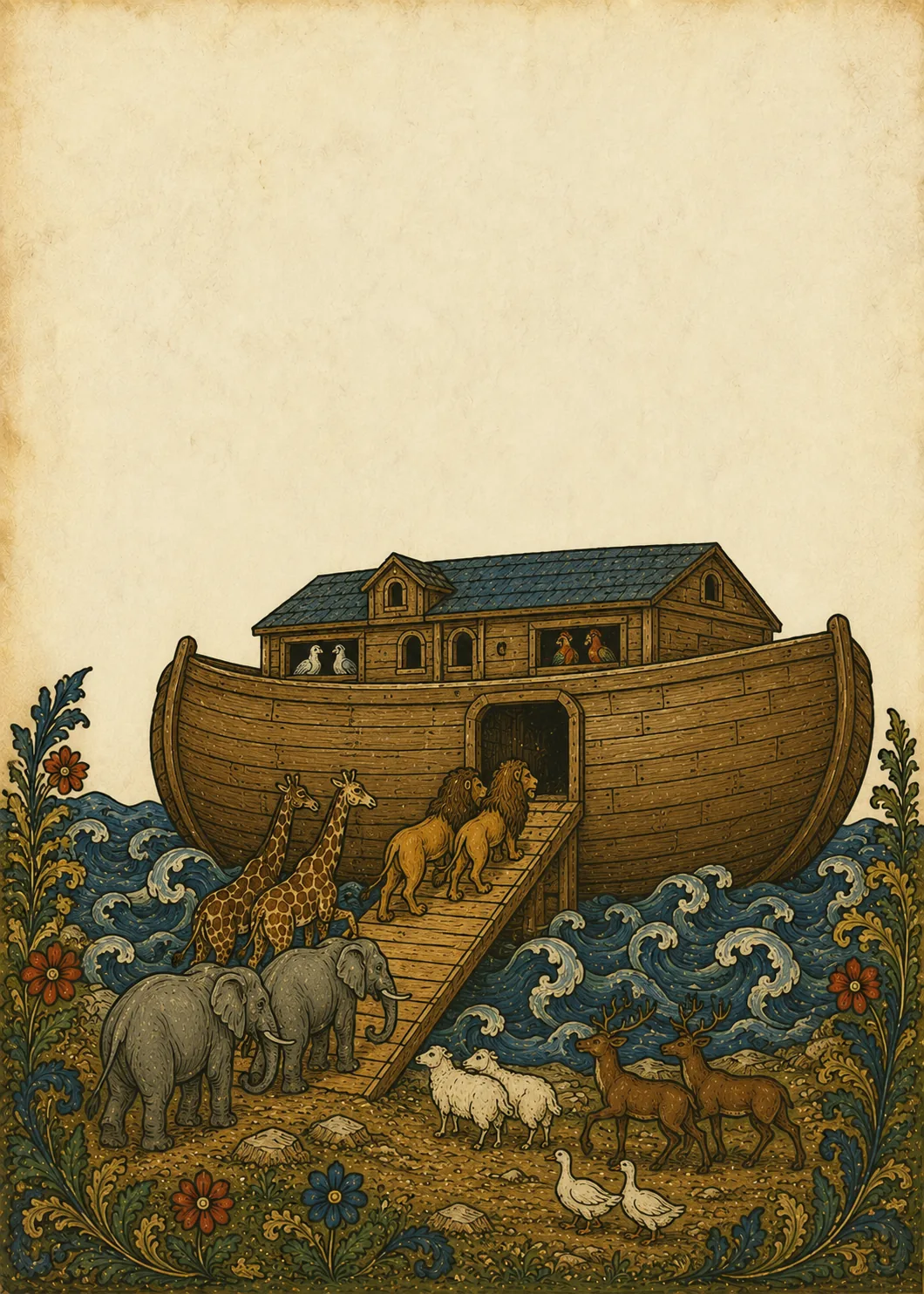
From 6
The world has filled up with fighting and noise. It's one big mess, and decides to start over.
He gives the job of building an enormous boat. Right in the middle of dry land. Everyone's doubled over laughing: a ship on land, how do you even come up with that.
Noah keeps building. For years.
When it's finished, he goes inside with his family and a pair of every kind of animal. The door closes.
And then it starts to rain. The water rises and rises, and outside everything gets swept away. Inside, between the wooden walls, it's quiet.
Forty days. And then a very long wait until there's dry land again.
To now
There's unrest in your class. Fights on the playground, nasty comments at break, everyone's angry at everyone and no one remembers how it started. It wears you right out.
You're not going to change the whole class. You can't, and it's not your job either.
What you can do: not join in. And find two people who are calm, to do something that has nothing to do with the mess.
That's your boat. It's not big. But it floats.
Bring everyone along? Forget it. I'm building my own boat and leaving the rest to swim!
Mirror line
I'd love to just leave everyone who's fighting behind, but I've learned you can't change the whole class — you can only build your own boat.
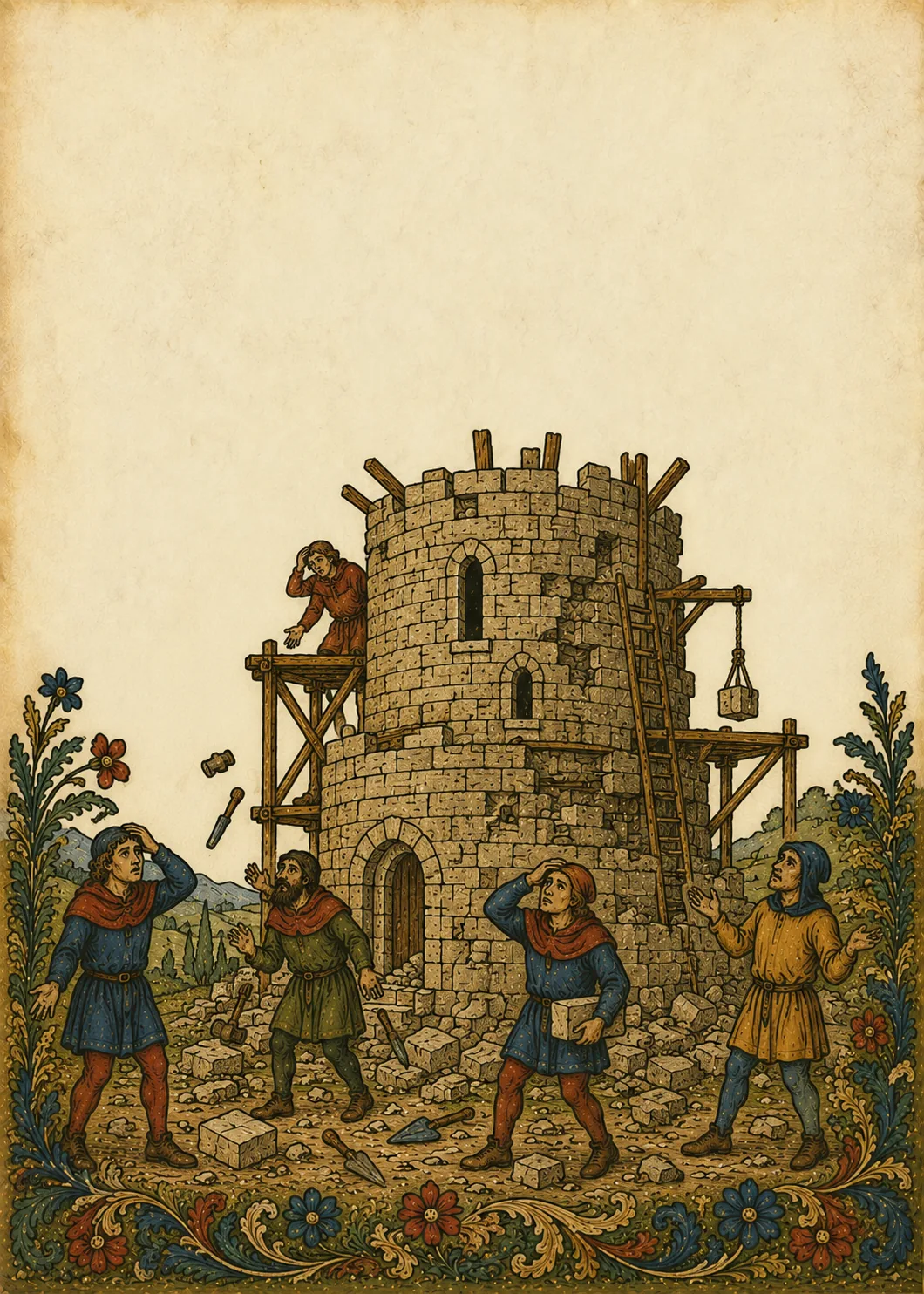
From 11
Everyone on earth speaks the same language. They understand each other without any trouble, and they can do anything together.
Then they get a big idea. Let's build a tower that reaches into the clouds. Then everyone will see how great we are.
The tower rises. Brick on brick on brick.
And the higher it gets, the less they listen to each other. Everyone is busy with the tower and no one with the person standing next to them.
Then scrambles their language. They stand next to each other and can't understand a word. The building stops and everyone scatters.
The tower was never finished.
To now
You're building a den in the garden with a couple of friends. At first it goes well. But the bigger the den gets, the more everyone wants their own way — one wants a roof of branches, another wants a blanket, a third thinks it should all be done differently. Everyone's shouting, nobody's listening.
You all speak the same language. And yet you don't understand each other.
The only thing that helps is going quiet for a second, walking up to someone, and just asking: shall we do this?
Listen to him? Never have, never will. I'm quietly hoping his whole tower comes crashing down!
Mirror line
I'd love to just keep shouting until everyone agreed with me, but I've learned you don't understand each other better by shouting louder — only by actually listening.
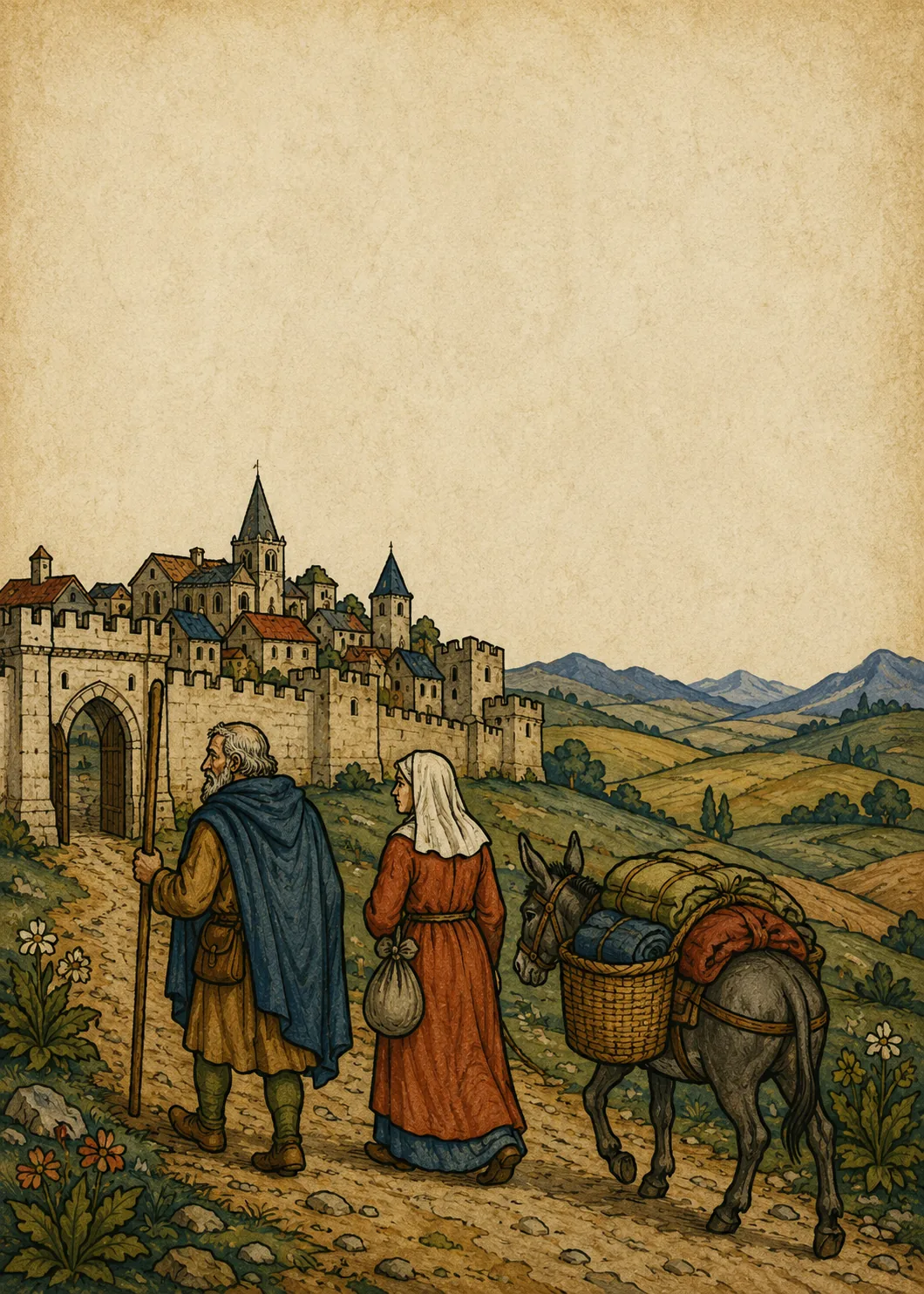
From 12
has a good life. A fixed place, family around him, everything familiar. And he's not young anymore.
Then says to him: leave this place. Go to a land I will show you.
No map. No address. No idea how long it takes or what it looks like once he's there. Only that it will be good.
He packs his things. He takes his wife, and his nephew, and everything he owns. And he walks out through the city gate.
What he's leaving behind is certain. What he's walking into is not.
(Later in the book he's called Abraham. It's the same man; he gets a new name along the way.)
To now
The night before your first day at a new school. Or your first practice at a club where you don't know anyone. Your stomach clenches and you want to stay under your blanket until it's over.
And then you go anyway. You cycle over, you park your bike, you walk in. That's the scariest bit: those twenty metres.
Three weeks later you cycle there without even thinking about it. And you can't quite remember what you were so afraid of.
Leave? I don't think so. I'm staying right here and pretending the outside world doesn't exist!
Mirror line
I'd love to say I just didn't feel like it, but I've learned the scariest part of something new is almost always only twenty metres long.
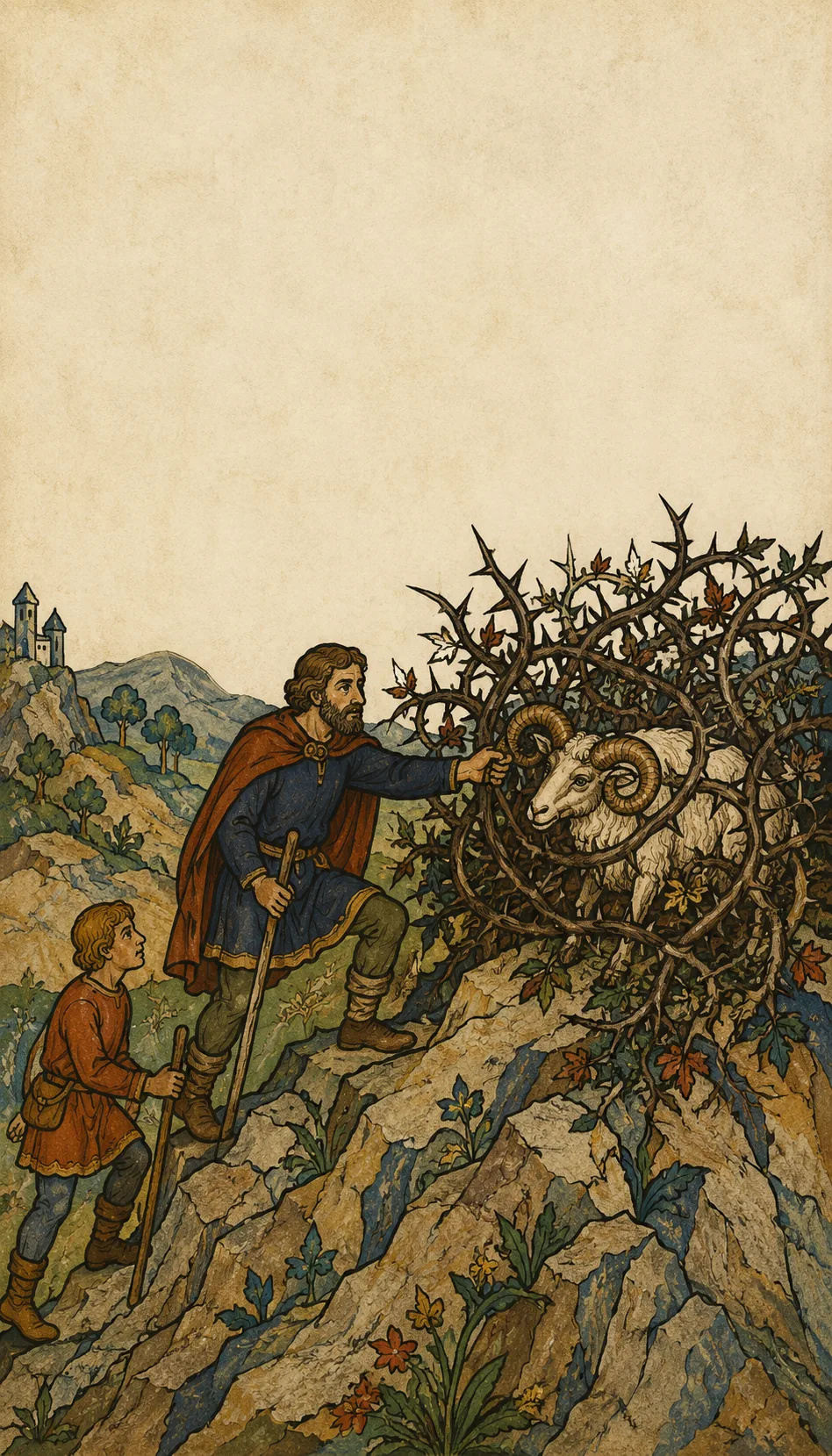
From 22
has waited a very long time for a son. Now that is finally here, he means everything to him.
And then asks him the hardest thing there is. He must give up his son.
Abraham says nothing back. He gets up early the next morning, saddles his donkey, and sets off. They walk together for three days. Along the way Isaac asks him something, and Abraham gives an answer that isn't really an answer.
On the mountain, at the very last moment, an angel calls out to him. Stop. Don't touch him.
There's a ram caught in the bushes.
They walk back down together. But nowhere does it say whether they said anything more to each other along the way.
To now
There's something you really love. A friendship, say. And precisely because you want so badly to keep it, you start acting strange.
You get angry when he plays with someone else for once. You ask for the tenth time whether you're still best friends. You watch who he looks at during break.
And then the strange thing happens: by holding on so tightly, you push him away.
Things work differently than people. The tighter you hold onto a person, the less you have left.
Share him? Absolutely not. I'll hold on so tight no one else gets anywhere near him!
Mirror line
I'd love to keep him all to myself, but I've learned the tighter you hold onto a person, the less you have left.
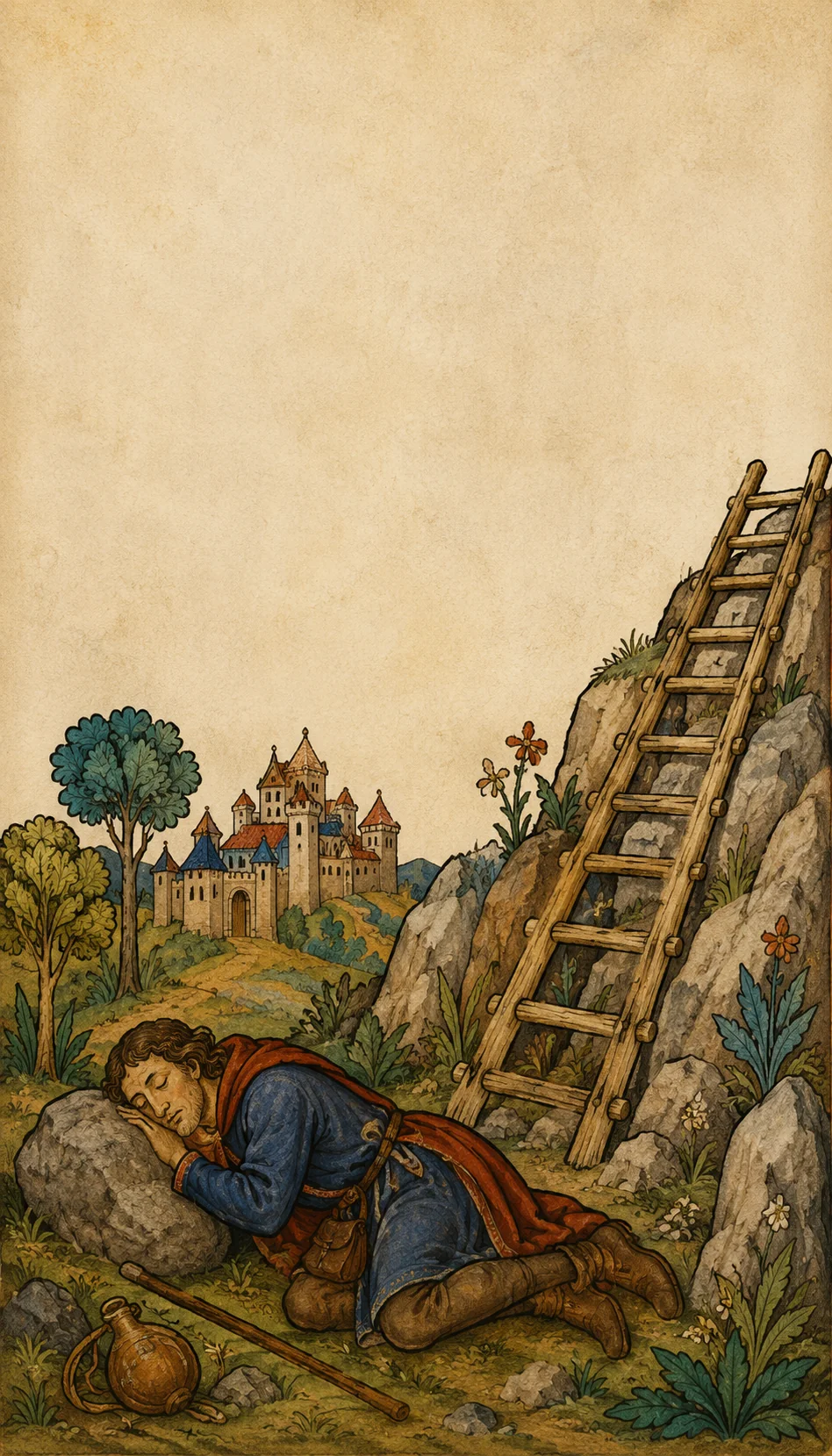
From 28
Jacob is on the run from his brother. He tricked him, and now he has to leave.
Night falls and there's nothing around. No village, no house, no one. He lies down in the sand and rests his head on a stone.
And there, on that stone, in the worst bed of his life, he dreams. He sees a staircase reaching from the ground all the way to heaven, with angels going up and down.
When he wakes up, he looks around at the same empty sand as the evening before.
He says: was here, and I didn't know it.
Then he sets that stone upright, gives the place a name — , house of God — and walks on. Later himself gets a new name too: Israel.
To now
You cycle down the same street every day. You know every paving stone and there's nothing to it.
Until one morning you stop at a spiderweb covered in dew drops, glinting in the sun.
That street was exactly the same yesterday. And the day before. You just weren't looking.
The strange thing is that moments like this usually don't come on the days you feel like having them. They come when you're tired, or late, or grumpy.
Pay attention? Why bother. Nothing special ever happens in a boring place like this!
Mirror line
I'd love to act like I saw nothing special, but I've learned the most ordinary places are sometimes exactly where something important happens.
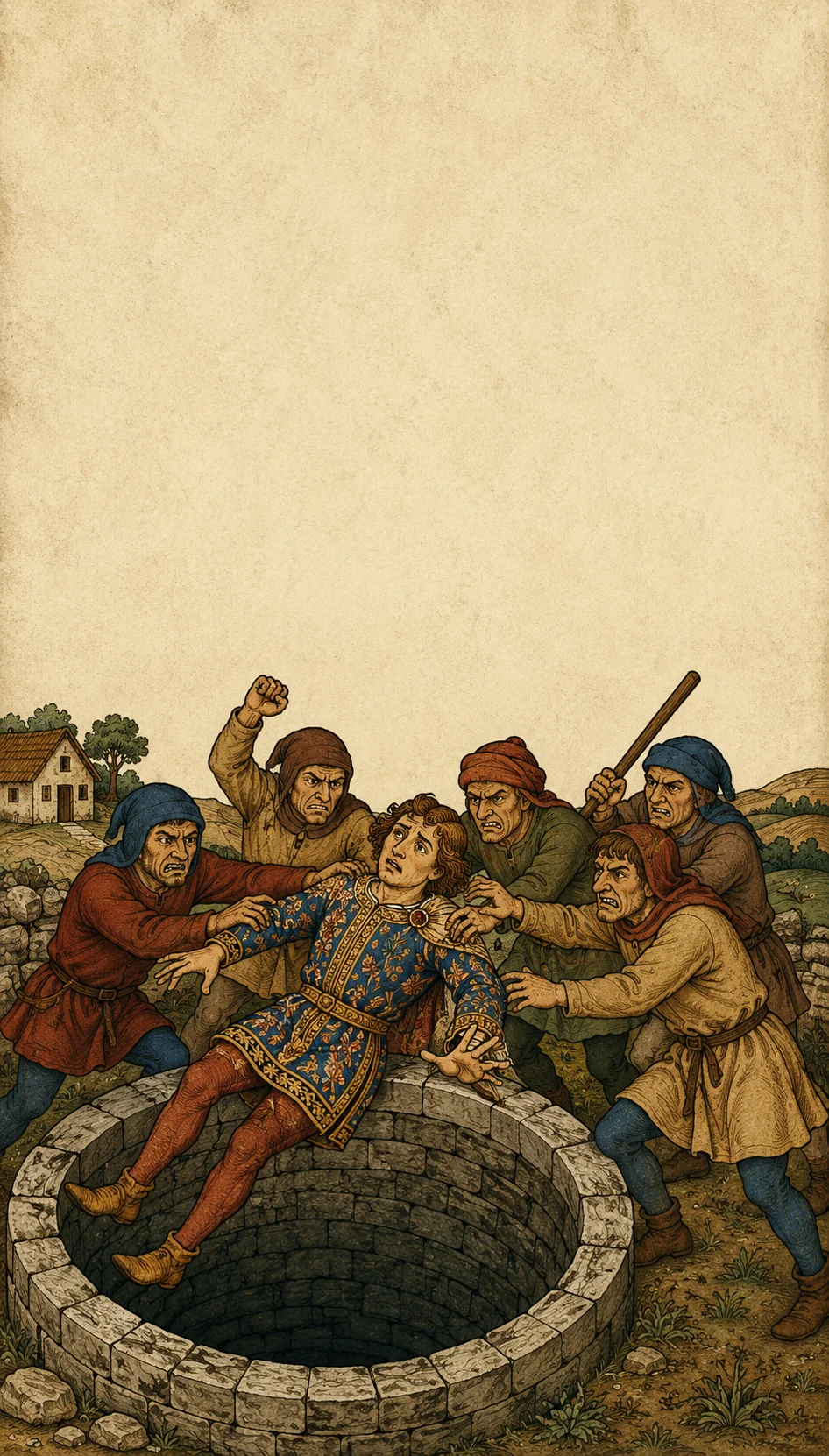
From 37
has twelve sons, and is his favourite. He doesn't hide it. He gives him a beautiful coat, while the others get nothing.
Joseph wears it every day.
And then he starts telling his dreams too. I dreamed about , he says, and yours were bowing down to mine. A little later he has another one: the sun and the moon and eleven stars were bowing down to me.
He just tells it. He doesn't see what it's doing.
His brothers can't stand him anymore. When he comes out to the field one day, they throw him into a well. A little later they pull him out and sell him to a passing .
They take his coat home. They tell their father that Joseph is dead.
To now
You get a great mark on a test you barely studied for. You tell everyone right away. And again. And then again, to someone who'd already heard.
Next to you sits someone who studied for three whole evenings and still failed.
You haven't done anything wrong. You're just happy.
But there's a difference between being happy and telling everyone over and over. And you almost never notice that difference when you're the one on the good side.
Say sorry? Please. I'm just tossing him down the nearest well!
Mirror line
I'd love to say I did nothing wrong, but I've learned being happy with yourself and constantly making sure everyone else knows it are two very different things.
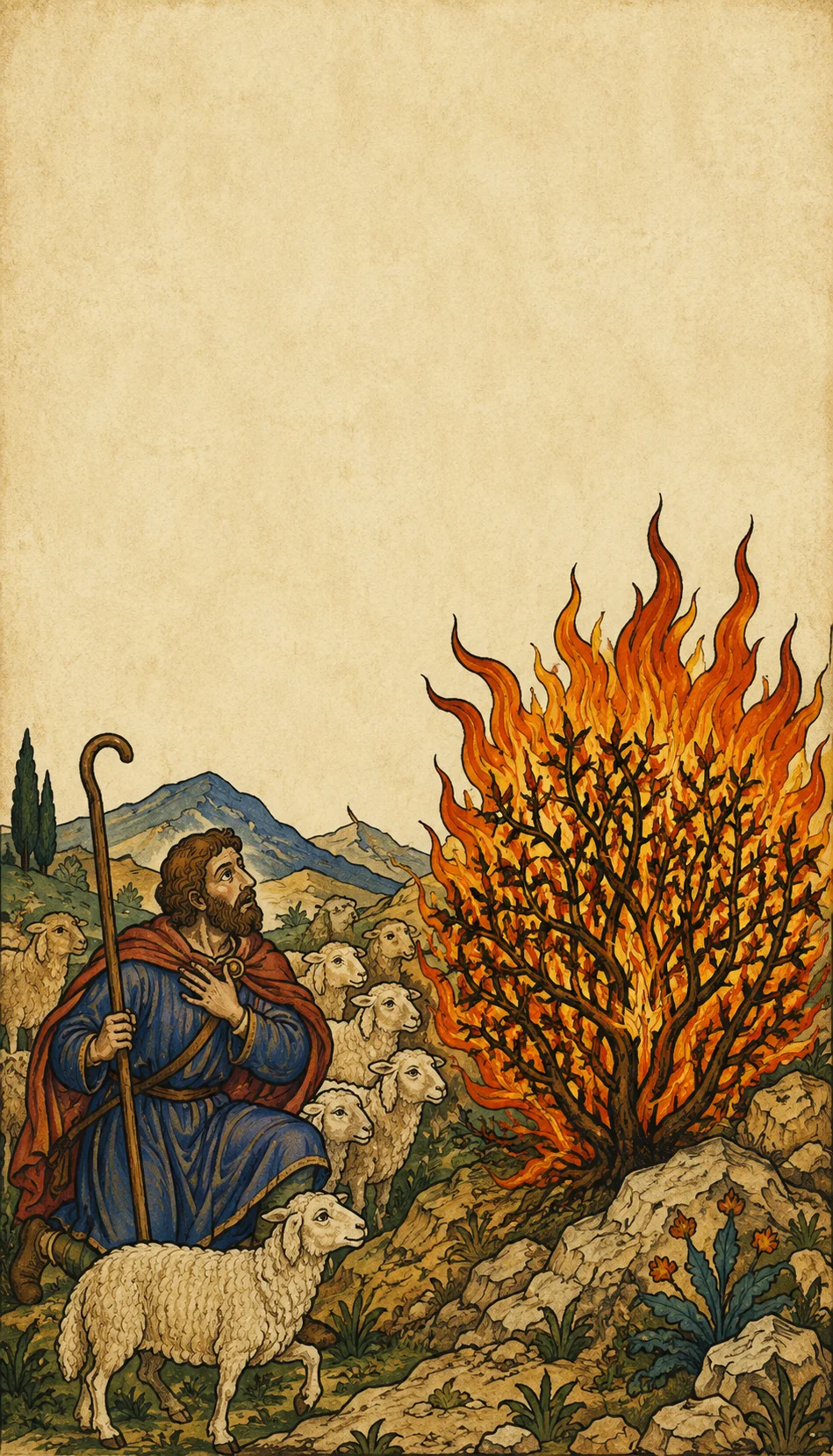
From 3
is tending his father-in-law's sheep. He's far from home and far from everyone. He used to live in a palace. Now he walks out here, with a stick.
Then he sees something strange. A thornbush is on fire. But it doesn't burn up. The flames keep going and the bush stays standing.
He walks closer to get a better look. And out of the fire, calls his name.
He's given a task: go back, and get my people out of there.
Moses starts making excuses right away. Who am I? They'll never believe me. I can't even speak well, you know that.
Four times he tries to get out of it. Four times.
And then he goes.
To now
Tomorrow's your presentation. Tonight in bed you think of everything that could go wrong. Your voice sounds weird. You forget your lines. Someone laughs.
You half hope you get sick.
And then you're standing there, and it starts. The first sentence is the worst. After that you just hear yourself talking, and before you know it you're on your last slide.
The nerves didn't go away before you started. They went away while you were doing it.
Just get on with it? Not likely. I'll cook up an excuse and be rid of it for good!
Mirror line
I'd love to say I'd forgotten, but I've learned the nerves only go away once you actually start.
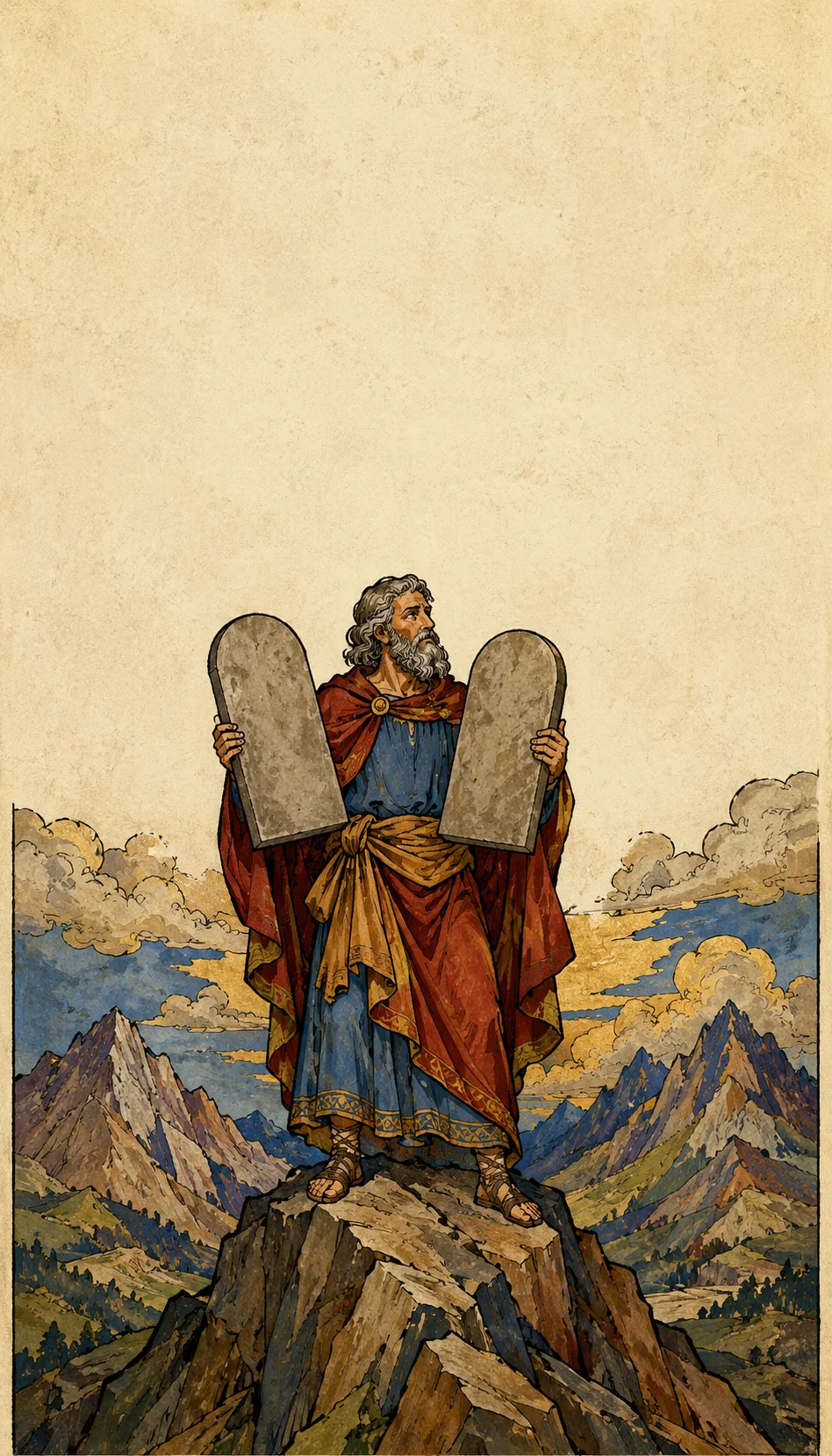
From 20
The people are free. They're out of Egypt and can do whatever they want.
And that goes wrong. Because when nobody has agreed on anything, whoever shouts loudest is in charge. There's fighting all through the camp: whose goat is that, who gets to the well first, who said what exactly.
climbs the mountain. Below, the whole people stand waiting, and the mountain itself smokes and rumbles as if there's thunder inside it. Up there, gives Moses ten agreements. The first few are about God himself. The rest are about how people treat each other, and they're short. Don't take what belongs to someone else. Don't say things about someone that aren't true. Don't spend all your time wanting what your neighbour has. And: one day a week, you do nothing.
These aren't punishment rules. They're agreements that make it possible to live together without it being a fight every day.
Moses comes down the mountain with two stone tablets in his arms, written by God himself.
To now
Playing football on the playground with no referee and no lines. The first two minutes are fun. Then someone handles the ball, someone else shouts offside, and there's a fight.
Only once you've agreed where the goal is and what's not allowed can you actually play.
It works the same way at home. That rule about tablets and phones being put away at the table is annoying. But it does make sure people actually talk.
Follow the rules? Not a chance. I'm making up my own — rigged so I always win!
Mirror line
I'd love to make up rules that only suit me, but I've learned that without rules, freedom doesn't win — the strongest one does.
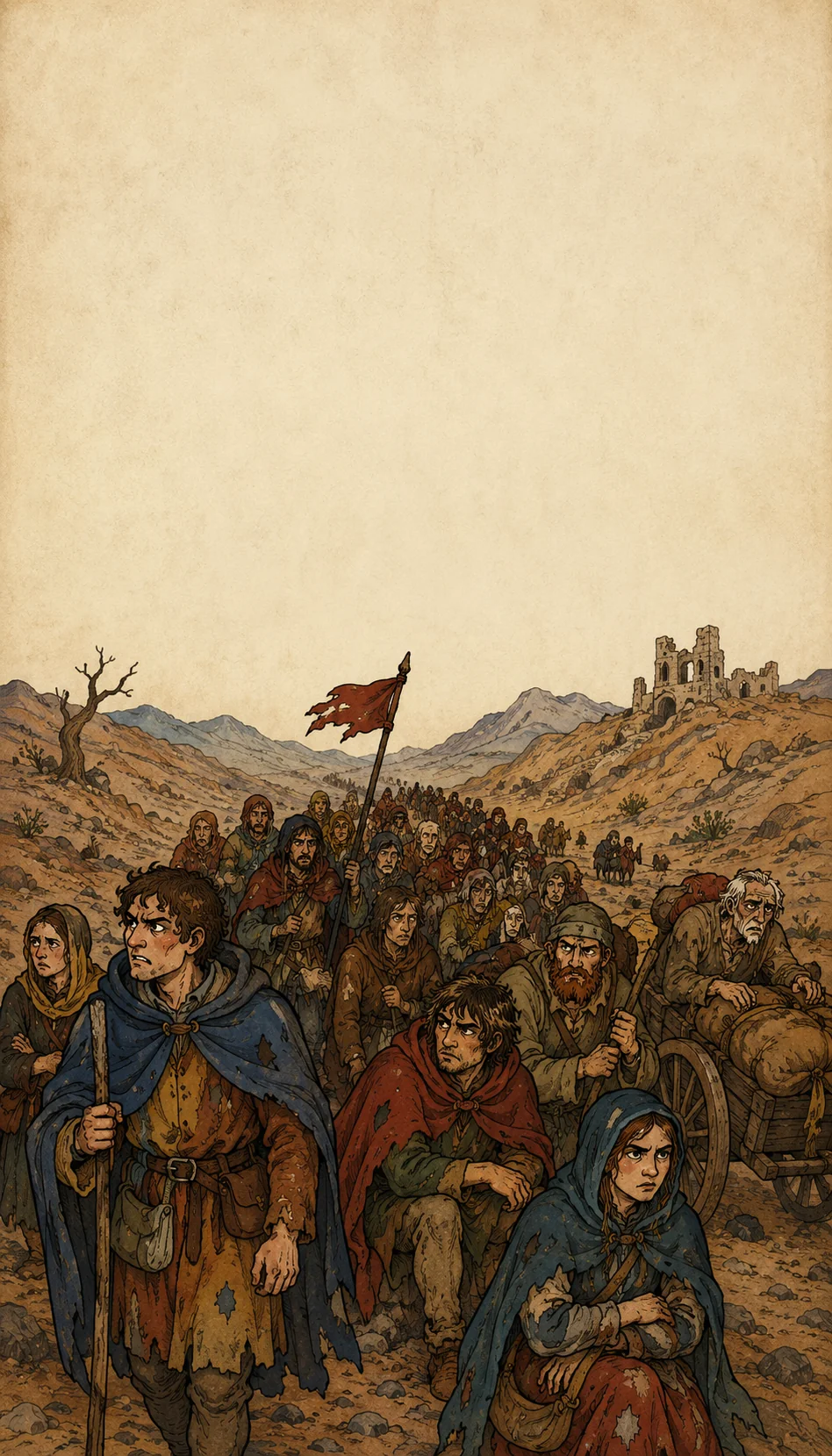
From 14
They're on their way to a new land. It's hot, it's heavy going, and it's taking a long time.
Twelve men are sent ahead to scout. Ten of them come back with bad news: it's beautiful there, but the people are giants and we're grasshoppers. Two say: it can be done.
The ten are the ones who get listened to.
That night the whole camp cries. They say to each other: if only we'd stayed in Egypt, at least we had food there. For a moment they forget they were slaves there.
And then they wander the desert for forty years. Children are born along the way and learn to walk in the sand; they grow up and have children of their own, without ever having seen anything but tents and rock. Only their children arrive. Not them.
To now
You've been at a new school for three weeks. Everything's different, you still don't know where to sit at break, and you suddenly miss your old class terribly.
Even though you were often fed up there. You know that perfectly well. You just don't feel it.
This is the hardest part. Not the beginning and not the end, but the middle. The old is gone and the new isn't here yet.
That takes everyone a while. And never exactly the same amount of time for anyone.
Keep going? Good luck to him. I'm leaving him behind with all his moaning about the good old days!
Mirror line
I'd love to say I'm never going again, but I've learned the hardest part is always the middle — not the beginning and not the end.
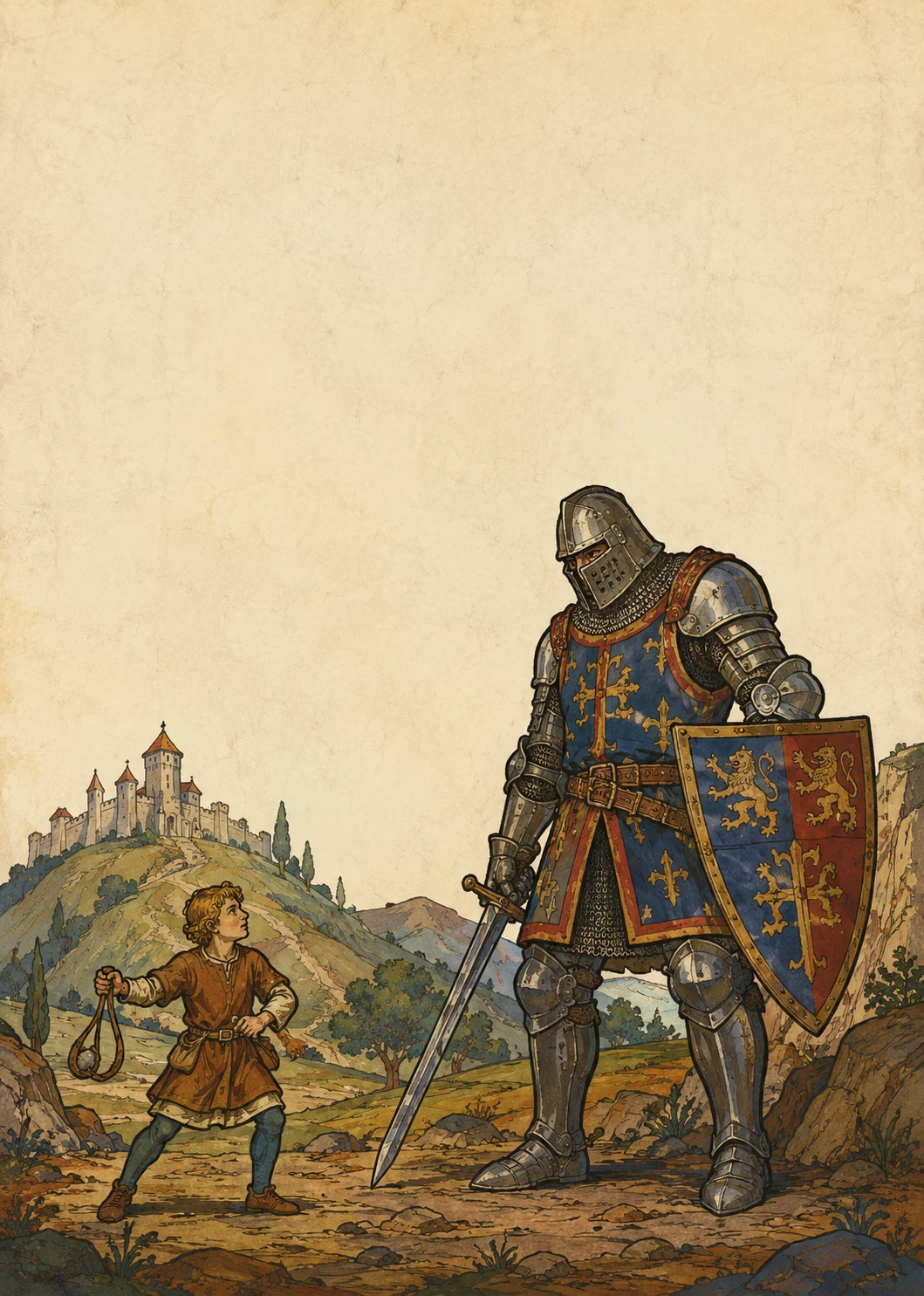
From 17
Two armies stand facing each other and nothing happens. Every day steps forward and shouts: send one of your own, and we'll settle this together. He's enormous and nobody dares.
For forty days.
Then comes to bring food for his brothers. He hears it and says: I'll do it.
King Saul hangs on him. A helmet, a sword, the whole set. David takes three steps and says: I can't walk in this, I've never worn it before.
He takes it off. He grabs his stick and picks five smooth stones from the stream.
Goliath sees him coming and starts laughing.
And then it happens very fast.
To now
You're playing with the older kids. They shove and pull and they're two heads taller. If you try that too, you're on the ground within a minute.
But you're faster. And smaller. And you see gaps they don't see.
It's not just about sport. Someone in your class is great at talking and you're not. Try to copy him, and you can hear yourself that it sounds fake. Just say what you'd actually say, and you can hear that it's right.
Be scared? Never heard of it. I'm cutting that irritating bully down to size myself!
Mirror line
I'd love to act just as tough as he does, but I've learned you don't beat someone by putting on his armour — only by staying yourself.
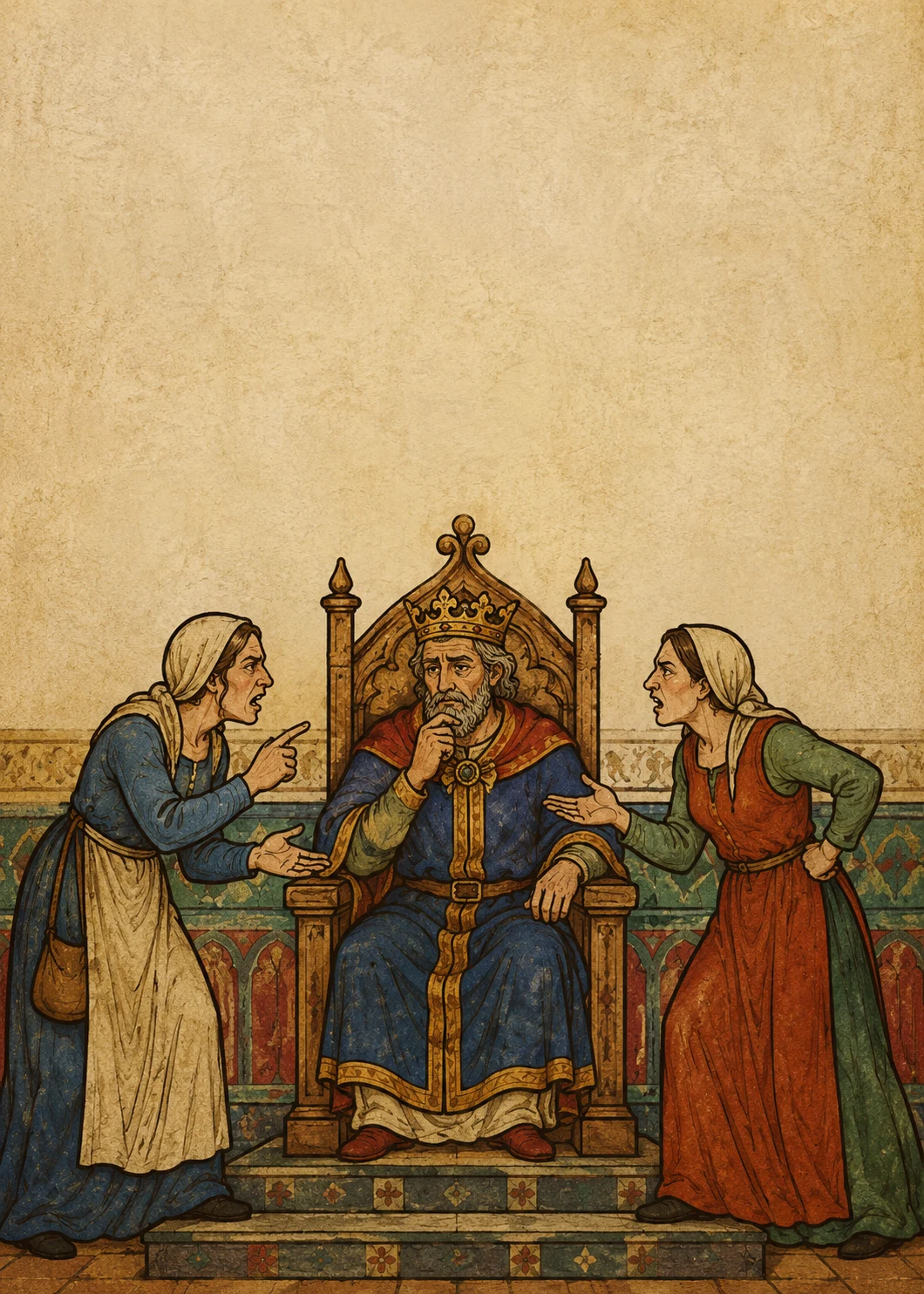
From 3
has only just become king and he's still young. Two women come to him, both claiming the same baby is theirs.
There are no . There's no proof. It's one woman's word against the other's.
Solomon thinks. And then he says something terrible: bring a sword. We'll cut the child in half, so each of you gets a piece.
One of the two says: fine. Go ahead. Then neither of us has him.
The other screams: no! Give him to her, then. As long as he lives.
And then Solomon knows enough. Give the child to the second woman, he says. She is the mother.
To now
The two of you are pulling on the same thing. You're both shouting that it's yours.
And at some point it's not about the thing anymore. It's about not wanting to give in.
You hear it start to crack. And you pull again.
If one of you lets go, the other usually thinks: I won. But the one who let go was the one who still remembered what it was actually about.
Back down? Not a chance. I'll keep pushing until it breaks — purely to win!
Mirror line
I'd love to keep nagging until I got my way, but I've learned that whoever lets go first often still remembers best what it was actually about.
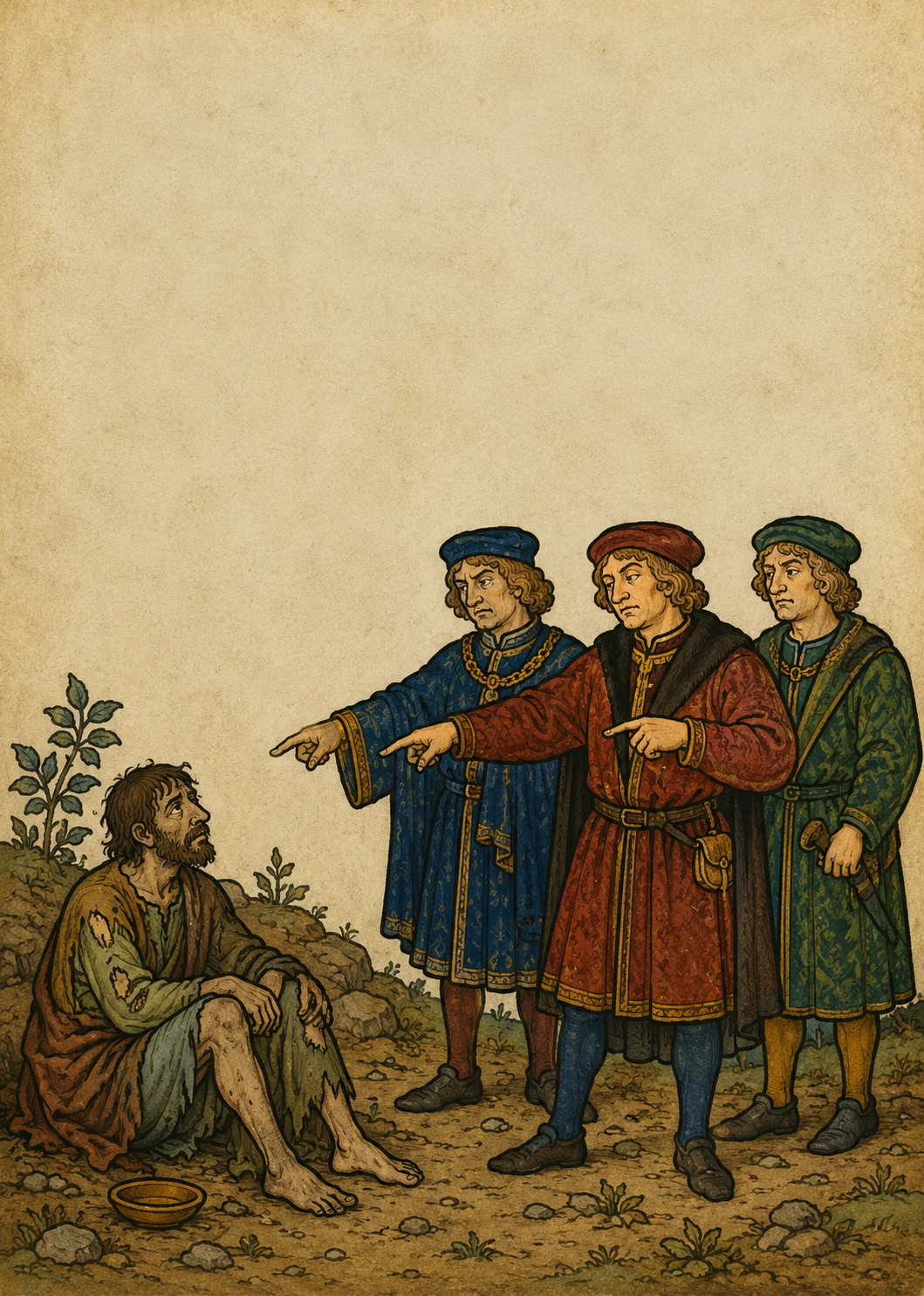
From 38
Job loses everything in a very short time. His animals, his house, the people he loved. Then he gets sick too. He sits in the dust and doesn't understand any of it.
Three friends come to see him. For seven days they say nothing. They just sit next to him.
Then they start talking, and all three say the same thing: you must have done something wrong.
Job keeps asking. Why? Why me? No answer comes.
Until a storm rises. Out of that storm, speaks, and Job thinks: now I'll finally hear it. But God gives no answer. He asks questions.
Where were you when the earth was made? Do you know where the snow is kept? Can you tame a wild donkey?
Almost a hundred questions. And not one answer.
And when the storm settles, Job is calm.
To now
Something really awful happens to a kid in your class. And on the playground someone says, “Well, his dad always drives way too fast too.”
We say things like that because we're scared. If there's a reason, it can't happen to us. But there isn't always a reason.
And then that other moment. You're standing next to someone who's sad and you don't know what to say. Every sentence you think of sounds stupid. So you say nothing and walk on.
While that person maybe didn't need a sentence at all. Just someone who stayed.
Sit with him? No time for that. I'll just think: at least it's not me, and carry on with my day!
Mirror line
I'd love to think: at least it's not me, but I've learned that looking for a reason usually comforts yourself, not the other person.
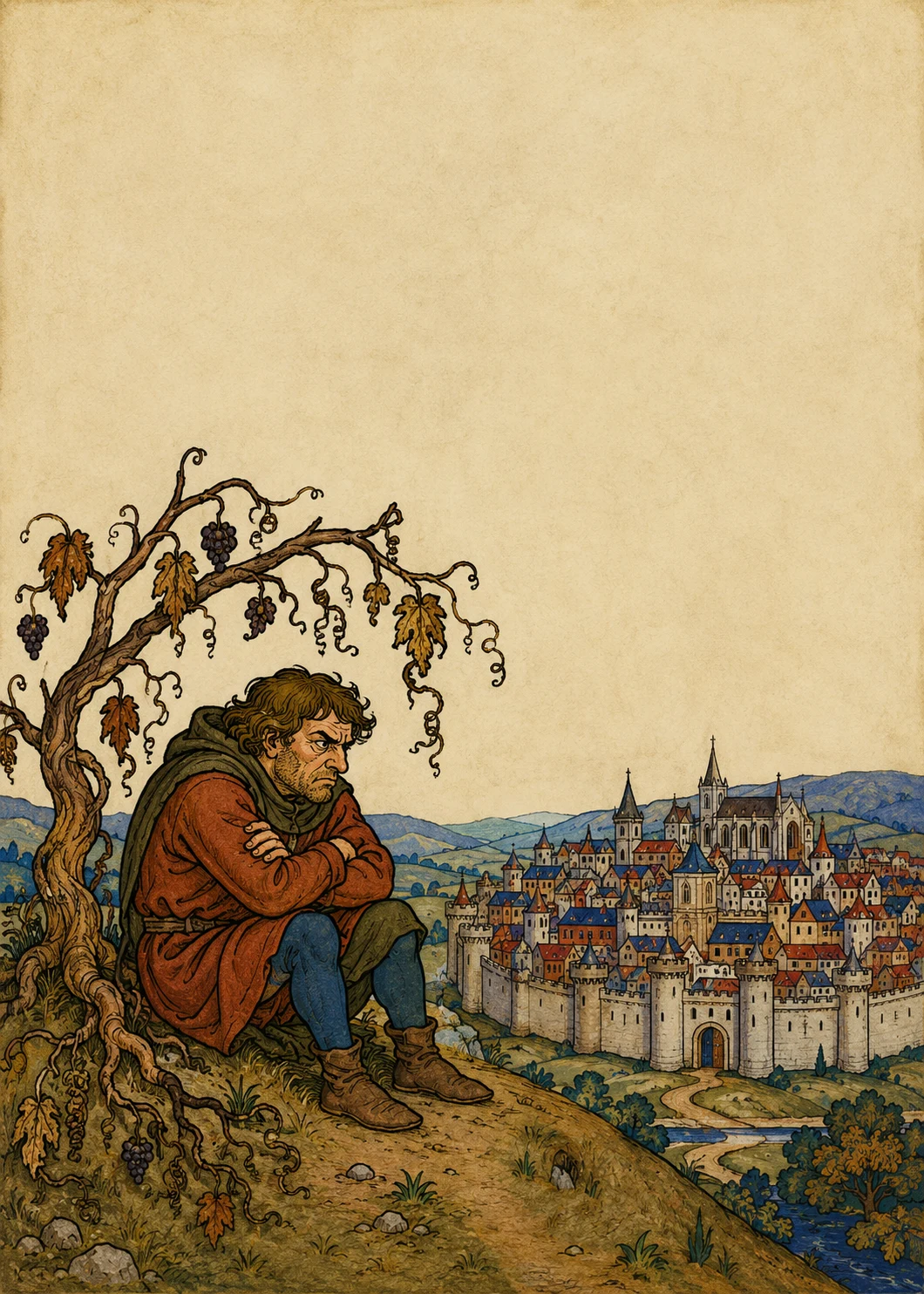
From the book of
tells Jonah: go to . That's the enemy's city, and Jonah doesn't feel like it. So he heads in exactly the opposite direction.
A storm comes. He gets thrown overboard, an enormous fish swallows him, and three days later spits him out onto the beach.
Then he walks to Nineveh after all. He says one sentence. And to his utter astonishment, the whole city listens. Everyone says sorry and changes their ways.
So it turns out brilliantly. And Jonah is furious.
He goes and sulks on a hill outside the city. A plant grows over his head and gives him shade, and he's thrilled about that. But the next morning a little worm chews through the stem. The plant dries up, the sun burns down, and Jonah doesn't want to go on.
Then God asks him one last question: you're devastated over a little plant you didn't even plant yourself. And what about those thousands of people?
The book stops there. We never hear what Jonah answered.
To now
There's a kid in your class who's been annoying all year. You know exactly who he is. That's the troublemaker. Case closed.
And then one day he apologises, and the teacher says he can join in again. Everyone's happy. And you're standing there feeling something odd: you're annoyed. Part of you is almost hoping he messes it up again.
That's not because you're mean. It's because you'd already given him a fixed spot in your head, and that spot doesn't fit anymore.
Be happy for him? Forget it. I'm quietly hoping he messes it up again, right when things were finally going his way!
Mirror line
I'd love to hope he messes it up again, but I've learned that means I'm still keeping him stuck in the spot I once gave him — even if he stopped fitting there long ago.
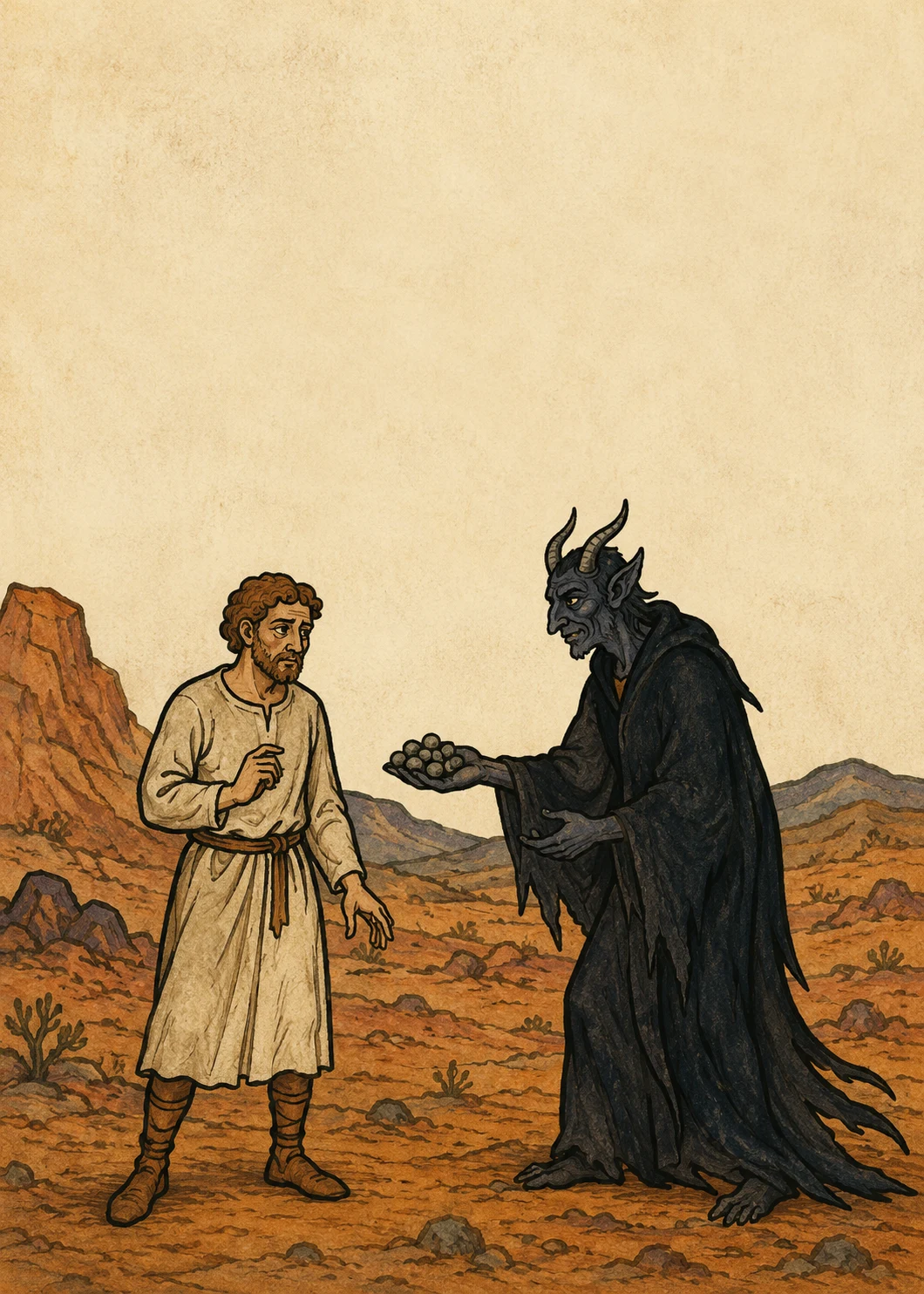
From 4
is alone in the desert for forty days. No food, no people, only sand and his own thoughts. He's exhausted and starving.
And then the devil comes walking alongside him. He sounds friendly and he has three suggestions. The clever thing is: all three sound perfectly reasonable.
You're hungry. Look, stones everywhere. Turn them into bread.
Go stand on the highest point of the temple and jump. Angels will catch you, and the whole city will see. Then everyone will know at once who you are.
Look at all the countries of the world. Yours, today. All you have to do is bow down for a moment.
Three times he says no. Not because food, or being seen, or having something to say are bad things. But because he doesn't want to get them this way.
Then the devil is gone. And he's still standing there. Hungry. And he just has to start walking.
To now
You've been stuck on the same level for days and it just won't work. In the app you see: buy this upgrade and you'll have it instantly. You buy it. You win. But within a couple of minutes the fun's gone, because you haven't really won anything — and you're out some money too.
Or you're writing a project on volcanoes and you paste in a chunk of text you don't even understand yourself. You get a great mark. And when someone asks you a question about your own project afterwards, you don't quite know where to look.
The shortcut works, almost every time. Only you know how you got there.
Earn it properly? Why would I. I'll just buy it and act like I pulled it off myself!
Mirror line
I'd love to just buy it, but I've learned a shortcut never gives you the satisfaction of something you actually earned.
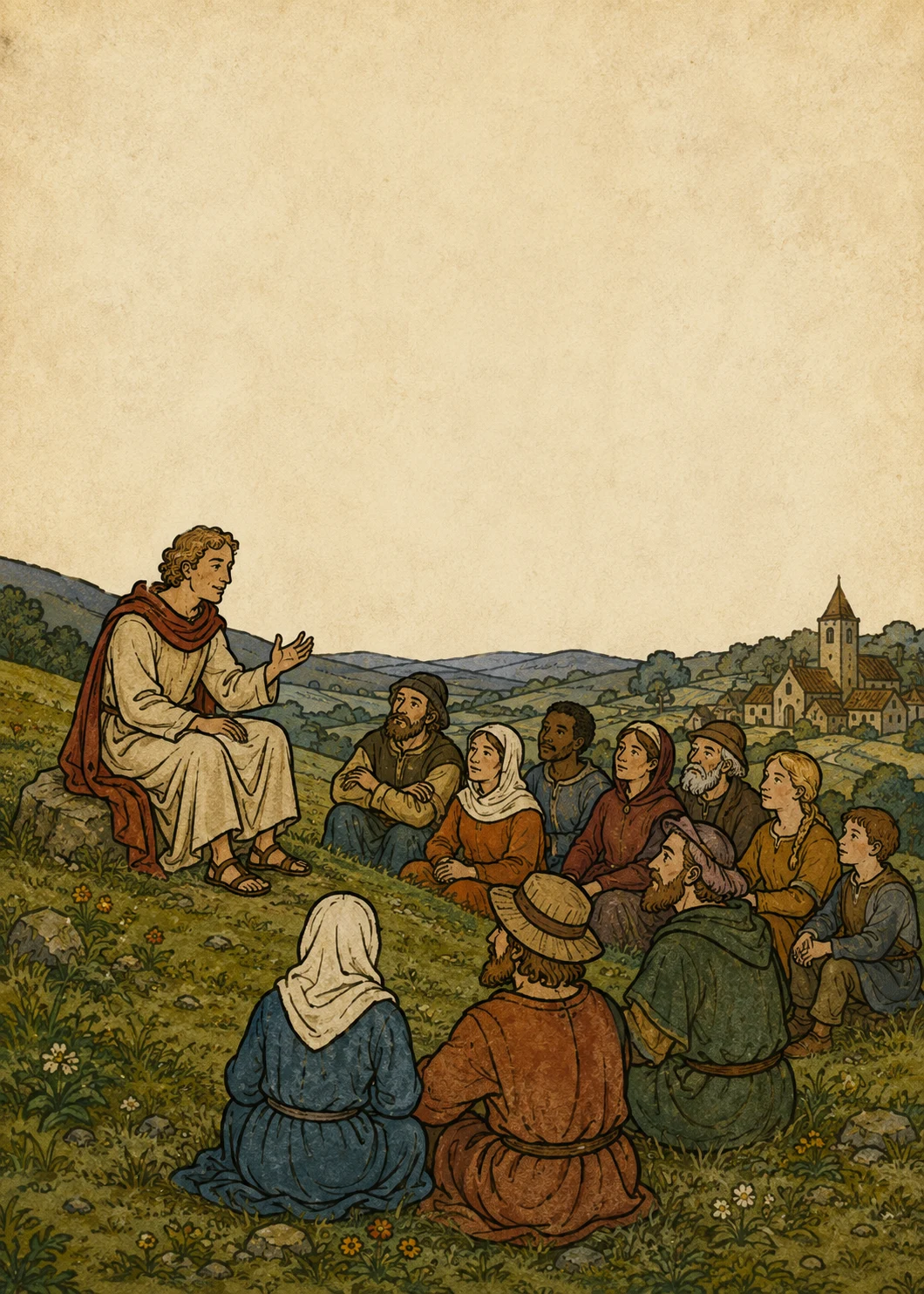
From 5
sits on a hillside with a big crowd around him. He starts talking about a rule everyone knows: an eye for an eye. If someone hurts you, you're allowed to hurt them back exactly as much. Neatly measured out.
And then he says something strange. Someone slaps your one cheek? Turn the other cheek towards him.
He gives another example like it. Back then a soldier was allowed to force you to carry his bag for a . Jesus says: carry it two miles.
That's not weak surrender. It's something else. As long as you automatically hit back, the other person decides what you do. The moment you do something he didn't see coming, you're the one choosing again.
To now
Your little brother pokes you in the side. You poke back. Within a minute it's war in the back seat.
Do absolutely nothing just once — no sighing, no looking, nothing — and something strange happens. He pokes you again. And then it stops. The fun was your reaction.
But this doesn't always work. With teasing, almost always. With real bullying, day after day, it doesn't work, and it's also not your job to solve that on your own. Then the strongest move isn't your other cheek, but getting someone else involved.
That's not tattling and it's not weakness. You're bringing in someone bigger than the problem.
Stay calm? Not a chance. I'm hitting back as hard as I can — with interest!
Mirror line
I'd love to hit back as hard as I could, but I've learned that whoever hits back automatically is still doing exactly what the other person wanted.
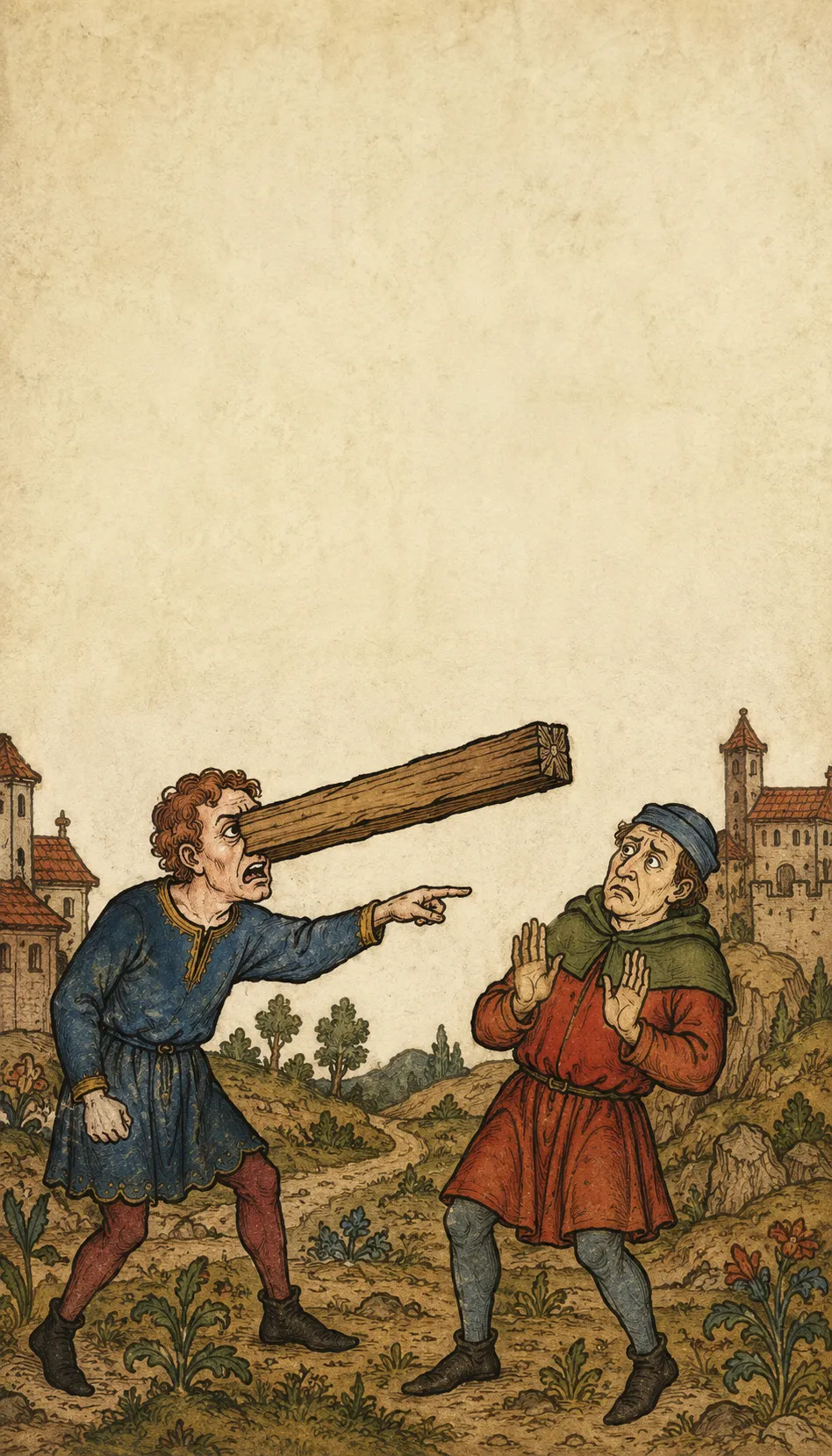
From 7
tells a little joke. Really, it's meant as a joke.
Picture someone saying to his neighbour: hang on, there's a little splinter in your eye, let me take it out for you.
Except that man has a plank in his own eye. A whole plank. A roof beam.
The people listening have to laugh, because the picture is ridiculous. Someone like that can't see anything at all. He can't even get that plank anywhere near the other person's eye.
And then comes the line that flips the joke around: take the plank out of your own eye first. Then you'll see clearly enough to actually help your neighbour.
To now
You yell through the house that your little sister has thrown her shoes in the middle of the hallway again. Meanwhile your own room looks like something exploded in it.
Or at school. You think it's really rude that someone keeps talking over the teacher, and you say so to two other people. What you conveniently forget to count is that you did the exact same thing yesterday.
The strange thing is you don't see it in yourself. Not because you're lying. But because you look at yourself from the inside, and at someone else from the outside. With yourself, you know why you did it. With someone else, you only see what he did.
Look at myself? I don't think so. I'd rather point at her mess and leave my own plank exactly where it is!
Mirror line
I'd love to just point at her mess, but I've learned I have a plank of my own — I just never see it.
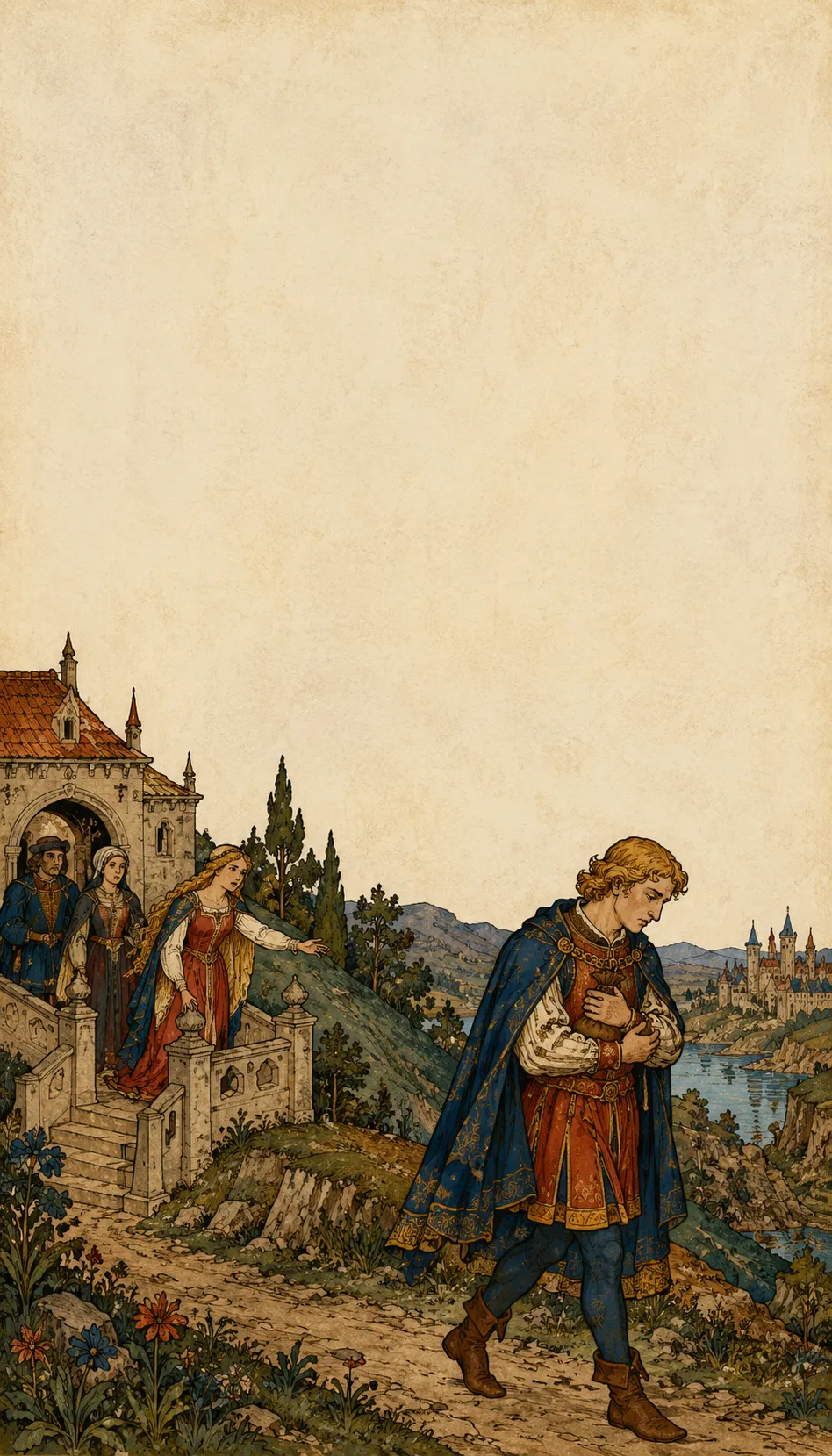
From 19
A young man comes up to . He's rich, he's kind, and he really tries hard. He asks: what else must I do to live well?
He probably expects to hear that he's doing just fine.
But the answer is: sell everything you have, give it away, and come with me.
The young man just stands there. He says nothing back. He turns around and walks away. And there's one small sentence that carries the whole story: he went away sad, for he owned a great deal.
He's not angry. He's sad. He does want to. But his things hold onto him more tightly than he holds onto them.
To now
You get something new that makes you really happy. And for the rest of the day you're mostly afraid of it. You don't take it outside, in case it gets dropped. You don't let anyone else hold it.
Outside they're calling you to come help with the den. And you're sitting inside trying out your new thing.
Or your suitcase for camp. You stuff it with everything you might possibly need, and on the way there you're lugging it around exhausted. Half of it never even comes out.
Share it? Absolutely not. I'm dumping all my excess baggage on someone else so I can travel light!
Mirror line
I'd love to just keep everything, but I've learned things don't make you freer — you also have to guard them, keep them clean, and not lose them.
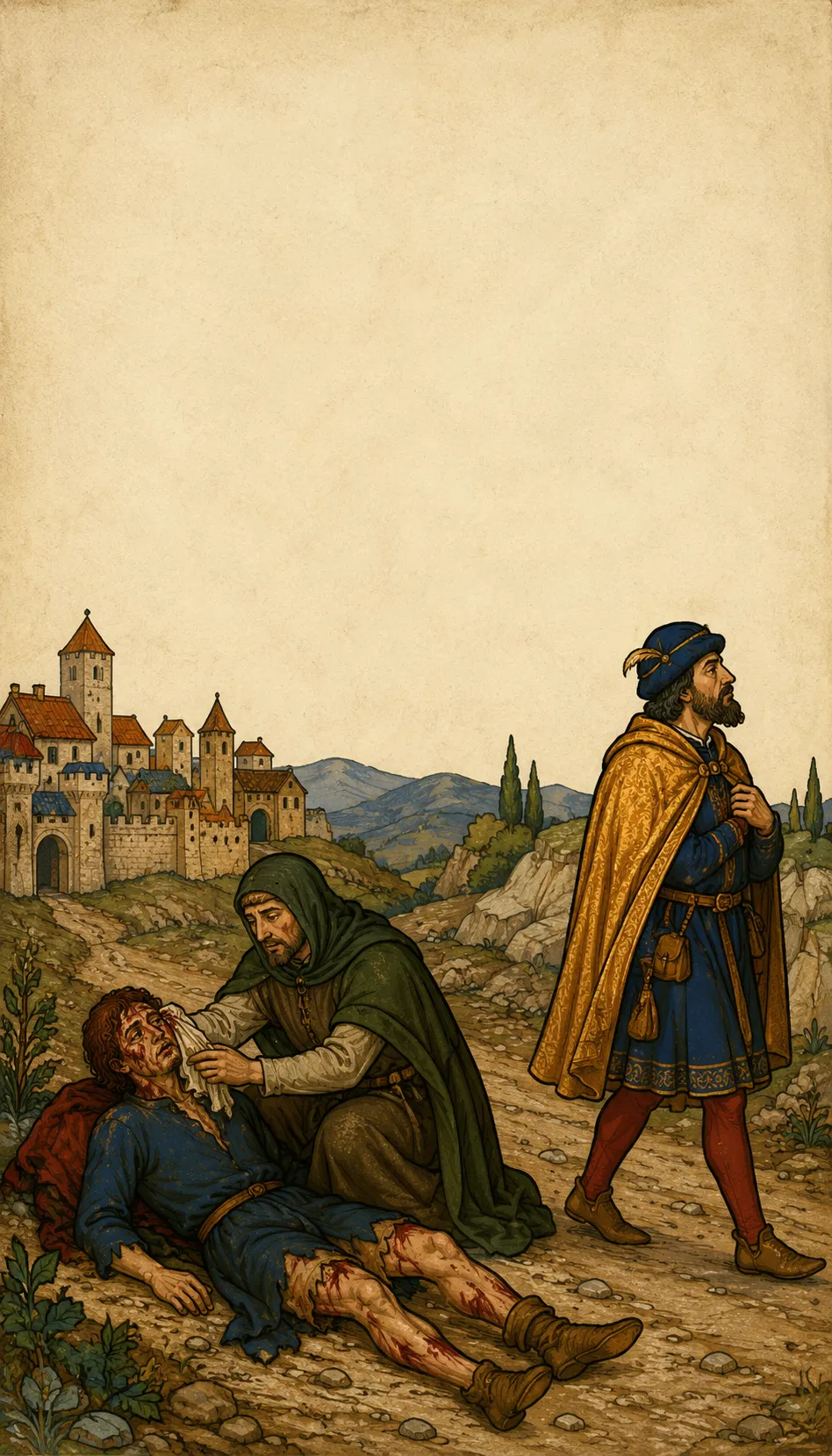
From 10
Someone asks : who am I actually supposed to help? Who counts as mine?
Jesus answers with a story. A man is walking down a lonely road and gets attacked. They beat him and leave him half-dead by the roadside.
Someone important comes along. He sees the man lying there, crosses over, and walks on along the other side of the road. A little later, someone else like him comes by. He crosses over too.
Then a passes. And that's exactly someone from the wrong side: the people listening to this story want nothing to do with Samaritans.
He stops. He treats the wounds, puts the man on his own donkey, brings him to an , and pays for him.
At the end, Jesus flips the question around. Not: who counts as yours? But: who became a here?
To now
Someone takes a hard fall on the playground. Not just anyone: it's that tough kid who was rotten to you last week. Your first thought is: serves him right.
You stop for a second. And in those few seconds you come up with three reasons to keep walking. You're going to be late. Other people are already there. And he probably doesn't even want your help.
Those reasons aren't lies. All three of them are a little bit true.
That's exactly what makes them so useful.
Stop and help? Why would I. He surely wouldn't help me either!
Mirror line
I'd love to just keep walking, but I've learned the question isn't who deserves my help, but who I become when someone's lying there.
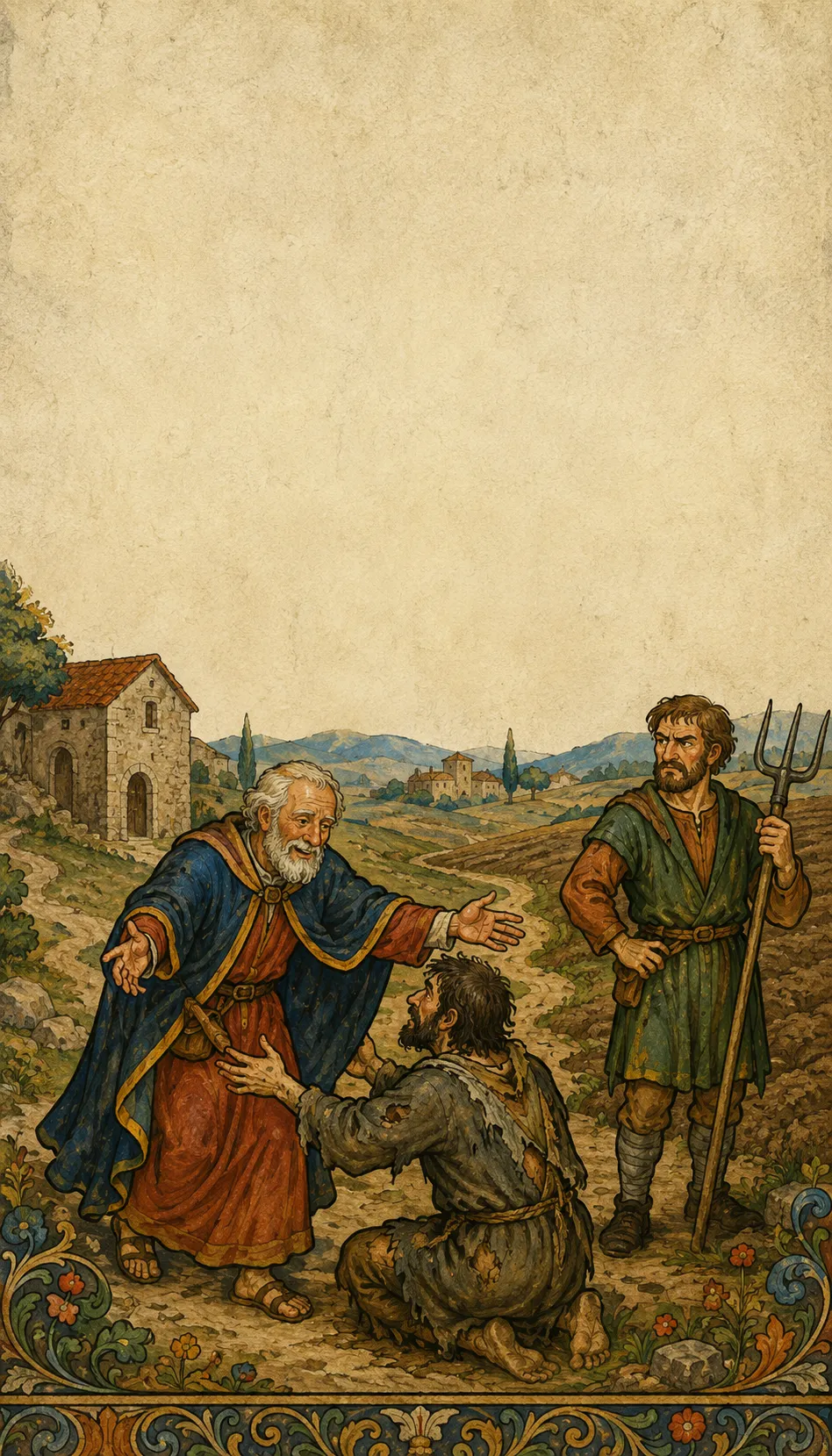
From 15
A father has two sons. The younger one won't wait and asks for his share of the money right now. He leaves, spends it all, and ends up with nothing. Eventually he's working among the pigs and is so hungry he wants to eat their food.
He decides to go back, and practises his apology along the way.
But his father sees him coming from far away. So he'd been watching. He runs to him, and a party breaks out. Music, food, everything.
The oldest son is out in the field. He hears the music, hears what's going on, and refuses to go inside. All these years, he says, I've worked here. And I've never had a party.
Then the father goes outside too. Towards him.
What the oldest son did next isn't written down.
To now
Your little brother breaks something and gets a hug. You got told off last week for something much smaller. You don't say anything about it, but something settles inside you.
Or this: someone who did nothing all year for the group project gets exactly the same compliments at the presentation as you, who put in three whole evenings.
In moments like that, you're the older brother. You haven't done anything wrong — that's exactly the point. You did everything right and it feels like nobody noticed.
That's a lonely kind of angry.
Be happy for him? No thanks. I'll give him a party he'll never forget!
Mirror line
I'd love to say I didn't mind about the party, but I've learned it's fine to be jealous of a party — as long as you actually say so out loud sometime.
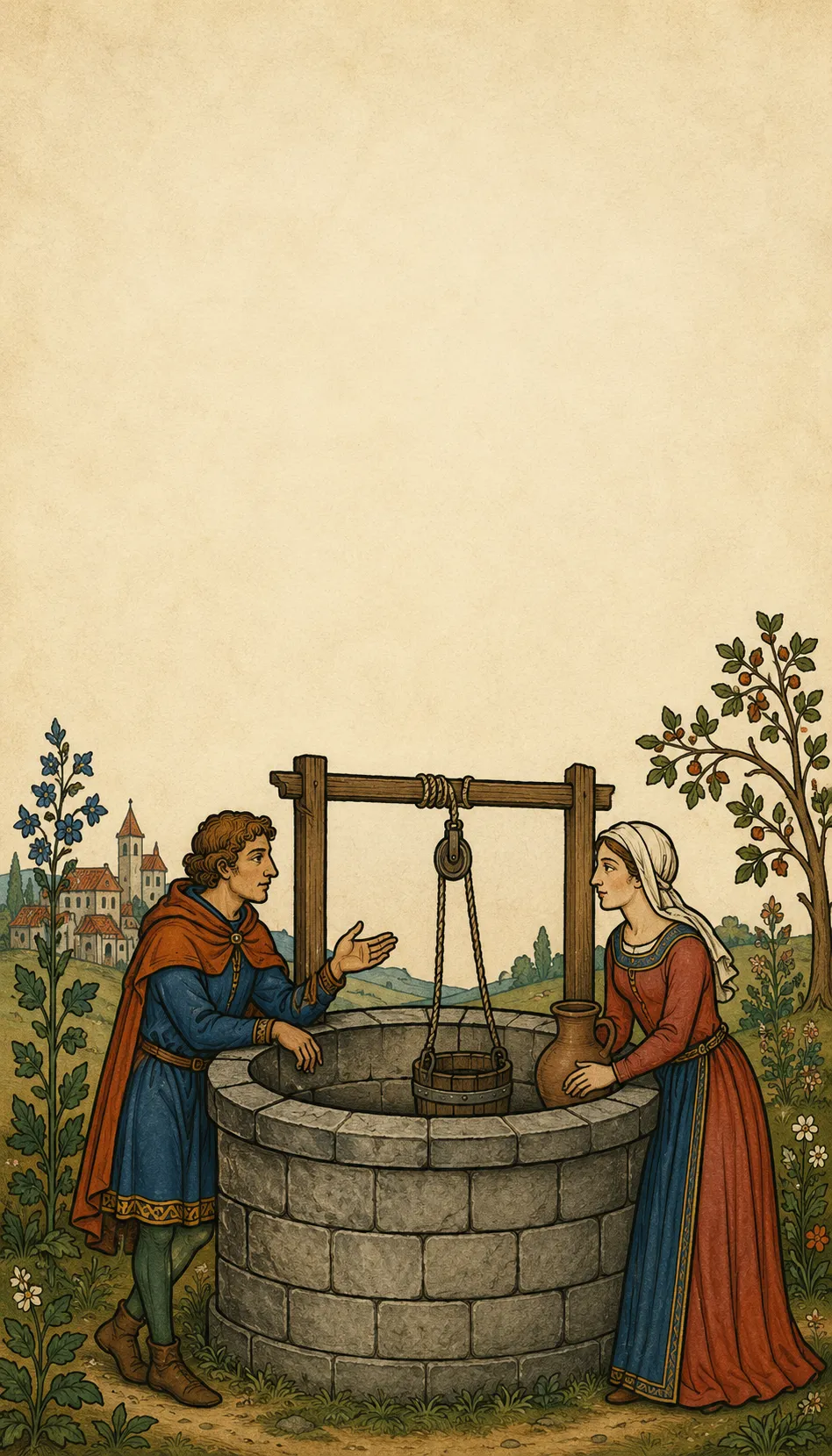
From 4
It's the middle of the day and blazing hot. is tired from walking and sits down by a well.
A woman comes to fetch water. That's odd, because no one fetches water in the hottest part of the day. She's probably coming at exactly that time because there's no one else around.
And then something happens that really isn't supposed to happen. He asks her for something. Give me a drink.
That sounds small, but it isn't. She belongs to the wrong people, she's alone, and really he should be pretending not to see her. Instead he asks her for help — because she has the bucket and he doesn't.
They get talking. It becomes the longest conversation of his recorded in the whole book. And afterwards she goes and tells the entire town.
To now
There's someone in your class you never talk to. Not because you have anything against him. It just never happened, and by now it would feel strange to start.
If you want to be kind, you usually think of giving. You ask if he wants to join in. That's meant kindly, but it also says: I'm inside, you're outside, and I'm letting you in.
There's something that works better, and it's even easier. Ask him something. Whether you can borrow his eraser. Whether he knows how to beat that one level.
Asking for something turns the other person, for a moment, into the one who gets to help.
Start a conversation? Far too much effort. I'll just never look that way at all!
Mirror line
I'd love to just never look, but I've learned you don't have to be mean to someone to still never really see him.
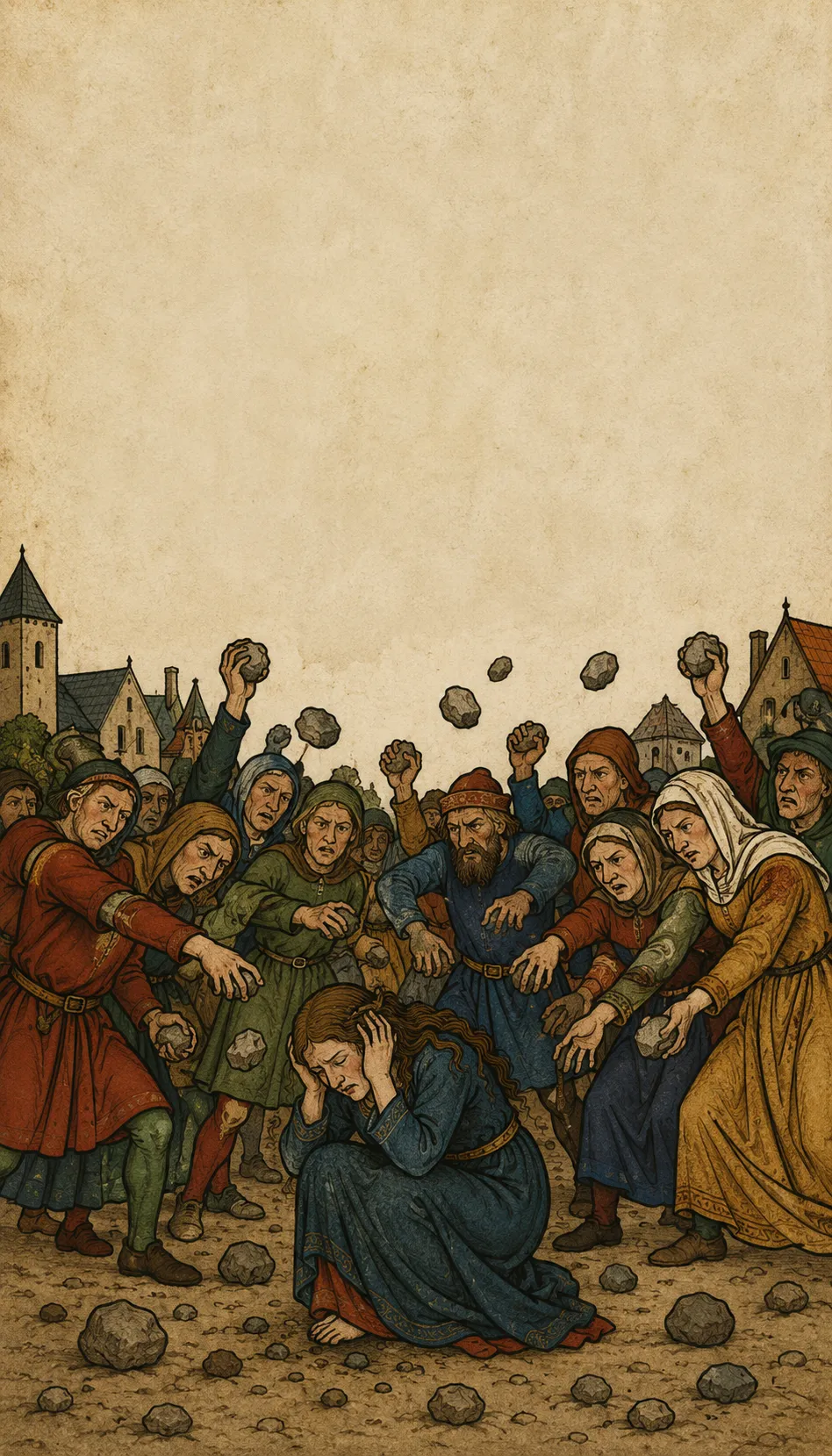
From 8
A large group of people comes along, pushing a woman ahead of them. She's done something forbidden, and by the rules of that time she can be stoned for it.
They put her in the middle of the circle. Everyone can see her. And then they ask : so, what do you think?
He says nothing. He bends down and writes something in the sand with his finger. What he wrote isn't recorded. Nobody knows.
They keep pressing him. Then he stands up and says one sentence: whichever of you has never done anything wrong may throw the first stone.
And then he bends down again, and keeps writing.
It goes quiet. And one by one they walk away. The oldest ones first.
To now
Someone starts talking about a classmate on the playground. A second comment follows. Then a third, with a nasty joke on top. Within two minutes almost everyone's joined in.
You say something too. Not the worst thing — you're smarter, you say something funny. Everyone laughs. That feels good.
That night in bed you think about it again. On your own, without all that laughter around it, your little sentence suddenly sounds very different.
The strange thing about a group is that no one feels responsible. Everyone thinks: I only did a small bit. Added up, it wasn't a small bit at all.
Can't quite manage a throw? Just say so. Hand over the biggest stone you've got!
Mirror line
I'd love to say I only said that one joke, but I've learned a group never makes you feel responsible — even when you were.
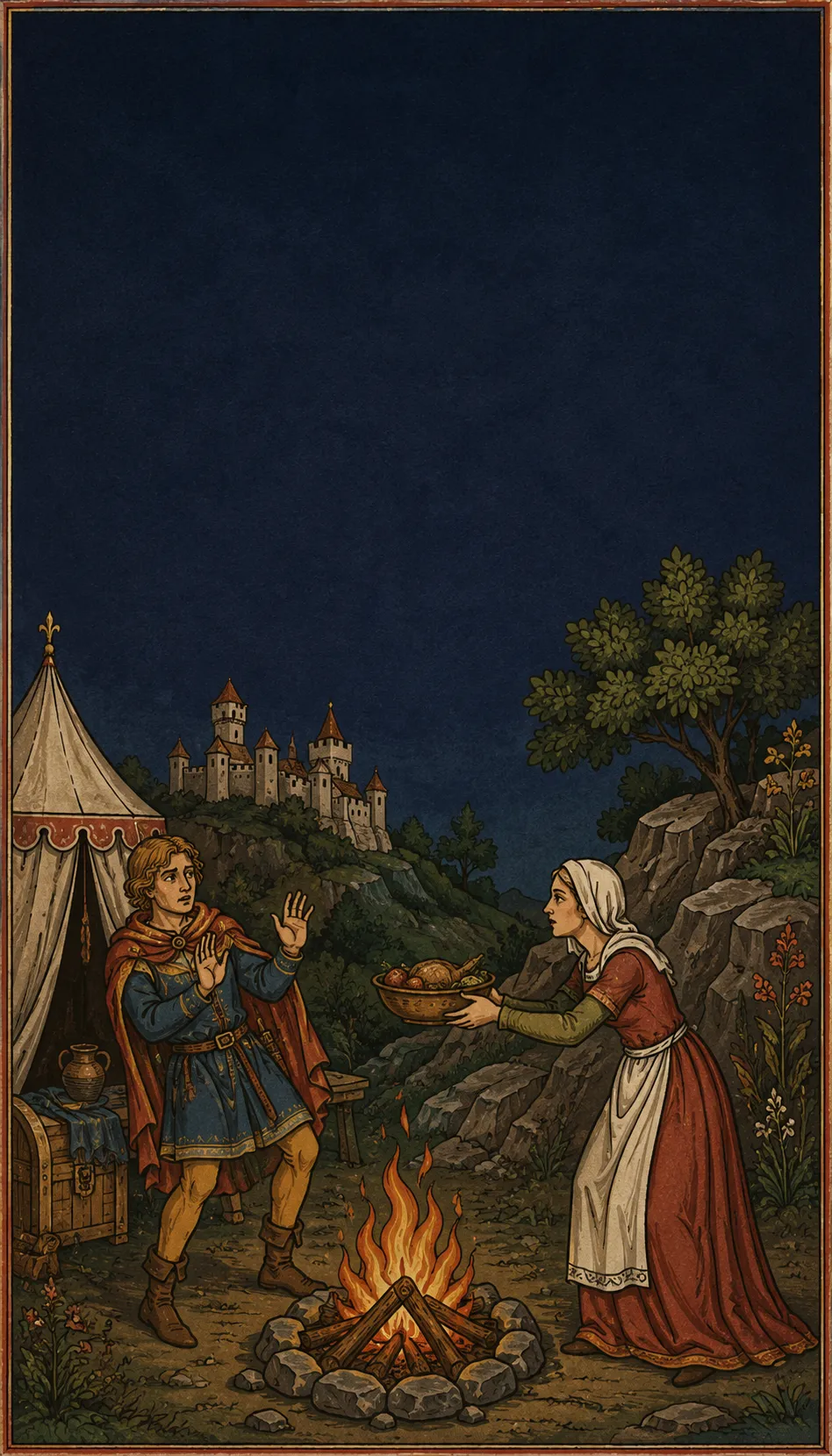
From 26 and 22
knows something terrible is about to happen. At the last meal with his friends, he says it out loud: soon all of you will leave me alone.
nearly gets angry. Not me. Never.
Later that evening Jesus sits in a garden and he's afraid. Really afraid. He asks his three closest friends to stay awake with him. When he comes back, they're asleep. He wakes them. When he comes back again, they're asleep again.
Then the soldiers arrive. And then they all run away.
Only Peter follows at a distance, all the way to a courtyard where a fire is burning. Someone looks at him and says: weren't you with him? No. A little later, again. I don't know that man. And a third time. I don't know what you're talking about.
Then a rooster crows. Peter gets up, walks outside, and cries.
What happens next is the worst part. Jesus is killed. His friends aren't there; a few women stand watching from a distance. He's laid in a tomb and a stone is rolled in front of it.
And on the third day, that tomb is empty.
To now
You have a friend from way back. You must have played together a thousand times. But at school he doesn't belong to the group you're part of now.
And then suddenly he's standing next to you on the playground, where everyone can see. Someone asks, laughing: is that a friend of yours? And you shrug and say: not really.
You haven't lied, you tell yourself. You've just made it a bit smaller. But he heard it, and you know he heard it, and it sits in your stomach for the rest of the day.
did it three times in one evening. And he was truly the best friend there was.
Admit I actually hang out with him? I'll pass. Then they'd all know I'm a loser too!
Mirror line
I'd love to say he wasn't really my friend, but I've learned I usually only say that when I'm scared myself — and that's a very ordinary reason.
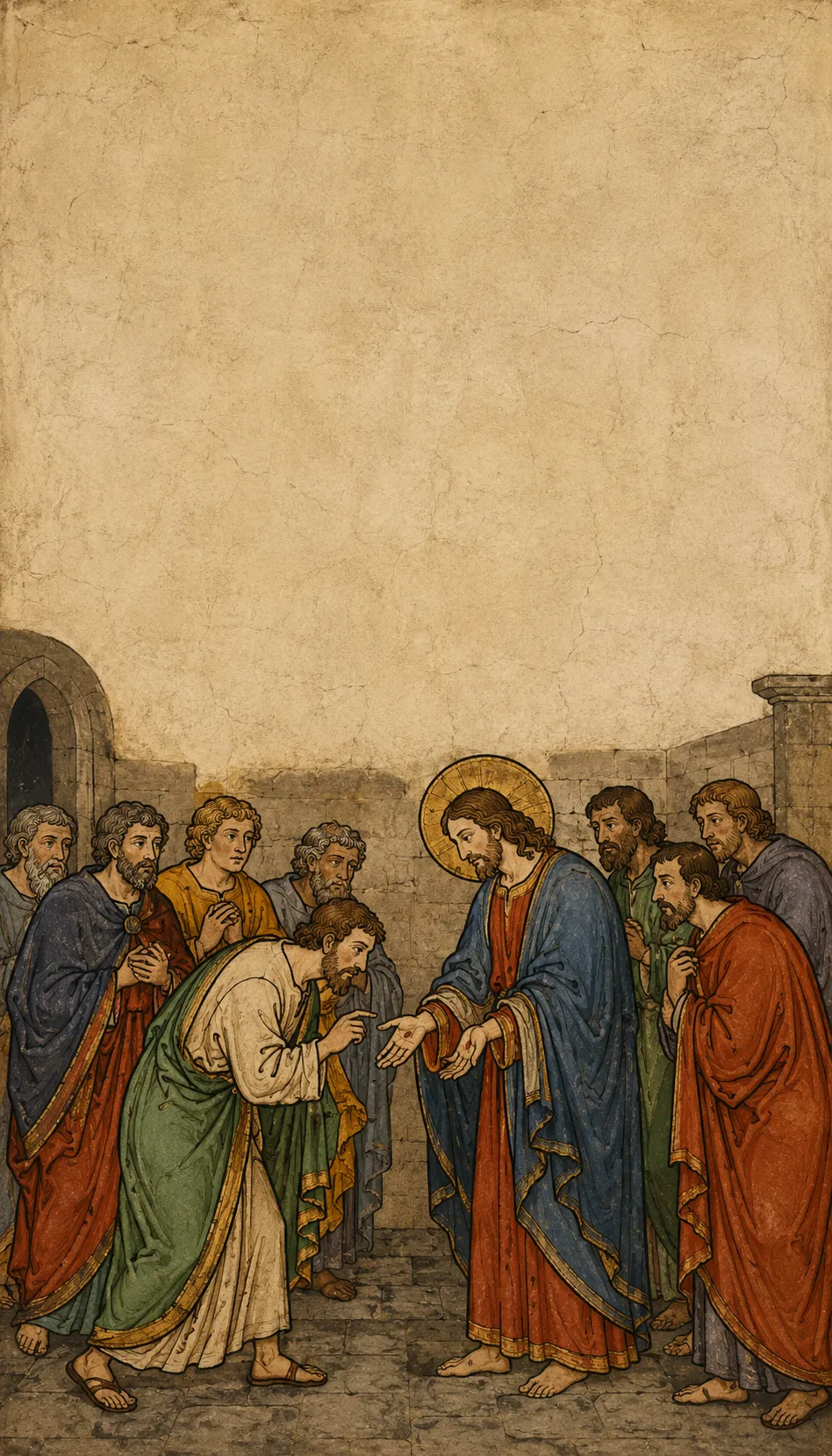
From 20
After everything that's happened, the friends are sitting together behind a locked door. They're afraid.
isn't there that time. When he comes back, everyone talks over each other: we've seen him.
Thomas doesn't believe it. He says: I want to see it myself. I want to feel it with my own hands. Otherwise, no.
That's a brave thing to say, because he's completely on his own with it. All his friends are saying something different from him.
A week later he is there. And then he hears: come here. Look. Feel.
It doesn't say whether Thomas actually did that. Only that he stopped doubting.
He's ended up with a nickname that doesn't really make sense: doubting Thomas. When really he was the only one who said out loud what he actually thought.
To now
A story goes around school. Someone did something, or something's about to happen, and everyone's sure of it. Ask where they heard it, and someone says: heard it from Sam. And Sam heard it from someone else.
If you then ask “are you sure?”, they look at you like you're being annoying. Nodding along is easier.
And then that other side of it. You're in class and you don't understand the maths problem. You look around and no one puts their hand up. So neither do you. Afterwards it turns out half the class didn't get it either.
Whoever asks a question is usually asking it for more people than just themselves.
Ask questions? Waste of time. I'll just nod along with everything and call him the weird one!
Mirror line
I'd love to just nod along without understanding a thing, but I've learned that whoever dares to ask a question is usually asking it for more people than just themselves.
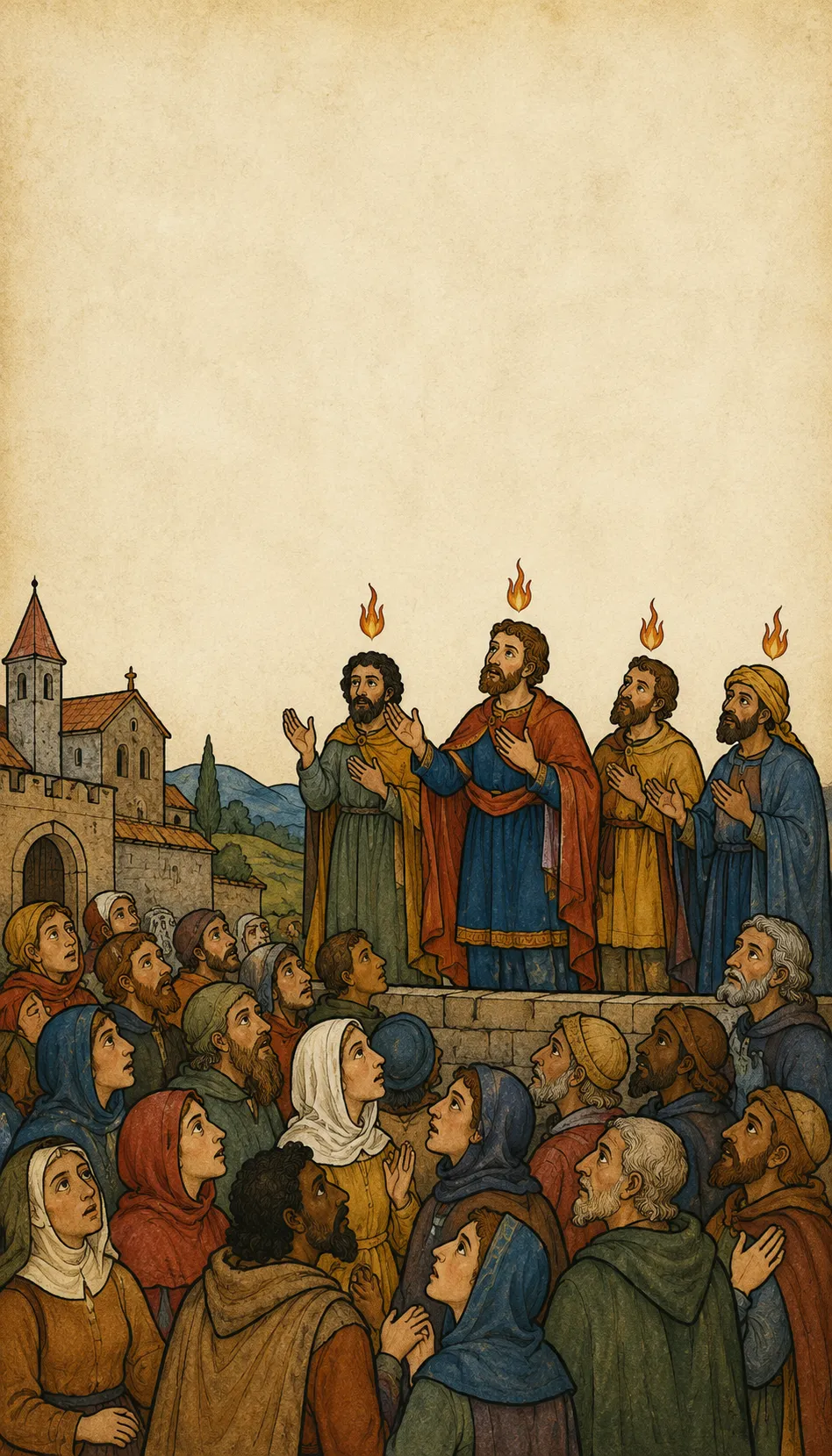
From 2
The friends are all sitting together in one house. Suddenly a sound like a rushing wind fills the room, and it's as if little flames appear above their heads.
They go outside, onto the street. The city is busy. There are people from every corner of the world.
And then comes the strange part. The friends speak, and everyone who hears them, hears it in their own language. Not: everyone suddenly speaks the same language. Everyone hears it in the language of home.
The people can't make sense of it. Some say: they've had too much to drink. Later the friends explain it was the that had come over them.
Remember that tower, from earlier in this book? That went wrong when everyone was the same and still stopped listening to each other. Here, exactly the opposite happens.
To now
A new kid joins the class who barely speaks the language yet. And the whole class starts talking slowly and loudly, as if he's a bit deaf.
Then there's one person who does something different. Who sits down next to him and points things out. Or draws it. Or learns three words in his language and gets them completely wrong, which makes everyone laugh — him too.
That works. Not because it's easier, but because that one person wasn't waiting for the other to become like them.
Adjust, calmly? Far too much effort. I'll just drum it into his ear if I have to!
Mirror line
I'd love to just talk louder, but I've learned you don't understand each other better by raising your voice — only by doing something slightly different from everyone else.
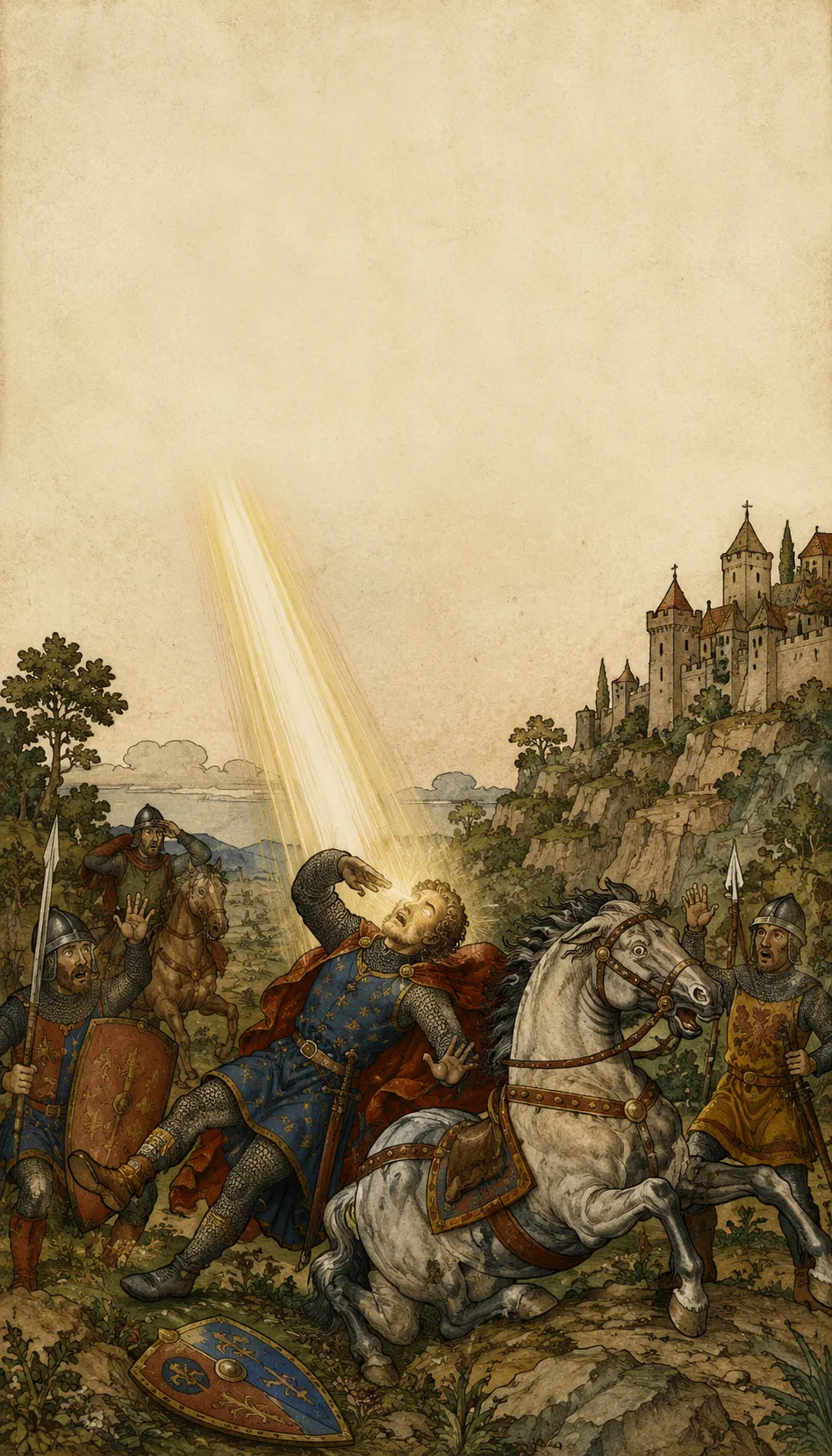
From 9
is a dangerous man. He hunts down the friends of and has them arrested. Everyone knows his name and everyone is afraid of him.
On the road to the city of , something happens. There's a blinding light and he falls to the ground. He hears a voice say his name and ask: why are you doing this to me? When he gets up, he can't see anything at all. For three days he sits in the dark. He doesn't eat and he doesn't drink.
In that same city lives . tells him: go to Saul.
Ananias is terrified and just says so out loud. Do you know who that is? I've heard what that man does. He's come here to arrest us.
But he goes. He walks into that house, puts his hands on the shoulders of the most dangerous man he knows, and says: Saul, my brother.
To now
The kid who's bullied you all year comes up to you and says sorry.
You don't believe a word of it. That's not strange either — you've seen it a hundred times, him being nice and then not again. Your face is already set to no before you've said anything.
And here's the hard part. Someone who wants to change almost never manages it alone. He needs someone willing to believe him, even once, while it's still nowhere near certain.
That doesn't have to be you. If he's bullied you all this time, that's really not your job. But someone has to do it, or he stays exactly who he was.
Give him another chance? Once a liar, always a liar. I should know!
Mirror line
I'd love to never trust him again, but I've learned that whoever truly wants to change almost never manages it alone — he needs someone willing to believe him, just once, first.
Afterword
That was them. Stories, some of them thousands of years old.
What stands out when you read them one after another is how little people have changed. They were jealous of their brother. They walked on while someone lay there. They pretended not to know their friend once things got tense.
That's maybe not a cheerful thought. But it is a reassuring one. What you feel isn't strange, and it isn't new.
The stories don't solve anything for you. They just help you look at yourself a little more clearly.
Back to ordinary life
The real work begins once you close this book. Swallowing an unkind remark. Seeking out someone standing alone. Not hitting back, just once. Asking: are you sure about that?
It's not much more than that.
My story
Every story in this book was once written down by someone, because something had happened that they didn't want to forget.
Now it's your turn.
Type something here that happened to you. It doesn't have to be extraordinary.
In a few thousand years, this will be an old story too.
My story
I mostly felt…
For parents and caregivers
This book asks questions with no right answer. That's not modesty; it's the whole point.
Don't correct the answer. If a child says they weren't jealous when you saw that they were, let it stand. The question has already done its work the moment it was asked.
Silence is an answer too. Sometimes "I don't know" simply means: not now, and not with you.
For parents and caregivers
Answer honestly yourself, too. Children only speak honestly once someone has been honest with them first. An adult who admits to once walking on themselves does more than ten questions.
And watch your timing. A child may look up a chapter after a rotten day; that's exactly what this book is for. But if you bring it up, ten minutes after the argument it's actually about, it's no longer a mirror. It's a sermon by a roundabout route. Wait a day.
Acknowledgements
This book began as something for three children at my own table. That it's now found its way to you too still feels remarkable to me.
I hope there was a story somewhere between these pages that did something for you. A question that stuck. A mirror line you read a second time.
This app is free, so it can reach as many children as possible — and that will stay that way.
Install the app for quick access, with no address bar — just like a regular app.
An update to The Mirror Bible is available. Refresh the app to use the latest version.
Come see what's been added to The Mirror Bible.